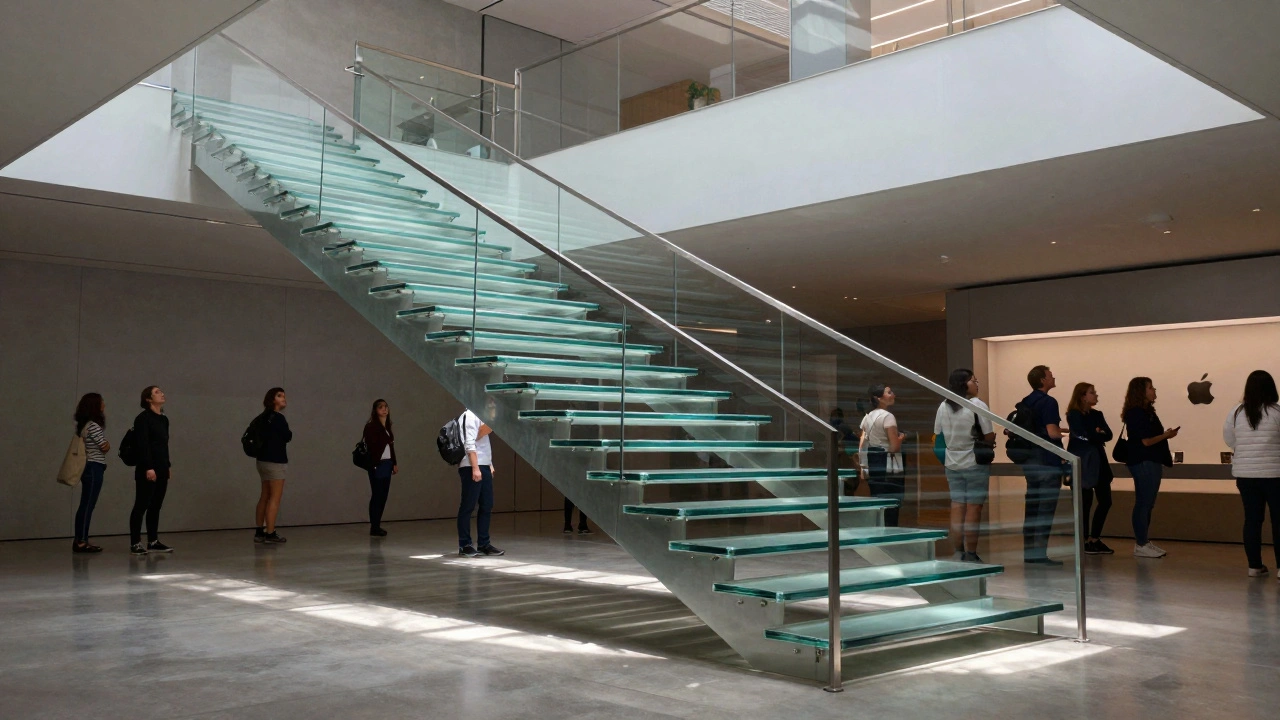

What if a staircase could be invisible?
Apple doesn’t just sell products. It sells experiences. And nowhere is that more visible than in its flagship stores-where the architecture itself becomes part of the brand. At the heart of this experience? Glass stairs that seem to float. Not because they’re light. But because every bolt, every joint, every connection has been erased.
The first one appeared in 2002 in SoHo, New York. A single glass staircase, rising from the street into the store. No metal brackets. No visible supports. Just glass, held together by titanium and stainless steel so precisely placed that you couldn’t see them. People stopped. Looked up. Didn’t move. They weren’t just walking up stairs. They were walking into something new.
That stair wasn’t an accident. It was the first statement in a 20-year design language-one that would define Apple’s retail identity. And it wasn’t about making stairs. It was about making invisible engineering look like magic.
The birth of a design language
Before Apple, no one used structural glass like this. Glass was decorative. Glass was a window. Glass wasn’t a load-bearing element. But Apple, working with Bohlin Cywinski Jackson and structural engineers Eckersley O’Callaghan, turned that idea upside down.
The SoHo stair carried the full weight of every person who climbed it. Not through hidden steel frames. Not through reinforced concrete. But through laminated glass panels-layers of glass fused together with a plastic interlayer. Inside those layers? Metal inserts. Tiny, custom-shaped pieces of stainless steel, embedded during the lamination process. They didn’t stick out. They didn’t show. They just… worked.
This wasn’t about aesthetics alone. It was about control. Every curve, every angle, every connection had to handle stress from footsteps, handrails, and even thermal expansion. Glass expands and contracts. Steel does too. But at different rates. One wrong calculation, and the stair could crack. The team spent years testing. Simulating. Prototyping. They didn’t just build a stair. They built a new standard for how glass could behave under load.
And the result? A stair that looked like it was suspended by light.
The evolution: From visible to invisible
By 2012, Apple wasn’t satisfied. The original SoHo stair was iconic-but it still had visible connections. The glass treads were separate. The handrails were bolted on. There were seams.
So they redesigned it.
This time, they used single, continuous laminated glass panels that spanned the entire length of each stair tread. No joints. No seams. The metal fittings? Embedded so deep inside the glass that they were completely hidden. The handrail? Attached through tiny, polished steel pins that disappeared into the glass surface. Even the balustrades were anchored with fittings buried beneath the glass, not bolted to it.
TriPyramid Structures, a specialist in high-precision metal fabrication, manufactured every single fitting. Each one was machined to exact tolerances. No room for error. One millimeter off, and the whole structure would fail. The result? A stair that looked like it was carved from a single block of glass.
It wasn’t just a better stair. It was a different kind of architecture. One where the engineering didn’t just support the design-it became invisible within it.
The Fifth Avenue cube: Glass as a building
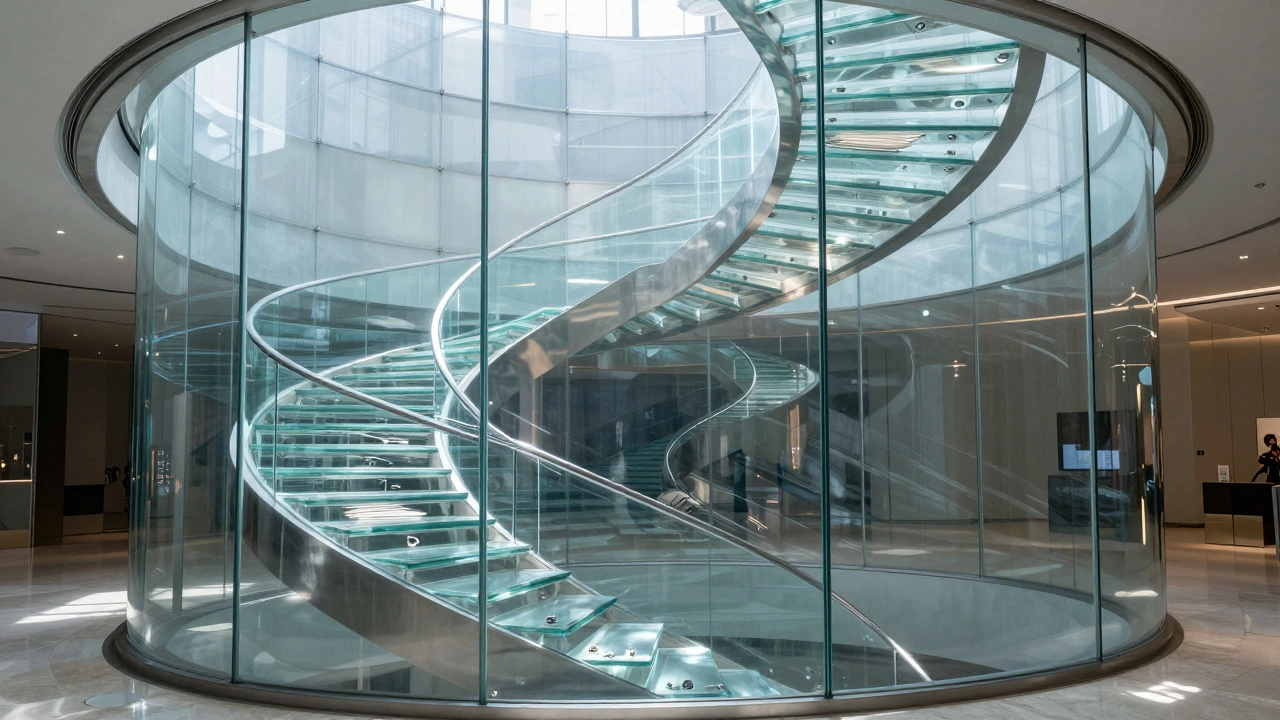
In 2006, Apple opened its Fifth Avenue store-a glass cube, 9 meters tall, floating above the sidewalk. No steel frame. No internal supports. Just 164 glass panels, held together by 250 connection points. Each panel was unique. Each connection was custom. The entire structure was self-supporting, like a giant glass egg.
Inside? A spiral staircase made entirely of glass. It twisted down into the store like a frozen wave. People called it breathtaking. Architects called it impossible.
But Apple didn’t stop there.
By 2011, they had cut the number of glass panels from 164 to 15. The fixings? Down from 250 to 40. How? They invented a new way to embed metal into the glass. Instead of attaching fittings to the surface, they fused them into the core of the laminated layers. The glass wasn’t just holding weight-it was holding the hardware itself.
That design was patented in 2010. Not because it was pretty. But because it was new. No one else could replicate it without breaking the law.
The 2019 revolution: When glass gave way to steel
Then came 2019. Foster + Partners took over the Fifth Avenue redesign. And they did something shocking: they removed the glass staircase.
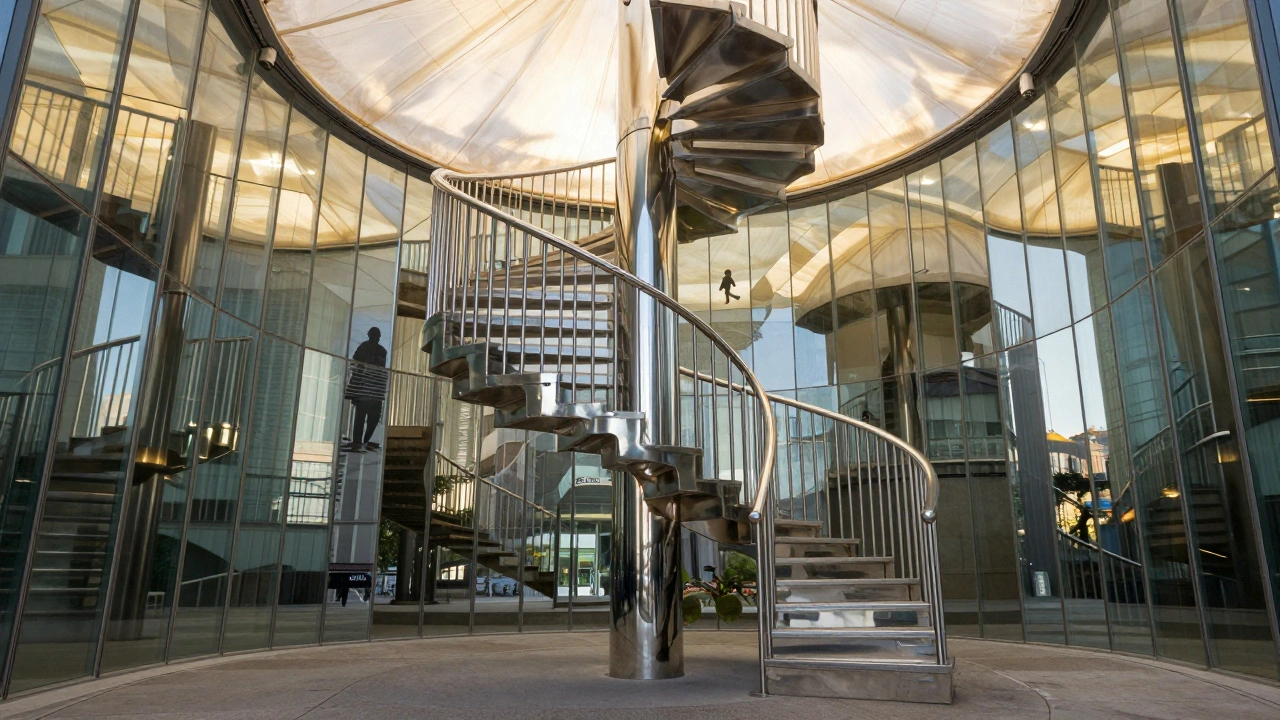
In its place? A spiral of mirror-polished stainless steel.
At first glance, it seemed like a betrayal. But it wasn’t. It was an evolution.
The new stair had 43 treads. Each one was machined from a single block of steel. No welds. No joints. Just one solid piece, shaped into a Bezier curve-the same curve used in Apple’s product design. The curve wasn’t decorative. It was calculated. Every angle optimized for balance, for light, for movement.
And here’s the twist: they didn’t hide the steel. They made it disappear.
By wrapping the stair in mirrored walls and glass, they reflected the treads so perfectly that the staircase looked like it was floating in mid-air. A glass elevator, hidden inside the spiral, had a bottom and top made of glass-so you couldn’t tell where the floor ended and the ceiling began.
The lighting? A cloud-like ceiling of curved fabric, backlit to match the exact color of sunlight at every hour. It didn’t just illuminate. It changed. It breathed.
Apple didn’t abandon its design language. It deepened it. The goal wasn’t glass. It was weightlessness. The goal wasn’t invisibility. It was illusion.
Why hidden joinery matters
This isn’t just about stairs. It’s about philosophy.
Apple’s products don’t show their circuits. Their phones don’t show their screws. Their software doesn’t show their code. Why should their stores?
Hidden joinery is the architectural version of a seamless user experience. It’s the idea that complexity should be buried-so the user only feels simplicity.
When you walk up an Apple stair, you don’t think about engineering. You don’t think about load distribution or thermal expansion. You just feel like you’re floating.
That’s the point.
Every hidden bolt, every embedded insert, every mirrored surface is a silent promise: we made this impossibly hard, so you don’t have to think about it at all.
The ripple effect
Apple didn’t just build stores. They built a new language for luxury retail.
Other brands took notice. High-end fashion boutiques began using glass stairs. Luxury hotels copied the embedded joinery. Architects started asking glass fabricators: "Can you do what Apple did?"
The truth? Most can’t.
It’s not because they lack money. It’s because they lack the partnership. Apple didn’t just hire a glass company. They worked with Seele Sedak-Germany’s top structural glass processor-for over 20 years. They co-developed fabrication methods. They filed patents together. They didn’t outsource. They collaborated.
That’s the difference between a design trend and a design legacy.
What makes this architecture
Architecture isn’t about walls. It’s about how people feel inside a space.
Walk into a typical store, and you feel like you’re in a box. Walk into an Apple store, and you feel like you’re inside a moment.
The glass stair isn’t just a way to get from one floor to another. It’s a threshold. A ritual. A quiet spectacle that makes you pause, look up, and wonder.
That’s what Apple understands better than anyone: the most powerful brand experiences aren’t shouted. They’re whispered.
And in a world of noise, silence is the loudest statement of all.