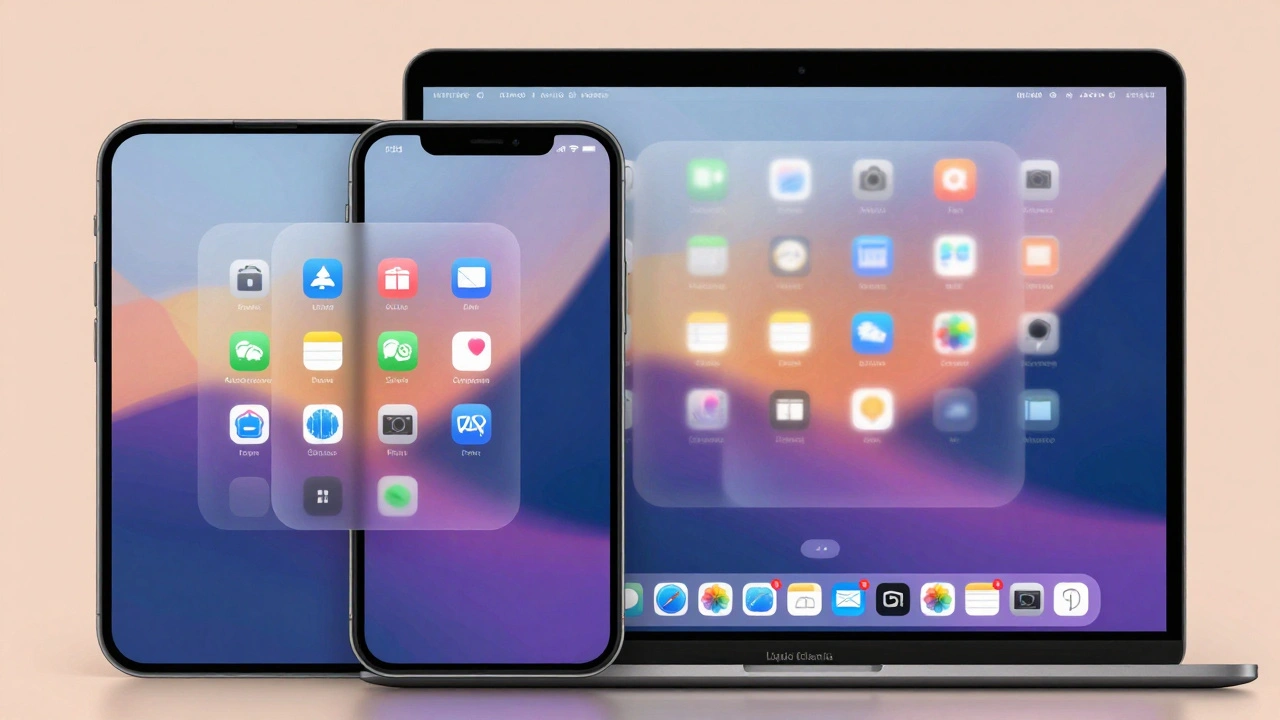

There is a specific kind of frustration that hits when you buy two devices from different brands and they refuse to talk to each other. You connect your phone to your laptop, wait for the sync icon to spin, and eventually give up, resorting to email or cloud storage workarounds. This friction is exactly where Apple a technology company known for its tightly integrated hardware, software, and services ecosystem finds its competitive edge. It isn't just about having more features; it's about how those features interact. While competitors often compete on spec sheets, Apple competes on the seamlessness of the handoff between devices.
This approach forces a fundamental shift in how design teams think about product success. Instead of asking "what can this device do?", the question becomes "how does this device make the user's life easier across their entire digital environment?" For designers and product managers, understanding this distinction is crucial. It moves the focus from isolated functionality to systemic coherence.
The Anatomy of an Integrated Ecosystem
An integrated ecosystem is not just a collection of products; it is a network where each node enhances the value of the others. When you own an iPhone, an iPad, and a Mac, the value proposition changes. The iPhone becomes a remote control for the Mac. The Mac becomes a larger canvas for the iPhone. The iPad bridges the gap, offering touch-based creativity with desktop-grade power.
Continuity a suite of features allowing seamless interaction between Apple devices such as Handoff, Universal Clipboard, and AirDrop is the technical backbone of this strategy. Consider copying a text snippet on your iPhone and pasting it immediately onto your MacBook without opening any apps or transferring files manually. To the user, this feels like magic. To the designer, it is the result of rigorous backend synchronization, consistent API standards, and unified user interface guidelines.
- Handoff: Allows users to start a task on one device and finish it on another.
- Universal Clipboard: Shares copy-paste data across nearby devices instantly.
- AirDrop: Enables peer-to-peer file transfer over Wi-Fi and Bluetooth without internet.
These features do not exist in isolation. They rely on a shared identity system (iCloud) and consistent security protocols. If one link in this chain breaks-for example, if the iCloud sync fails-the entire perceived value of the ecosystem drops. This creates a high barrier to entry for competitors who lack the same level of vertical integration.
The Trap of the Feature Checklist
On the other side of the spectrum, many tech companies adopt a feature-checklist mentality. This approach focuses on matching or beating competitors on individual specifications: camera megapixels, battery life in hours, processor speed in GHz. While these metrics matter, they are additive, not multiplicative.
A smartphone might have the best camera in the market, but if it cannot easily share that photo to a tablet for editing without compressing the image or waiting for a cloud upload, the user experience suffers. The feature exists, but the workflow is broken. Designers falling into this trap often optimize for launch-day headlines rather than long-term user retention.
The danger here is fragmentation. Users end up managing multiple ecosystems. They use Android for their phone, Windows for their laptop, and iOS for their tablet. Each transition involves friction: different file formats, incompatible accessories, separate account logins, and disjointed notification systems. This cognitive load is real. It slows down productivity and reduces satisfaction, even if each individual device is technically superior.
| Attribute | Integrated Ecosystem (Apple Model) | Feature Checklist (Competitor Model) |
|---|---|---|
| Primary Value Driver | Seamless cross-device workflows | Individual hardware specifications |
| User Retention Mechanism | Ecosystem lock-in via convenience | Price competition and spec upgrades |
| Design Focus | Systemic consistency and interoperability | Isolated feature optimization |
| Switching Cost | High (loss of connected workflows) | Low (devices function independently) |
| Risk Profile | Single point of failure affects all devices | Fragmentation and user confusion |

Design Implications for Product Teams
So, what does this mean for designers who aren't working at Apple? You don't need to build a closed garden to benefit from integration principles. You need to design for flow. Whether you are building a SaaS platform, a mobile app, or a hardware accessory, ask yourself how your product fits into the user's existing routine.
First, map the user journey across devices. Where do they switch contexts? A user might draft an idea on their phone during a commute, expand it on a tablet at lunch, and finalize it on a desktop at home. Your design must support these transitions. Use responsive design patterns that maintain context. Preserve state so the user doesn't have to re-enter data or restart processes.
Second, standardize your interface language. Consistency reduces learning costs. If your button styles, typography, and navigation patterns remain identical across web, mobile, and desktop, the user feels confident. This is a subtle form of trust. Trust leads to loyalty, which is far more valuable than a one-time purchase driven by a spec sheet.
Third, minimize friction in data transfer. In a world where users expect instant access to their content, slow sync times or format incompatibilities are deal-breakers. Invest in robust backend infrastructure that supports real-time collaboration and offline-first capabilities. This ensures that the "magic" of integration works even when the connection is unstable.

The Economic Reality of Vertical Integration
It is important to acknowledge that Apple's strategy is expensive. Controlling both hardware and software allows for deep optimization, but it requires massive capital investment. For smaller companies, full vertical integration may be impossible. However, partial integration is achievable through strategic partnerships and open standards.
Consider the rise of Matter, a smart home connectivity standard supported by Apple, Google, Amazon, and Samsung. This initiative aims to reduce fragmentation in the IoT space. By adopting common protocols, companies can create integrated experiences without owning every piece of hardware. This represents a shift from proprietary lock-in to collaborative openness, driven by consumer demand for simplicity.
For designers, this means staying current with industry standards. Understanding how protocols like USB-C, Wi-Fi 6E, and Bluetooth LE Audio impact user experience allows you to design products that plug into the broader ecosystem effortlessly. The goal is not to replicate Apple's closed system, but to ensure your product speaks the same language as the devices users already own.
Measuring Success Beyond Specs
How do you know if your integration strategy is working? Traditional metrics like download counts or unit sales tell only part of the story. You need to measure workflow efficiency and user satisfaction across touchpoints.
Track the time it takes for a user to complete a multi-step task that spans multiple devices. Monitor drop-off rates during context switches. Survey users specifically about their perception of ease-of-use when moving between platforms. These qualitative and quantitative signals reveal whether your design is reducing friction or adding to it.
If users report feeling "connected