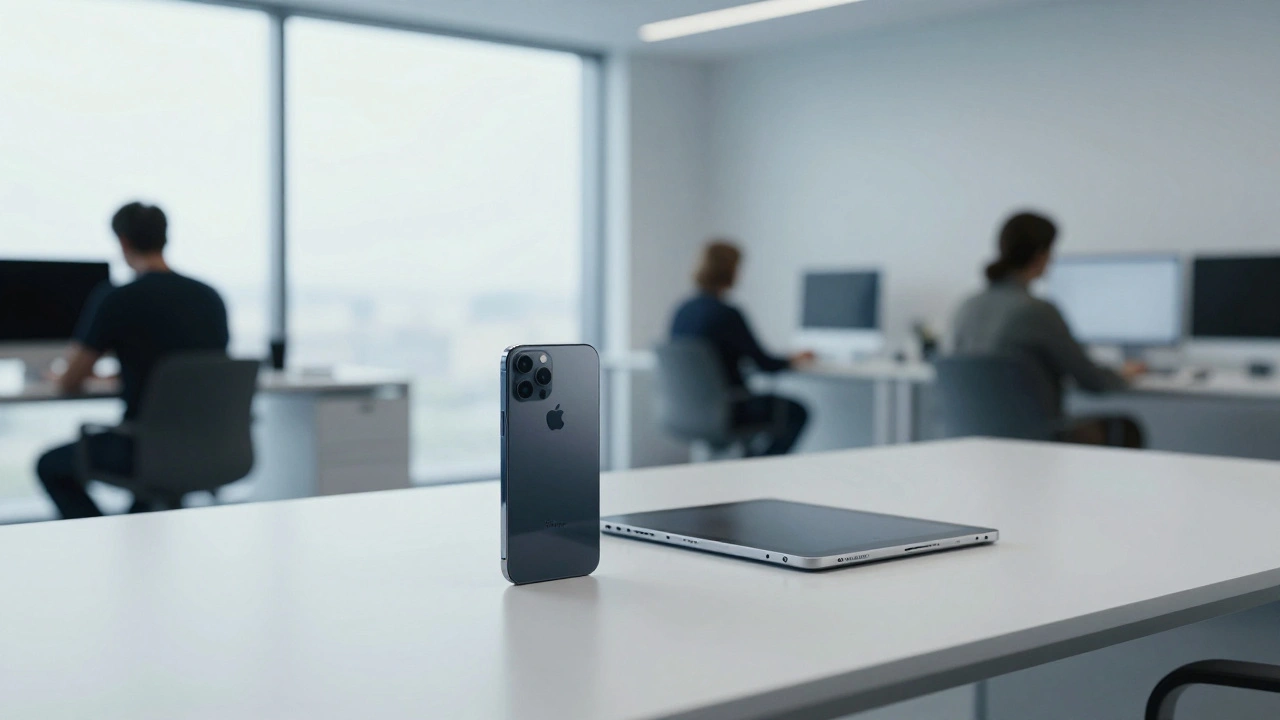

You walk into an Apple Store. The glass is seamless. The aluminum feels cold but not sharp. There are no visible screws on the back of the iPhone you’re holding. It just works. But have you ever stopped to think about how that happens? How does a company with over 160,000 employees manage to make every single product feel like it came from the same mind?
The answer isn’t in the marketing department. It’s not even primarily in the engineering labs where silicon gets etched. The magic happens inside Apple’s Industrial Design Group, a secretive, elite team responsible for the physical form, material choice, and tactile experience of every hardware product Apple releases. Led for decades by Jony Ive (until his departure in 2019) and now guided by Evans Hankey, this group operates less like a corporate department and more like a monastic order dedicated to craft.
The Monastery on Campus
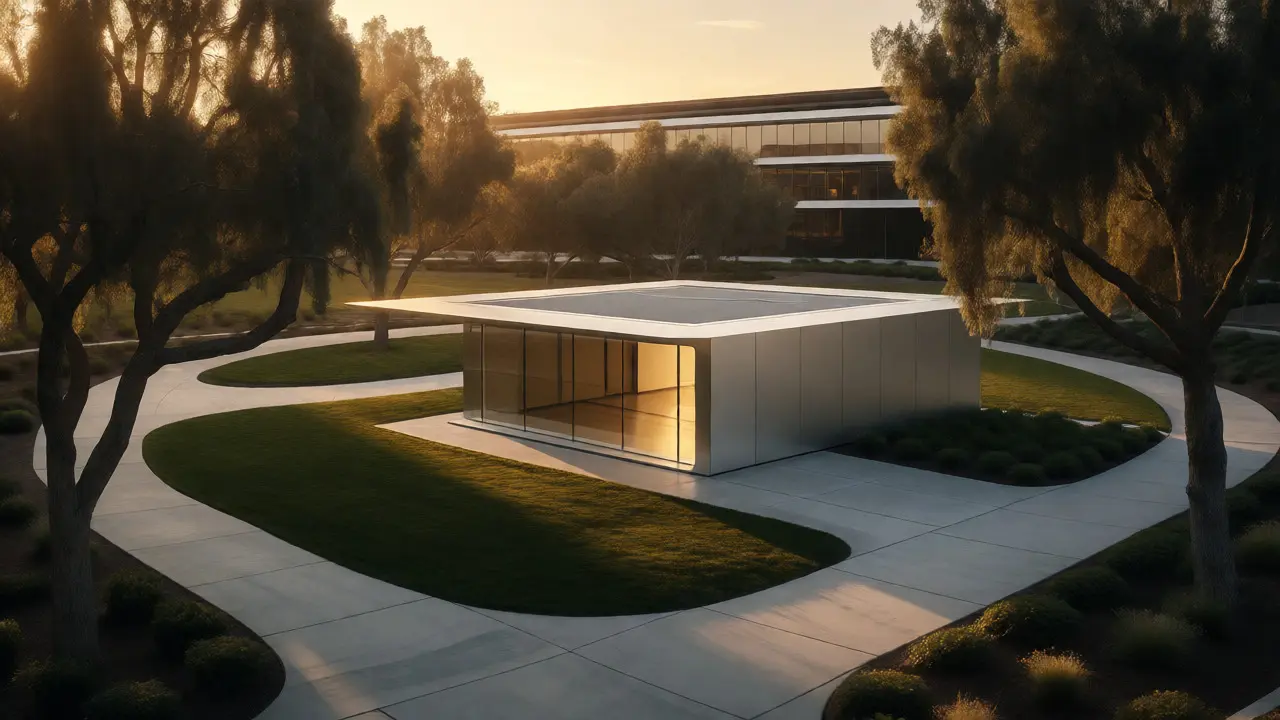
If you’ve visited Apple Park in Cupertino, you’ve seen the spaceship-shaped main building. But if you look closely at the grounds, you’ll notice a smaller, unassuming structure nearby. This is the home of the Industrial Design (ID) group. Unlike other tech giants where designers might sit in open-plan offices next to developers, Apple’s ID team has historically had its own dedicated space. Why? Because they need silence. They need focus. And most importantly, they need to be hidden.
This isolation isn’t just about keeping competitors out; it’s about preserving a specific state of mind. Working in ID requires a level of obsessive attention to detail that can be shattered by casual office chatter. Imagine trying to debate whether a corner radius should be 3mm or 3.2mm while someone behind you asks what’s for lunch. You can’t do it. The environment is designed to foster deep work. When Jony Ive was still leading the charge, he famously described the studio as a place where "the noise of the world" was kept at bay. Today, under Evans Hankey, who previously served as Vice President of Industrial Design, that ethos remains intact. The team reports directly to the top, bypassing middle management layers that often dilute creative vision in larger corporations.
Culture of Radical Simplicity
What exactly does this team do all day? If you think they just draw pretty pictures, you’re missing the point. The core philosophy here is subtraction. Anyone can add features. It takes real courage-and significant political capital within the company-to remove them. The ID group’s primary job is to strip away everything that doesn’t serve the user’s experience until only the essential remains.
This process is brutal. Prototypes aren’t just reviewed once; they go through hundreds of iterations. A button isn’t approved because it looks good in a rendering. It’s approved because it feels right when pressed by a human thumb, repeatedly, for years. This focus on tactile feedback is a defining attribute of Apple’s design language, prioritizing haptic response and material integrity over purely visual aesthetics.
Consider the transition from the glossy white plastic of early iPods to the brushed aluminum of the MacBook Pro. That wasn’t a trend-following decision. It was a result of years of testing materials for durability, thermal conductivity, and emotional resonance. Aluminum feels premium. Plastic feels disposable. The ID group knows this instinctively, and they fight hard to protect those instincts against cost-cutting pressures from finance teams who see aluminum as expensive.
The Wall of Secrecy
You’ve heard the stories. Employees signing NDAs before they even get their badge. Security guards checking bags. Teams working on projects without knowing who else is on the project. This level of secrecy is legendary in Silicon Valley, but it serves a functional purpose beyond preventing leaks to Samsung or Xiaomi.
Secrecy protects the creative process. In many companies, ideas die in committee meetings because people are afraid to suggest something radical until it’s fully fleshed out. At Apple, the ID group operates in a vacuum during the exploration phase. They can pursue wild, impractical ideas without immediate judgment. Once a concept survives internal scrutiny, it moves forward. If it fails, it disappears quietly. No one outside the room knows it ever existed. This reduces the fear of failure, which is the biggest killer of innovation.
However, this secrecy comes at a cost. Communication silos can form. Engineering teams sometimes complain that design decisions seem arbitrary or impossible to manufacture. Bridging the gap between the dreamers in ID and the builders in Engineering is one of the hardest parts of Apple’s operational model. It requires constant dialogue, often mediated by senior leaders who understand both languages.
From Sketch to Sand Mold
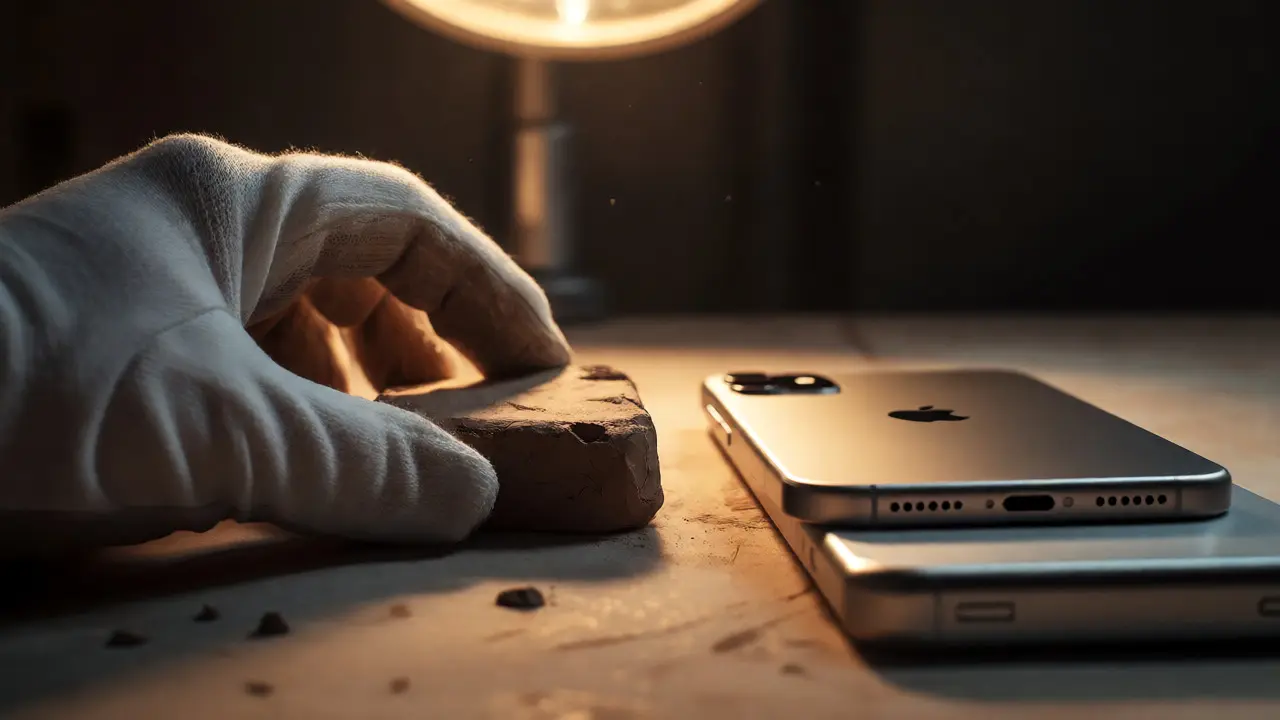
How does an idea become a product? It starts with sketches, yes, but quickly moves to physical models. Apple’s ID group is famous for its use of clay and foam. Digital tools like CAD are powerful, but they lack soul. You can’t feel weight in a digital file. You can’t smell the finish. So, designers spend hours sculpting mockups by hand.
These physical prototypes are then subjected to rigorous testing. They’re dropped, heated, cooled, and rubbed until they wear down. This phase is where the rubber meets the road. If a prototype breaks easily, it’s rejected, no matter how beautiful it looks. The goal is perfection, but practical perfection. The device must survive daily life.
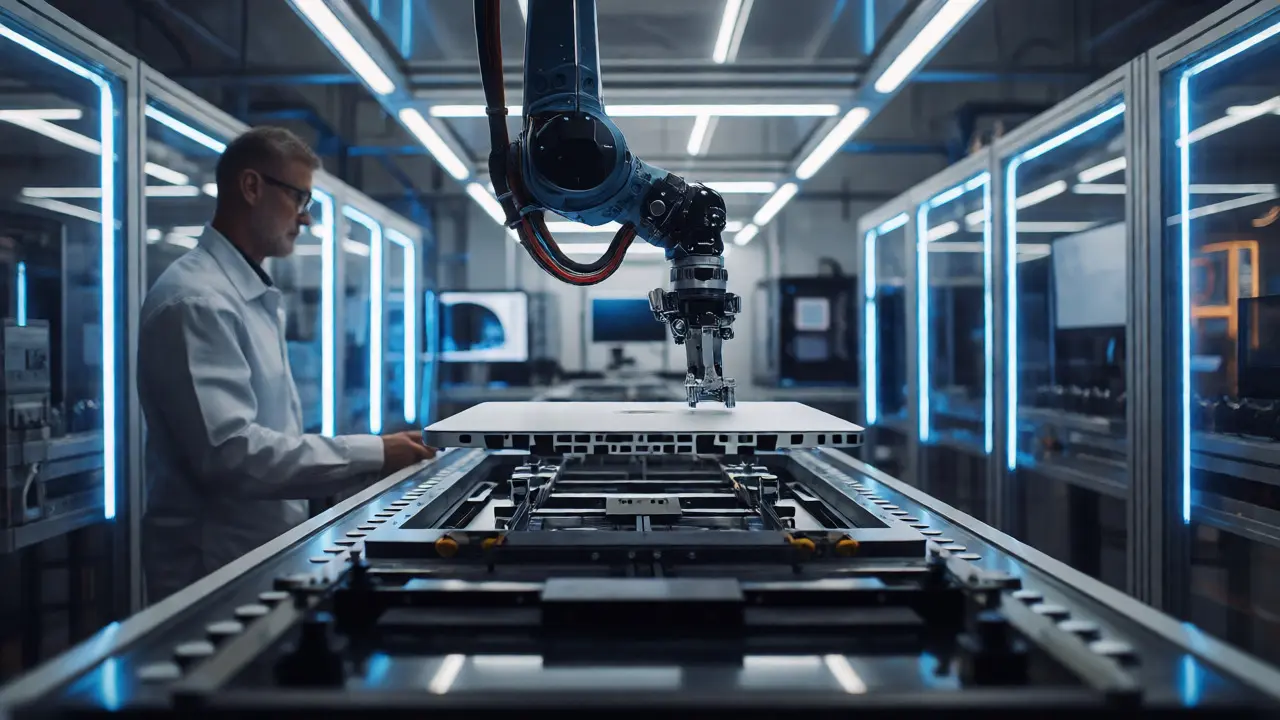
Once the design is locked, it moves to manufacturing. Here, the relationship between ID and Manufacturing is critical. Apple pushes manufacturing limits harder than almost any other consumer electronics company. They demand tolerances measured in microns. They require custom machinery built specifically for their products. This level of control ensures that the final product matches the prototype almost perfectly. When you hold an iPhone 15, you’re holding something that was fought for tooth and nail by a small group of people who refused to compromise.
Leadership Transition and Modern Challenges
When Jony Ive left Apple in 2019, many predicted the end of Apple’s design dominance. Critics argued that the company would become just another hardware manufacturer, chasing specs instead of soul. Five years later, in 2026, that hasn’t happened. Why?
Because the culture Ive built was institutionalized. It’s not dependent on one person. Evans Hankey, who took over as head of Industrial Design, has maintained the high standards while navigating new challenges. The current landscape is different. We’re seeing a shift towards sustainability and modularity. The recent push for USB-C across devices wasn’t just regulatory compliance; it was a design opportunity to simplify ports and reduce e-waste. The ID group had to rethink internal layouts to accommodate new connector standards without adding bulk.
Another challenge is the rise of AI and spatial computing. With the release of the Vision Pro, Apple entered a new category. Designing for mixed reality is fundamentally different from designing for a screen you hold in your hand. The ID group had to consider ergonomics for long-duration wear, thermal management near the eyes, and aesthetic integration with clothing. These problems don’t have existing playbooks. They required the team to innovate in real-time, proving that the culture of craft is adaptable, not rigid.
Why It Matters to You
So, why should you care about a group of designers in California? Because their work shapes how you interact with technology every day. When you unlock your phone with Face ID, the speed and reliability are partly due to the precise placement of sensors dictated by ID. When you type on a MacBook keyboard, the travel distance of the keys is a deliberate choice made after thousands of tests. When you plug in your charger, the magnetic snap of MagSafe is a sensory cue designed to reassure you that connection is secure.
This attention to micro-interactions creates trust. You trust Apple products because they feel consistent. That consistency is the output of the Industrial Design Group’s relentless pursuit of coherence. They ensure that the software, the hardware, and the packaging all speak the same language. It’s a holistic approach that few competitors have successfully replicated because it requires total vertical integration-something Apple controls from chip to case.
| Attribute | Description | Impact on Product |
|---|---|---|
| Material Integrity | Use of premium materials like aerospace-grade aluminum and ceramic shield. | Enhanced durability and perceived value. |
| Form Follows Function | Aesthetics derived strictly from utility requirements. | Clean lines and intuitive usability. |
| Radical Simplicity | Removal of non-essential elements and buttons. | Reduced cognitive load for users. |
| Tactile Precision | Meticulous tuning of button pressure and surface texture. | Satisfying physical interaction. |
Frequently Asked Questions
Who currently leads Apple’s Industrial Design team?
Since Jony Ive’s departure in 2019, Evans Hankey has served as the Vice President of Industrial Design. He has been with Apple since 1999 and played a key role in designing iconic products like the iMac G4 and the iPhone. His leadership focuses on maintaining the legacy of simplicity while adapting to new technologies like spatial computing.
Why is Apple so secretive about its design process?
Secrecy serves two main purposes: competitive advantage and creative freedom. By keeping projects confidential, Apple prevents competitors from copying features before launch. More importantly, it allows designers to explore radical ideas without external pressure or premature criticism. This "safe space" encourages risk-taking, which is essential for breakthrough innovations.
Does Apple’s design team influence software as well?
Yes, significantly. While the Software Engineering group handles code, the Industrial Design group collaborates closely with Human Interface Design. They ensure that the physical hardware complements the software interface. For example, the shape of the iPhone influences how apps are laid out, and the haptics of the Taptic Engine are tuned to match visual animations in iOS.
How does Apple handle sustainability in industrial design?
Sustainability is now a core constraint in the design process. The team actively seeks recycled materials, such as 100% recycled rare earth elements in magnets and recycled aluminum in enclosures. They also design for disassembly, making repairs easier. This shift reflects a broader corporate goal to achieve carbon neutrality across the entire supply chain by 2030.
Is the Industrial Design group separate from Engineering?
They are distinct departments but work in tight integration. Industrial Design focuses on the exterior form, materials, and user touchpoints. Engineering focuses on internal components, circuitry, and manufacturability. Conflicts often arise when design demands thinness that engineering says compromises battery life. These debates are resolved through prototyping and data-driven discussions, ensuring the final product balances beauty and function.