
Most companies scale by adding heads. Apple scales by sharpening focus. The secret sauce behind the iPhone, iPad, and Vision Pro isn't just talent; it is a specific operating model that prioritizes small, senior-heavy teams with broad decision-making authority over large, hierarchical structures. This approach allows designers to own outcomes, not just deliverables. It reduces friction between engineering and design, ensuring that what gets built matches what was envisioned. If you are trying to replicate this success in your own organization, understanding the mechanics of this model is critical.
The Core Philosophy: Fewer People, Higher Leverage
At the heart of Apple’s design strategy is a counter-intuitive belief: bigger teams create slower products. When you have twenty people working on a single feature, communication overhead explodes. Decisions take days instead of hours. In contrast, Apple’s core product teams often consist of fewer than ten key individuals. These are not junior staff filling seats; they are senior experts who understand the entire product lifecycle.
This structure relies heavily on cross-functional collaboration, where designers, engineers, and marketing specialists work side-by-side from day one rather than handing off completed assets. Because the team is small, everyone knows each other’s strengths and blind spots. A designer can walk over to an engineer’s desk and ask, "Can we make this animation smoother?" without needing a formal request ticket or a project manager to mediate. This proximity drives speed and quality simultaneously.
Structuring the Team: The Hub-and-Spoke Model
How does a company with thousands of employees maintain such tight-knit groups? They use a hub-and-spoke organizational structure. The "hub" is the central product team responsible for the core user experience. The "spokes" are specialized support functions like hardware engineering, software architecture, or supply chain logistics. The hub leads the vision, while the spokes provide deep technical execution.
This setup prevents silos. In traditional companies, design might sit in one department and engineering in another, communicating only through documentation. At Apple, the boundary is blurred. A senior industrial designer might spend three days a week in the engineering lab, watching how a hinge moves or how a battery heats up. This immersion ensures that design constraints are understood early, preventing costly redesigns later in the production cycle.
Decision Making: Consensus Through Expertise
You might wonder how decisions get made when there are so few people. The answer is expertise-based consensus. Since every member of the core team is a senior professional, their opinions carry weight. There is no need for a middle management layer to filter ideas. Instead, the group discusses options openly, weighing trade-offs based on data and user intuition.
This process requires high psychological safety. Junior employees often fear speaking up against a manager, but peers respect each other’s judgment. If a senior engineer believes a design choice will cause thermal issues, they say so directly. The discussion focuses on the problem, not the person. This directness accelerates decision-making significantly. What takes weeks in a committee-based system can happen in an afternoon at Apple.

The Role of Prototyping in Validation
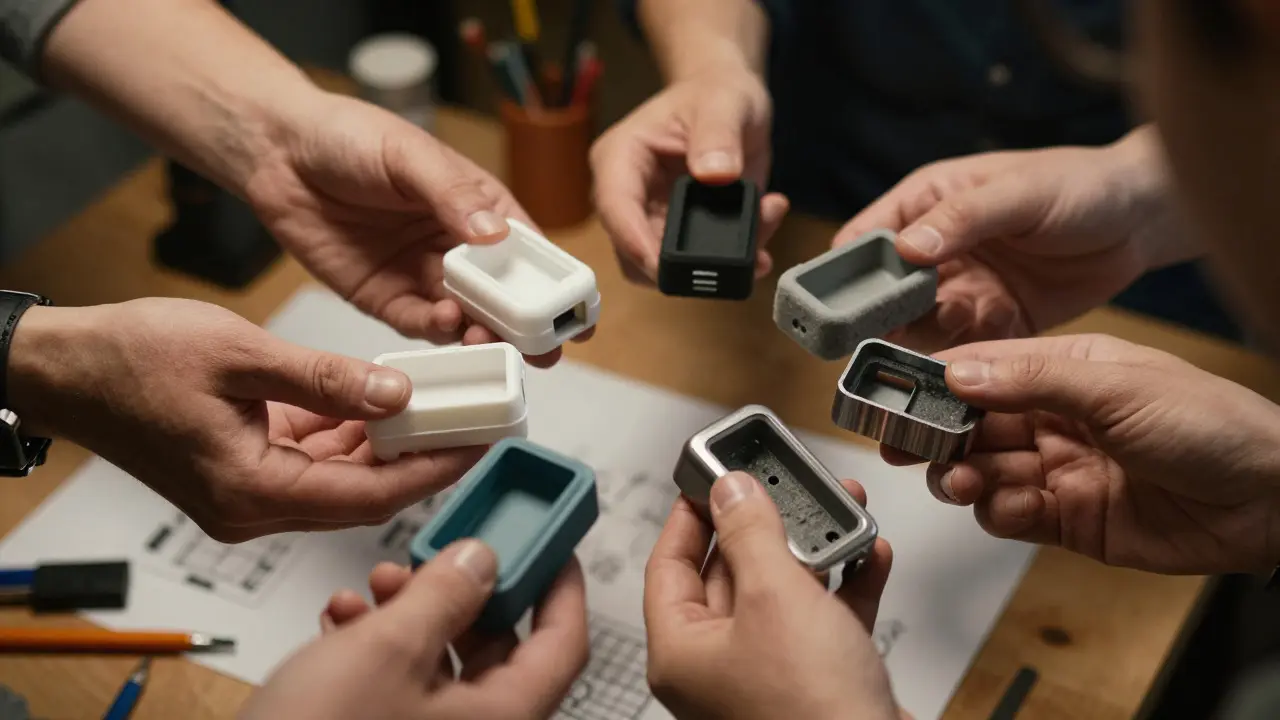
Small teams move fast because they prototype relentlessly. Before any code is written or metal is cut, the team builds physical or digital prototypes. These aren’t polished demos; they are rough, functional models used to test hypotheses. For example, before finalizing the shape of the AirPods case, the team likely tested dozens of variations for ease of opening and closing.
Prototyping serves two purposes. First, it validates user needs quickly. Second, it aligns the team internally. When everyone holds the same prototype, abstract debates about "feel" become concrete discussions about material texture or button placement. This shared reference point eliminates ambiguity and keeps the small team synchronized without lengthy meetings.
Comparing Operating Models: Why Apple Wins on Speed
To understand the impact of this model, compare it to a typical tech company structure. In many firms, a product manager defines requirements, hands them to a design team, who then hand off files to developers. Each handoff introduces delay and potential misinterpretation. By the time the developer sees the design, the original intent may be lost.
| Feature | Traditional Hierarchical Model | Apple Small Senior Team Model |
|---|---|---|
| Team Size | Large (15-30+ members) | Small (5-10 core members) |
| Communication Style | Formal documents, tickets, meetings | Direct conversation, whiteboards, prototypes |
| Decision Speed | Slow (days to weeks) | Fast (hours to days) |
| Role Definition | Siloed (Design vs. Engineering) | Cross-functional overlap |
| Error Correction | Late stage (during testing) | Early stage (during prototyping) |
The table highlights why Apple can iterate faster. Errors are caught when they are cheap to fix. Communication is continuous rather than episodic. This efficiency is not accidental; it is engineered into the operating model.
Challenges and Pitfalls of the Model
However, this model is not without risks. Relying on a handful of senior experts creates a bus factor risk. If one key person leaves, institutional knowledge walks out the door. To mitigate this, Apple invests heavily in internal documentation and pair-working practices, ensuring that no single individual is the sole owner of a critical insight.
Additionally, this model demands high hiring standards. You cannot afford to have underperformers in a small team. Every mistake has a magnified effect. Therefore, the recruitment process is rigorous, focusing not just on skills but on cultural fit and collaborative ability. Hiring for attitude as much as aptitude is essential here.
Implementing This in Your Organization
You don’t need to be Apple to adopt these principles. Start by identifying your core product teams. Are they too large? Can you reduce the number of stakeholders involved in daily decisions? Empower your senior designers and engineers to work together more closely. Reduce reliance on formal handoffs. Encourage prototyping as a primary tool for alignment, not just validation.
Finally, measure success differently. Instead of tracking hours spent or features shipped, track the speed of iteration and the reduction in post-launch bugs. If your teams are moving faster and making fewer mistakes, you are on the right path. The goal is not to copy Apple’s logo, but to adopt its operational rhythm: small, sharp, and focused.
Why does Apple prefer small teams over large ones?
Small teams reduce communication overhead and allow for faster decision-making. With fewer people, coordination is easier, and senior experts can collaborate directly without bureaucratic layers slowing down the process.
What is the role of seniority in Apple's design teams?
Seniority ensures that team members have deep expertise and can make informed decisions independently. This reduces the need for constant supervision and allows the team to operate autonomously while maintaining high quality standards.
How does cross-functional collaboration improve product quality?
By having designers and engineers work together from the start, technical constraints are considered during the creative phase. This prevents late-stage changes and ensures that the final product is both aesthetically pleasing and technically feasible.
Can small teams handle complex products like smartphones?
Yes, by using a hub-and-spoke model. The small core team handles the overall vision and user experience, while specialized larger groups handle specific technical components like battery life or camera sensors. This balances focus with depth.
What are the main risks of relying on small senior teams?
The primary risk is dependency on key individuals. If a critical expert leaves, knowledge may be lost. Organizations must mitigate this through strong documentation, knowledge sharing, and diverse skill sets within the team.