
You know that feeling when you unbox a new iPhone or Mac? It feels inevitable, like it was always meant to exist. But behind that sleek aluminum casing is a graveyard of ideas that didn’t make the cut. Apple doesn’t just guess; they manage risk with surgical precision. Their secret isn’t magic-it’s a rigorous system of experimenting, validating, and rolling out features that turns high-stakes bets into low-risk launches.
If you’re leading a product team, you probably feel the pressure. One wrong move can tank a quarter. One missed deadline can kill momentum. Apple faces these same pressures but operates at a scale where mistakes cost billions. So how do they sleep at night? By treating design not as an art project, but as a scientific experiment. This article breaks down their three-step framework so you can apply it without needing Cupertino-level resources.
The Myth of the "Big Reveal"
We love the Steve Jobs stage moments. The black turtleneck, the dramatic pause, the crowd going wild. But those reveals are the end of a marathon, not the start. Most companies fail because they try to jump straight to the reveal. They build the whole thing, launch it, and then find out users hate the interface. Apple flips this script. They assume everything will break until proven otherwise.
This mindset shifts the focus from "making it pretty" to "proving it works." In Apple’s culture, early prototypes are often ugly, clunky, and barely functional. That’s by design. If you spend three months polishing pixels on a feature nobody wants, you’ve wasted time. Instead, they strip ideas down to their core function. Does the user understand it? Do they care about it? If the answer is no, it dies in the lab, not in the App Store.
Step 1: Controlled Experimentation
Rapid Prototyping is the heartbeat of Apple’s experimentation phase. But it’s not just about sketching wireframes. It’s about building tangible artifacts that simulate the final experience. Think of the original iPod scroll wheel. Before it was plastic and metal, it was likely a crude mechanical model tested for finger fatigue. They weren’t testing aesthetics; they were testing ergonomics and interaction speed.
Here’s the key difference between Apple’s experiments and typical corporate brainstorming: specificity. A generic question like "Do people like dark mode?" yields useless data. Apple asks, "Does reducing screen brightness after sunset increase battery life perception by more than 10%?" When you define the metric first, the experiment becomes objective. You stop arguing opinions and start looking at numbers.
- Define the Hypothesis: What specific behavior are we trying to change?
- Build the Minimum Viable Artifact: Can be paper, code, or hardware.
- Test in Context: Don’t test in a sterile lab. Test in a noisy cafe or a dim bedroom.
By keeping the scope small, you reduce the cost of failure. If your prototype fails, you’ve lost two days, not six months. This psychological safety encourages teams to propose wilder ideas, knowing they’ll be killed quickly if they don’t hold up.
Step 2: Rigorous Validation Loops
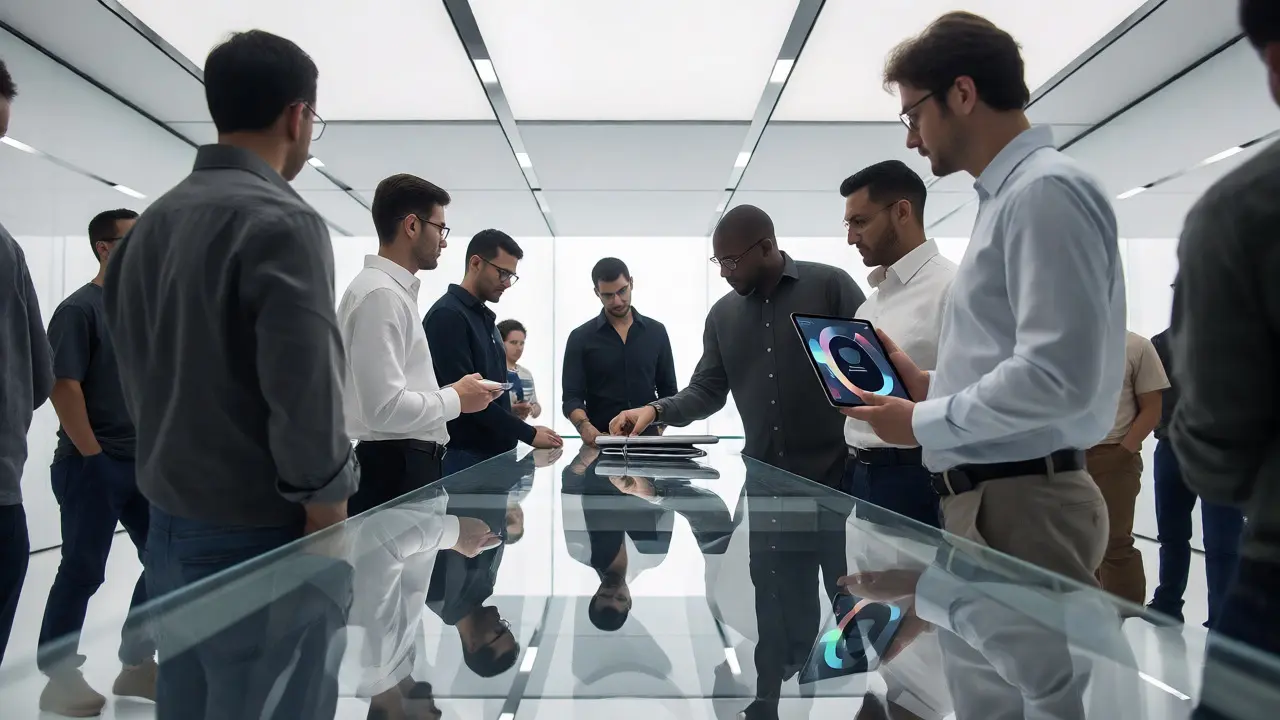
Once an idea survives the initial experiment, it enters the validation phase. This is where User Testing moves beyond simple usability checks. At Apple, validation is often internal before it’s external. Employees use beta software for weeks. Engineers carry pre-production devices everywhere. Why? Because employees are biased, but they are also highly observant.
They look for friction points that users might tolerate but secretly dislike. For example, if a button requires precise tapping every time, users might complain about accuracy. But if they tap it correctly only 80% of the time, that’s a design flaw, not a user error. Apple’s validation process digs into these subtle failures. They ask: "Why did the user hesitate here?" rather than "Did the user click?"
| Aspect | Standard Corporate Approach | Apple-Style Validation |
|---|---|---|
| Metric Focus | Click-through rates, conversion | Cognitive load, hesitation time |
| Tester Pool | External panels, surveys | Internal dogfooding + niche experts |
| Feedback Loop | Weekly reports | Daily standups with engineers/designers |
| Failure Handling | Patch post-launch | Kill feature pre-launch |
This tight feedback loop ensures that by the time real customers see the product, the obvious bugs are gone. It also protects the brand reputation. Remember the Antennagate incident on the iPhone 4? While it was a hardware issue, it highlighted the importance of validation. Since then, Apple has doubled down on stress-testing physical interactions under extreme conditions.
Step 3: Strategic Roll-Outs
Validation tells you if it works. Roll-out determines how fast you share it. Apple rarely releases everything at once. They use staged roll-outs to manage server loads, supply chain constraints, and customer support capacity. When iOS updates drop, not everyone gets them simultaneously. This isn’t just technical; it’s risk management.
If a bug appears in the first 5% of users, Apple can pull the update before it affects millions. This "canary release" strategy allows them to monitor crash logs and support tickets in real-time. If the error rate spikes above 0.1%, they halt the rollout. It’s a circuit breaker for quality.
Moreover, roll-outs serve a marketing purpose. By staggering features across device generations, Apple creates perceived value for newer models. The Dynamic Island wasn’t available on older iPhones, creating a clear upgrade path. This strategic delay manages expectations while maximizing sales.

Applying This to Your Team
You don’t need a $2 trillion market cap to copy this playbook. Start by changing how you talk about risks. Instead of asking "What could go right?", ask "What would prove this wrong?" Force your team to articulate the failure conditions before writing a single line of code.
Implement a "Kill Criteria" for every project. Define exactly what metrics must be hit to proceed to the next stage. If a prototype doesn’t improve task completion time by 15%, it doesn’t move forward. No exceptions. This removes emotional attachment from the decision-making process.
Finally, shorten your feedback loops. Move from monthly reviews to weekly check-ins. Bring engineers and designers into the same room-or Slack channel-daily. Break down silos. When validation happens continuously, you catch issues when they are cheap to fix, not when they are expensive to repair.
Common Pitfalls in Design Risk Management
Even with good intentions, teams stumble. Here are three traps to avoid:
- The Sunk Cost Fallacy: Just because you spent three months building a feature doesn’t mean you should launch it. If validation shows it’s weak, cut it. Killing a project is a success if it saves future resources.
- Vanity Metrics: Ignoring qualitative feedback because the quantitative numbers look good. Users might click the button, but if they curse while doing it, you have a problem.
- Over-Polishing Early: Spending too much time on visual design before proving functionality. Ugly prototypes are honest. Pretty ones lie.
Remember, Design Strategy is not about avoiding risk entirely. It’s about choosing which risks are worth taking. Apple takes huge risks on hardware integration and software ecosystems, but they mitigate those risks through relentless iteration.
How long does Apple typically spend on the experimentation phase?
It varies by complexity, but for major hardware features, experimentation can last 6-18 months. For software features, it might be 4-8 weeks. The key is that the timeline is dictated by validation results, not arbitrary deadlines.
Can small startups apply Apple's risk management model?
Absolutely. Small teams actually benefit more because they can iterate faster. The core principles-hypothesis-driven development, strict kill criteria, and continuous validation-are scalable. You don't need a massive lab; you need discipline.
What is the biggest mistake companies make during roll-out?
Releasing to 100% of users immediately. Without a staged roll-out, a minor bug can become a PR crisis. Always reserve a percentage of traffic for monitoring before full deployment.
How does Apple handle failed experiments?
They document the failure and archive the learnings. There is little stigma attached to killing a prototype. In fact, identifying a dead end early is celebrated as a win because it preserves resources for viable ideas.
Is user testing enough for validation?
No. User testing catches usability issues, but it doesn't catch systemic failures. Internal dogfooding (employees using the product daily) is crucial for catching edge cases and performance issues that short-term tests miss.