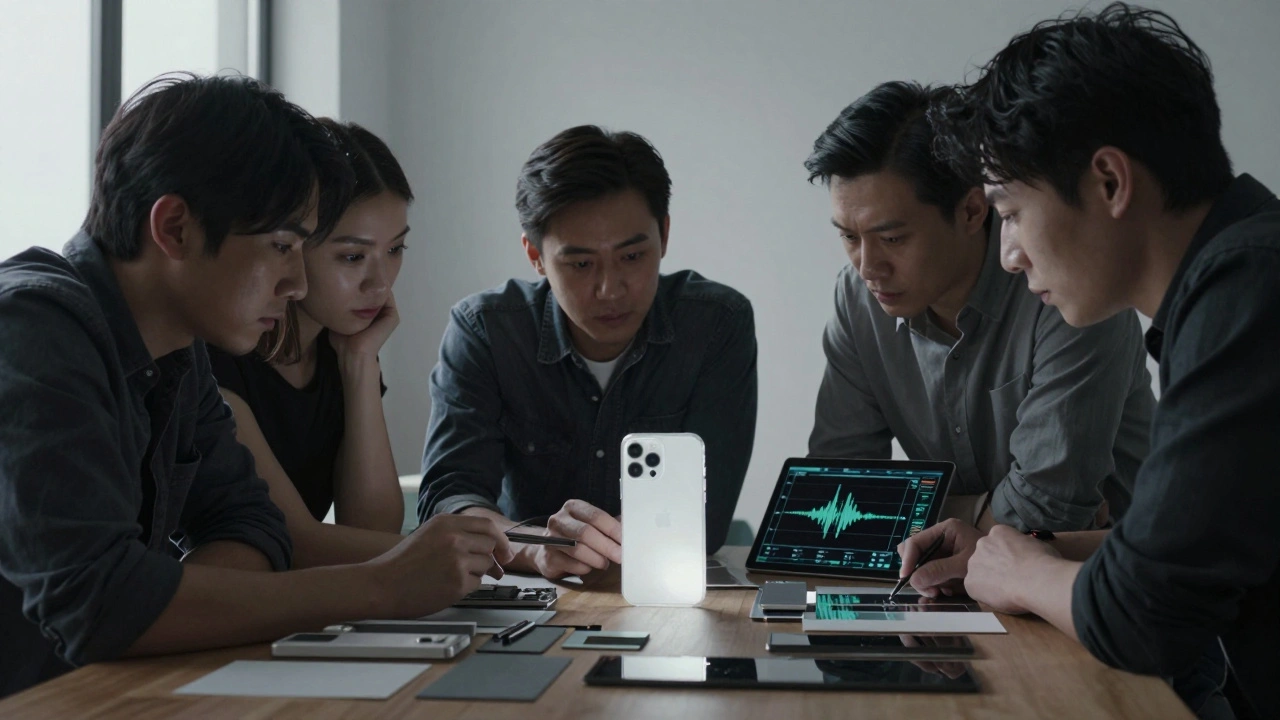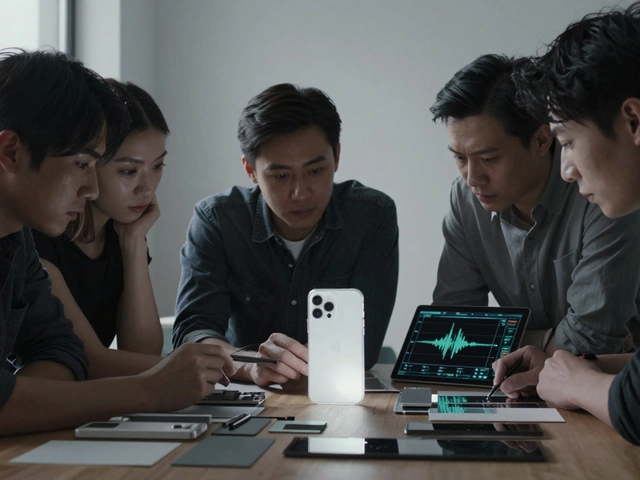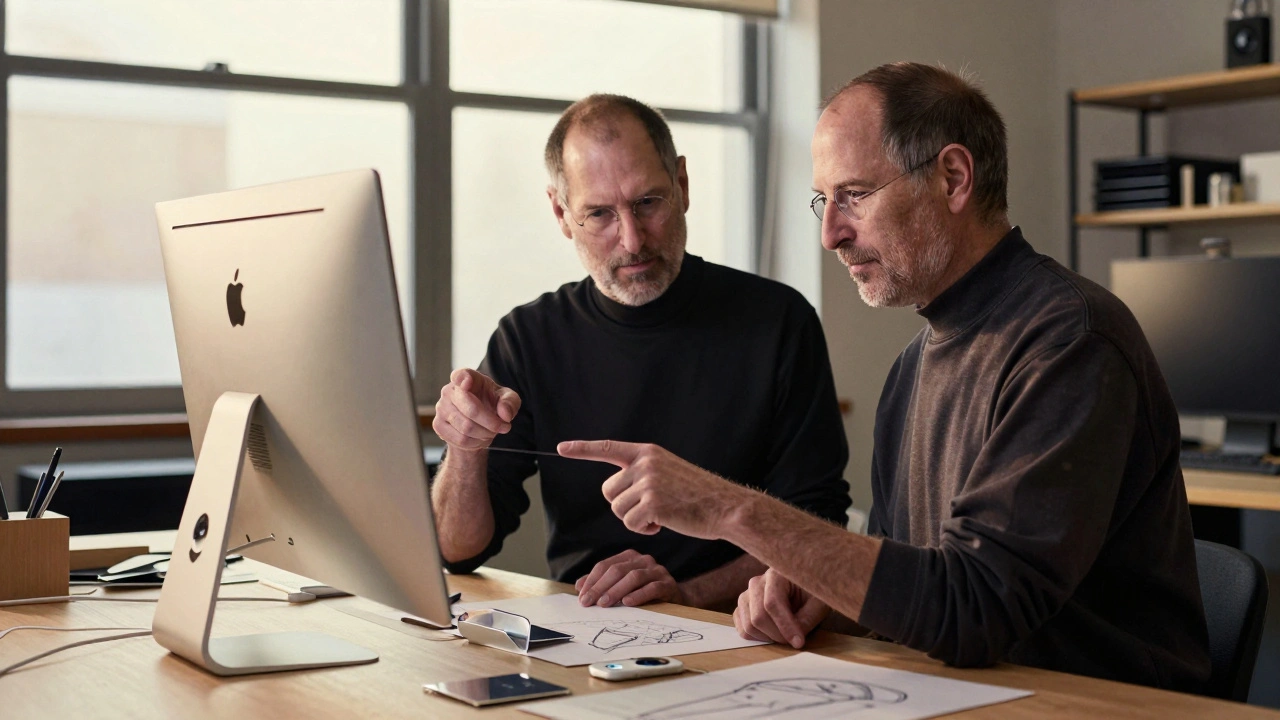

When Apple launched the original iPhone in 2007, it didn’t just introduce a new phone. It introduced a new way of thinking about technology. The screen was all glass. The buttons were gone. The edges were smooth. Every curve, every material, every detail felt intentional - not because it was trendy, but because it was designed. That wasn’t an accident. It was the result of a rare, almost mythical partnership between two people: Steve Jobs and Jony Ive.
How Jobs and Ive Built a Design Empire
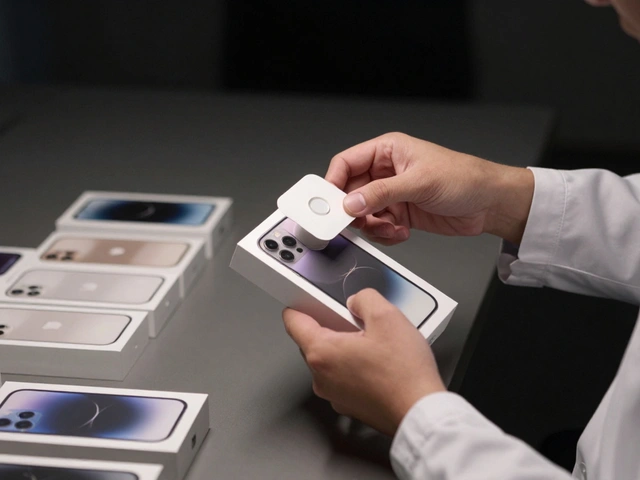
Steve Jobs didn’t hire Jony Ive to make things look pretty. He hired him to make things feel right. When Jobs returned to Apple in 1997, the company was a mess. Products were clunky, inconsistent, and disconnected. Ive, then a 29-year-old designer, was one of the few who shared Jobs’ obsession with simplicity, material, and hidden detail. Their first big win? The iMac. Not because it had powerful specs. But because it was translucent, colorful, and looked like it was alive. Jobs insisted the inside of the computer - the circuit boards, the wires - had to match the beauty of the outside. No one would see it. But they both knew: if you didn’t care about what no one saw, you didn’t care at all. Ive and Jobs didn’t just talk about design. They lived it. They spent months on the texture of a button. They argued over the weight of a cable. They flew to China for three months to oversee the anodization process of aluminum - a technique that turned dull metal into a smooth, colored surface. Jobs didn’t just approve the idea. He built a factory in China just to make sure the color stayed perfect. That’s not leadership. That’s devotion. The iPod changed everything. Ive wanted it to be pure white - not just the device, but the headphones, the charger, even the packaging. Jobs didn’t hesitate. He got it immediately. That white wasn’t just a color. It was a promise: every part of the experience would be controlled, polished, and unified. The unboxing? That wasn’t packaging. It was theater. A ritual. Every fold, every layer, every click of the lid was designed to make you feel like you were opening something sacred. Their partnership worked because Jobs wasn’t just a boss. He was the filter. When Ive’s team first showed the multi-touch interface for the iPhone, Ive was terrified. He told biographer Walter Isaacson: "I realized that if he pissed on this, it would be so sad." Jobs didn’t just say yes. He pushed it further. He demanded the screen be glass, not plastic. He wanted the home button to be a perfect circle. He didn’t care how hard it was. He cared how right it felt.The Cost of Perfection
But perfection came with consequences. The iPhone 4’s stainless steel band wasn’t just for looks. It was meant to be the antenna. Engineers warned: this would kill signal strength. Jobs and Ive didn’t listen. They believed the design was more important than the compromise. The result? "AntennaGate." Users held the phone wrong, lost signal, and complained. Apple responded with a free case. But the damage was done. It showed that even the best design leadership can blind itself to reality. When taste overrides engineering, you don’t just risk a flaw - you risk trust.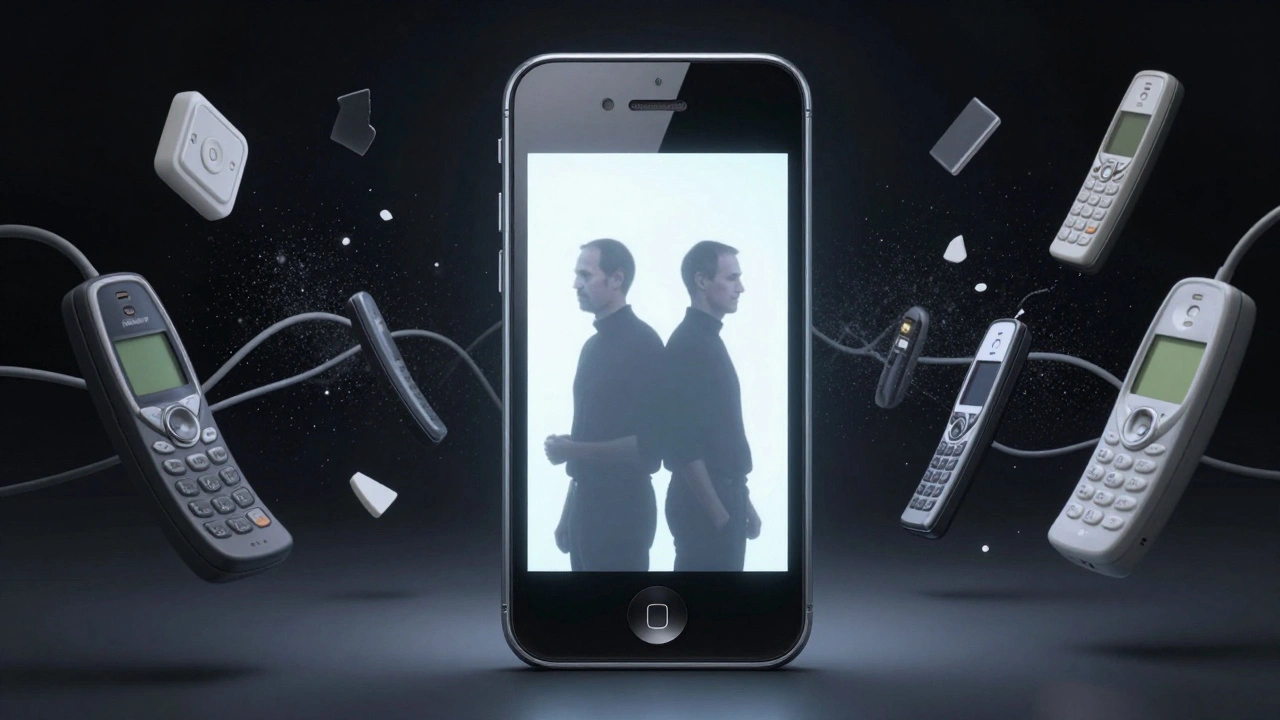
What Happened When Jobs Left?
Steve Jobs died in October 2011. The company didn’t collapse. But something fundamental shifted. Jony Ive stayed. He became Chief Design Officer. He still reported directly to the CEO. But without Jobs, the filter was gone. There was no one who could look at a design and say, "That’s not Apple," and mean it. No one who could force a team to rebuild an entire phone because the button didn’t feel right. Ive kept pushing. The Apple Watch. The MacBook Pro with the Touch Bar. The removal of ports. Each product carried his signature: clean, minimal, almost cold. But the magic? It was fading. Without Jobs’ brutal honesty, without his instinct for what mattered, the design process became slower. More meetings. More reviews. More compromise.The Big Shift: When Ive Left
In 2019, Jony Ive walked away. Not to retire. Not to slow down. He left to start his own design firm, LoveFrom, focused on everything from AI devices to architecture. His departure wasn’t just a resignation. It was the end of an era. Apple’s design team, once the most powerful unit in the company, no longer reported to the CEO. It now reported to the Chief Operating Officer - the same person who managed supply chains, factories, and logistics. That change wasn’t subtle. It was structural. Before, design was a driving force. After, it became a function. A department. A cost center. Designers no longer sat in the room where the biggest decisions were made. They were asked to execute, not to lead. Industry watchers noticed. John Gruber wrote: "When Jobs was at the helm, all design decisions were going through someone with great taste. Not perfect taste, but great taste. But the other part of what made Jobs such a great leader is that he could recognize bad decisions, sooner rather than later, and get them fixed." Today, Apple still releases beautiful products. The iPhone 15. The AirPods Pro 3. The Vision Pro. They’re polished. They’re expensive. They sell well. But do they feel like Apple? Or do they feel like a company that’s lost its north star?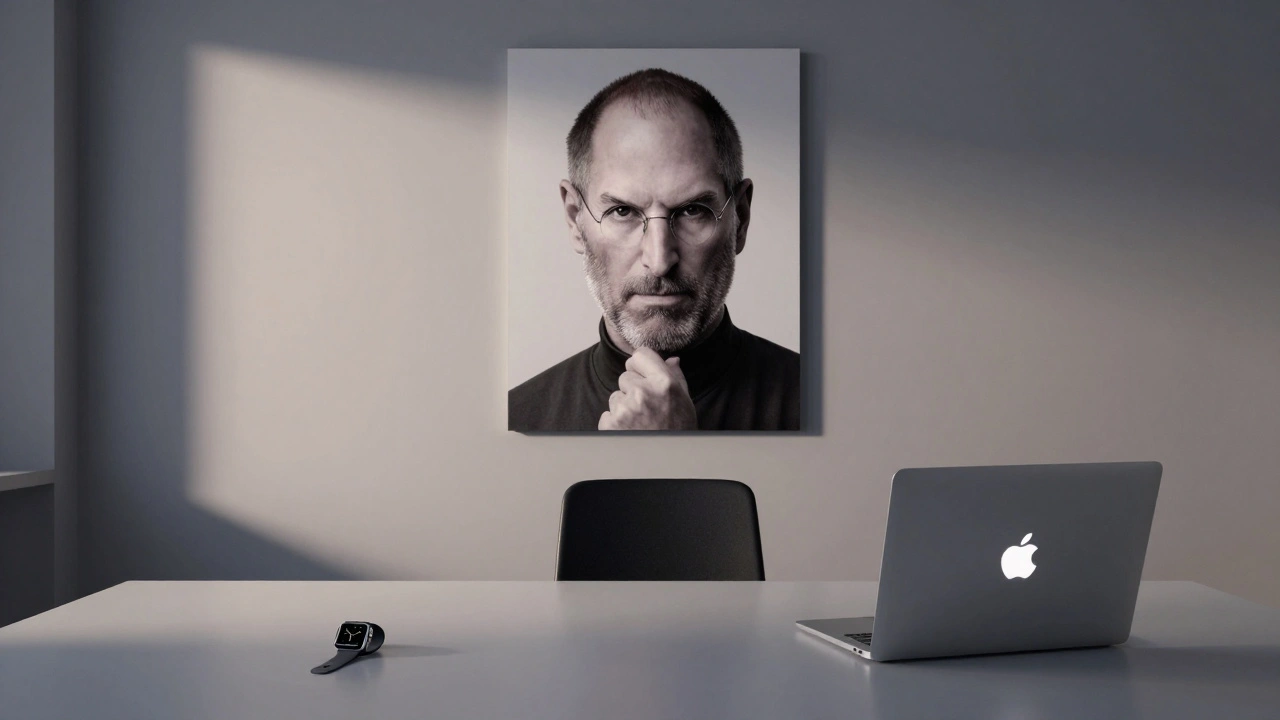
Who Leads Design at Apple Now?
The current design team is led by Evans Hankey and Alan Dye. Hankey oversees hardware design. Dye leads human interface and software. They’re both experienced. They’ve worked at Apple for decades. But they don’t have the same authority. They don’t have the same voice. They don’t have the same power to stop a product, rebuild it, and force engineers to start over. Apple’s design process now follows a more traditional corporate model. Teams propose. Managers review. Executives approve. Budgets are tracked. Timelines are locked. It’s efficient. It’s safe. But it’s not revolutionary. Compare that to the Jobs-Ive era. No budget limits. No timelines. No meetings. Just two people who believed that if you didn’t make something perfect, you shouldn’t make it at all. That’s not a design philosophy. That’s a religion.What’s Lost - and What’s Still Possible
Apple hasn’t failed. It’s still the most valuable company in the world. But it’s no longer the most daring. The products today are incremental improvements, not leaps forward. The iPad Pro doesn’t feel like a revolution. The MacBook Air doesn’t feel like a revelation. They’re good. But they’re not unforgettable. The real question isn’t whether Apple can still make beautiful products. It’s whether it can still make products that change the world. Ive didn’t leave because he was tired. He left because he wanted to build something new. In 2024, he co-founded io - a startup focused on AI-native devices. Not smartphones. Not tablets. Not wearables. But devices that think differently. That learn. That adapt. That don’t need buttons or screens. That’s the kind of design Apple used to chase. Now, it’s happening outside its walls. Apple’s design leadership today is competent. But it’s not courageous. It’s consistent. But it’s not iconic. The structure is stable. The process is predictable. And that’s the tragedy. Because the most powerful design isn’t born from流程, but from obsession. Not from committees, but from conviction. The next great Apple product won’t come from a slide deck. It won’t come from a budget meeting. It will come from someone who refuses to settle. Who sees a flaw no one else does. Who cares more about the inside than the outside. Who believes that if you’re going to make something, you have to make it perfect - even if no one else notices. That person doesn’t work at Apple anymore.Did Steve Jobs really design Apple products?
Steve Jobs didn’t sketch the first iPhone or draw the iMac. But he didn’t need to. He was the ultimate design filter. He knew what felt right and what felt wrong. He pushed teams to remove buttons, shrink screens, and rethink materials. He made decisions based on emotion, not data. He didn’t design the products - he shaped the vision, demanded perfection, and refused to compromise. His role was more powerful than any designer’s.
Why did Jony Ive leave Apple?
Jony Ive left Apple in 2019 because he felt the company’s design culture had changed. Without Steve Jobs as his direct partner and champion, he no longer had the freedom to push radical ideas. The design team lost its direct line to the CEO and became part of a larger operations chain. Ive wanted to build things without corporate constraints - so he founded LoveFrom, and later io, to focus on AI-native devices beyond hardware.
Is Apple’s design still as good as it used to be?
Apple’s products are still beautifully made. The materials, finishes, and attention to detail are top-tier. But the spirit of innovation has changed. Earlier products like the iPod, iPhone, and iPad changed entire industries. Recent products improve on existing ideas - thinner, faster, better battery life. But they rarely redefine what’s possible. The magic isn’t gone - it’s just quieter.
What made the Jobs-Ive partnership so powerful?
Jobs and Ive shared a single belief: that design wasn’t about appearance - it was about feeling. They both cared about the weight of a button, the sound of a click, the texture of a surface. Jobs gave Ive the freedom to explore. Ive gave Jobs the courage to believe in the impossible. They didn’t just collaborate - they co-created. Their trust was absolute. Their standards were extreme. And together, they built the most influential design legacy in tech history.
Can Apple recover its design leadership?
It’s possible - but only if Apple relearns how to trust its designers again. Right now, design is managed, not led. To return to greatness, Apple needs someone with the authority to say "no" to executives, "yes" to risk, and "redo" to perfection. It needs a leader who cares more about the hidden details than the quarterly report. Until then, Apple’s best designs will likely come from outside its walls.