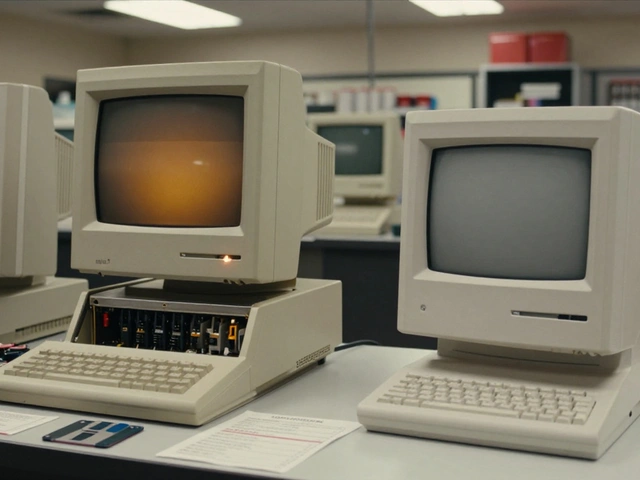

Most companies try to win by being better. They chase specs, cut prices, or add features until their roadmap looks like a shopping list for a robot. Apple is a technology company that differentiates through integrated design and ecosystem control rather than raw specification competition. The result? People don’t just buy an iPhone; they buy into a system where everything talks to everything else, and the friction of switching feels higher than the cost of staying. This isn’t magic. It’s a deliberate playbook of differentiation by design that turns hardware into a gateway for services and software.
The Core Philosophy: Integration Over Isolation
Think about the last time you tried to set up a new Android phone versus a new iPhone. On Android, you’re often downloading third-party launchers, adjusting notification settings, and wondering why your watch doesn’t sync perfectly with your laptop. With Apple, you hold two devices near each other, tap "Set Up," and you’re done. This seamless flow is the first pillar of their strategy: vertical integration. By controlling both the hardware (the body) and the software (the brain), Apple removes the chaos that plagues fragmented ecosystems.
This control allows them to optimize performance in ways competitors can’t match. When Apple designs its own chips, like the M-series processors, they aren’t just making faster computers. They are designing silicon specifically for macOS and iOS workloads. A standard Intel chip has to handle millions of different configurations across thousands of laptops. An Apple Silicon chip knows exactly what it will run. This specificity leads to better battery life and thermal management, which users feel every single day. It’s not about having the highest benchmark score; it’s about the device feeling responsive when you open an email at 3 PM on a Tuesday.
Hardware as a Service Gateway
Here’s where most tech analysts miss the point. Apple’s hardware margins are high, yes, but the real profit engine is the ecosystem lock-in. When you buy an iPad, you aren’t just buying a tablet. You’re buying access to a world where your notes appear instantly on your Mac, your photos sync without you thinking about it, and your AirDrop works flawlessly between devices. This convenience creates a "moat" around the customer.
Consider the transition from a standalone MP3 player to the iPod. Initially, it was a gadget. But paired with iTunes, it became a service platform. Today, the iPhone is the remote control for the Apple ecosystem. If you have AirPods, an Apple Watch, and a MacBook, leaving the ecosystem means losing continuity. You’d lose Handoff, Universal Control, and the effortless pairing of accessories. This isn’t forced by DRM alone; it’s earned through utility. The more devices you own, the harder it becomes to justify the switch because the cumulative value of integration outweighs the novelty of a competitor’s latest feature.
| Strategy Component | Traditional Tech Approach | Apple’s Playbook |
|---|---|---|
| Primary Value Prop | Best Specs / Lowest Price | Seamless Experience / Ecosystem Utility |
| Software Model | Open / Fragmented / Ad-Supported | Closed / Integrated / Privacy-Centric |
| Customer Retention | Based on Contract Renewal | Based on Data Continuity & Workflow |
| Innovation Focus | Incremental Feature Addition | Refinement & Removal of Friction |
Minimalism as a Competitive Weapon
Have you ever noticed how few buttons are on an Apple product? Or how the packaging feels like unwrapping a gift rather than unpacking electronics? This is minimalism weaponized. In a market screaming for attention with RGB lighting and aggressive gaming aesthetics, Apple whispers. They remove clutter-both physical and digital. The removal of the headphone jack wasn’t just about saving space; it was a bet on wireless audio quality and simplicity. Critics mocked it, but the market followed. Why? Because once you adapt to the simplicity, going back to tangled wires feels archaic.
This philosophy extends to the user interface. iOS updates rarely introduce radical changes that confuse long-time users. Instead, they refine gestures, improve animation smoothness, and enhance accessibility. This consistency builds trust. Users know that their muscle memory won’t be reset every year. Compare this to some Android skins that change navigation patterns with every major OS update, forcing users to relearn basic interactions. Apple bets on stability over novelty, knowing that reliability is a form of luxury.
The Role of Retail and Brand Narrative
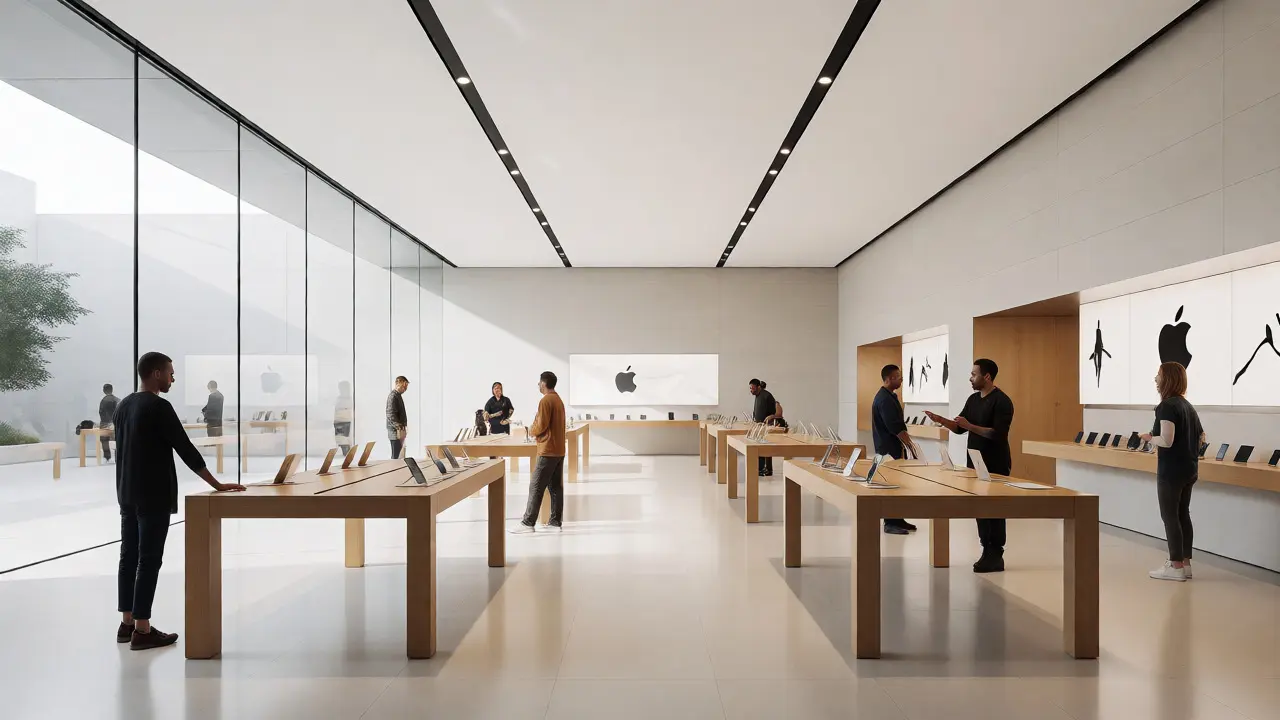
You can’t talk about Apple’s design strategy without mentioning its stores. The Apple Store is a retail environment designed to educate and demonstrate product usage rather than just transact sales. These aren’t just shops; they are living showrooms where the barrier to entry is lowered. Staff are trained to solve problems, not just push inventory. The Genius Bar turns repair-a typically stressful event-into a consultation.
This physical presence reinforces the digital promise. When you walk into an Apple Store, the air conditioning, the lighting, and the spacing of products all signal premium care. It aligns the physical experience with the digital one. If the app store were chaotic and buggy, but the stores were pristine, there would be cognitive dissonance. By keeping both aligned, Apple creates a cohesive brand narrative: "We care about the details so you don’t have to." This emotional connection drives brand loyalty far beyond what spec sheets can achieve.
Pitfalls and Risks of the Closed Loop
Is this strategy perfect? Hardly. The closed loop comes with significant risks. First, antitrust scrutiny is intensifying globally. Regulators in the EU and US are questioning whether Apple’s control over the App Store and default apps stifles competition. The Digital Markets Act in Europe is already forcing changes, allowing sideloading and alternative payment methods. This threatens the revenue stream that funds their R&D.
Second, innovation fatigue is real. When you rely on refinement, you eventually hit diminishing returns. Critics argue that recent iPhone models lack groundbreaking leaps. If a competitor offers a foldable screen or superior camera hardware at a lower price, does the ecosystem moat hold? For many power users, the answer might be no. The strategy assumes that convenience trumps capability. But if the gap in capability widens too much, the convenience premium may vanish.
Key Takeaways for Your Strategy
- Control the Stack: Don’t outsource core experiences. If your product relies on third-party integrations that break frequently, consider bringing key components in-house to ensure reliability.
- Sell Continuity, Not Just Features: Highlight how your product makes the user’s existing workflow easier, not just what it can do in isolation.
- Embrace Subtraction: Ask what you can remove. Less clutter often equals higher perceived value and ease of use.
- Align Physical and Digital: Ensure your customer support and retail experience match the polish of your software. One weak link breaks the chain.
Why is Apple’s design strategy considered a competitive advantage?
Apple’s advantage lies in vertical integration. By controlling hardware, software, and services, they create a seamless user experience that competitors struggle to replicate due to fragmentation. This reduces friction for the user, increasing retention and lifetime value.
How does the Apple ecosystem affect customer switching costs?
Switching costs are high because data and workflows are deeply intertwined across devices. Features like Handoff, iMessage, and iCloud sync mean that moving to Android requires rebuilding these connections, which is often more inconvenient than the potential benefits of switching.
Does Apple focus on hardware specifications?
Not primarily. While Apple uses high-end specs, their marketing focuses on real-world performance, battery life, and user experience. They prioritize optimization over raw numbers, ensuring devices perform well for specific tasks rather than just winning benchmark tests.
What role does privacy play in Apple’s differentiation?
Privacy is a core differentiator. Apple markets itself as a guardian of user data, contrasting with ad-driven business models. Features like App Tracking Transparency give users control, building trust that translates into brand loyalty, especially among privacy-conscious consumers.
Can other companies copy Apple’s strategy?
It’s difficult. Copying the aesthetic is easy, but replicating the deep vertical integration and brand trust takes years. Companies like Samsung and Huawei attempt this, but they often lack the same level of unified software-hardware control or global brand perception that Apple enjoys.