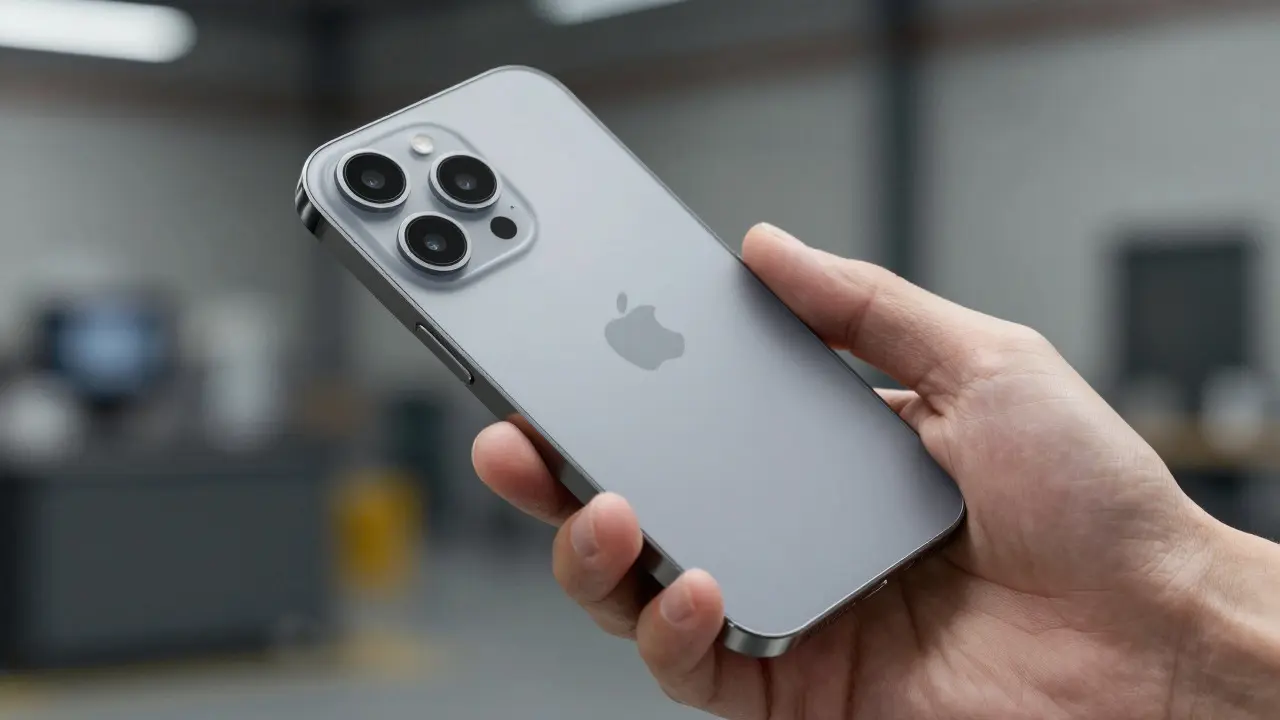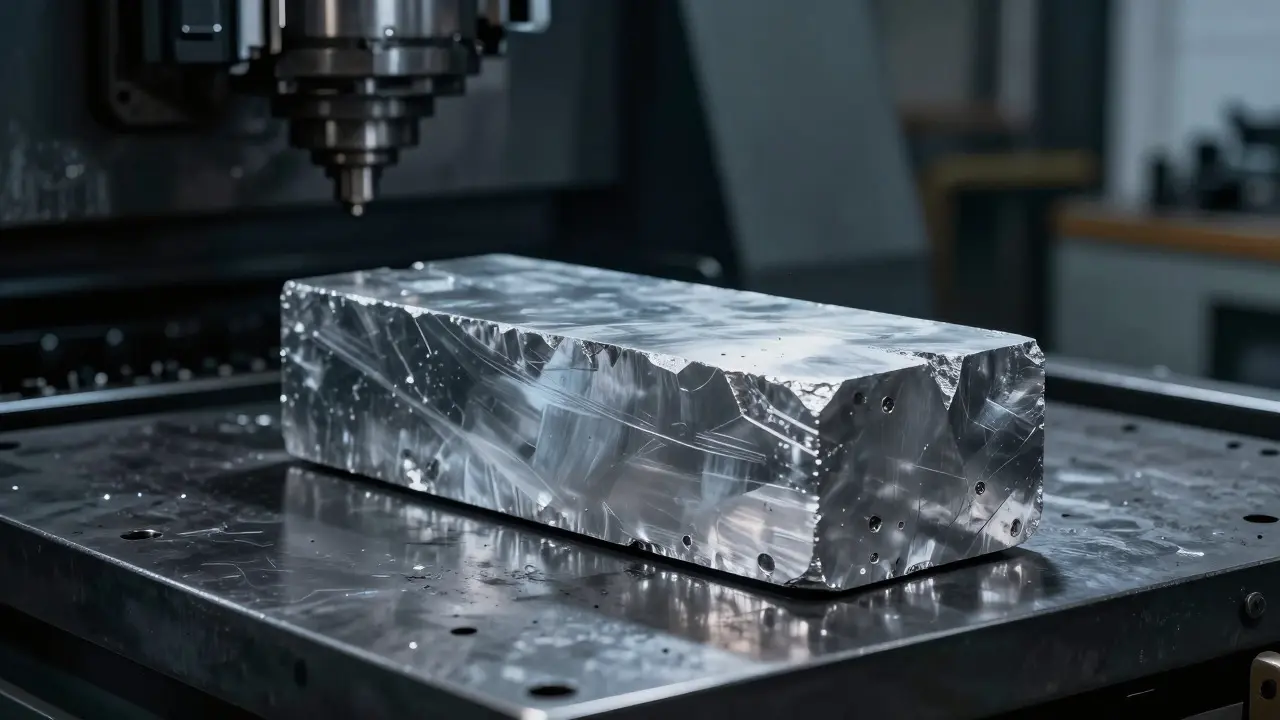

When you hold a modern MacBook, you’re not just holding a computer. You’re holding a solid block of metal that was carved down to specific thicknesses with laser-like precision. This shift from plastic and composite materials to the Aluminum Unibody is a single-piece enclosure milled from a solid aluminum billet using CNC machining. It wasn’t just a material swap; it was a fundamental change in how consumer electronics are built.
The story starts in 2008. Before that, laptops were often assembled from multiple parts-plastic shells, metal frames, and glued components. They felt fragile. They creaked when you opened them. Then Apple introduced the first-generation MacBook Pro with the unibody chassis. Suddenly, the laptop felt like a tool, not a toy. It signaled that Industrial Design is the process of developing new physical products for mass production, focusing on function, usability, and aesthetics. For Apple, this meant marrying form and function so tightly that the manufacturing process itself became part of the brand identity.
The Birth of the Unibody Concept
To understand why this mattered, you have to look at the problem Apple was solving. In the mid-2000s, the standard laptop construction involved joining separate pieces together. This created seams. Seams let dust in. Seams allowed flex. And most importantly, seams looked cheap. Jony Ive, Apple’s former Chief Design Officer, wanted a device that felt monolithic. He wanted the user to feel that the machine was one continuous object.
The solution was the unibody. Instead of assembling parts, engineers took a large block of 6061-T6 Aluminum is an alloy known for its high strength-to-weight ratio and excellent machinability, widely used in aerospace and automotive industries. They ran it through massive machines that shaved away up to 90% of the material to create the final shape. The result was a chassis with no visible screws, no plastic inserts, and minimal gaps between panels. It was a bold bet on manufacturing capability over assembly speed.
CNC Milling: The Heart of Precision
You can’t make a unibody with hand tools or standard stamping presses. You need CNC Milling is a subtractive manufacturing process where computer-controlled cutting tools remove material from a workpiece to create a desired geometry. Specifically, Apple relied on five-axis machining. Unlike traditional three-axis machines that move left/right, forward/back, and up/down, five-axis machines can tilt the cutting head. This allows the tool to reach complex angles inside the laptop chassis without flipping the part over repeatedly.
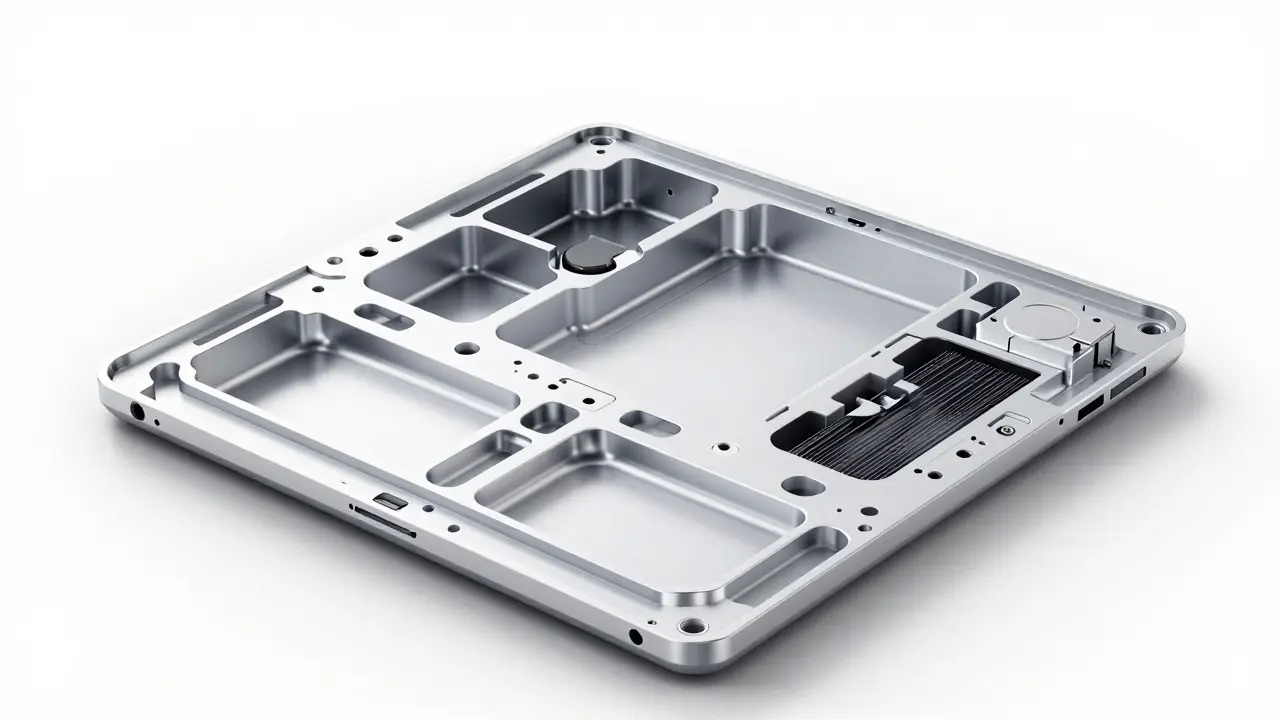
This technology was critical for the internal layout. The space inside a thin laptop is incredibly tight. The keyboard, trackpad, battery, and cooling system all had to fit into a shell that was only a few millimeters thick. Five-axis milling allowed engineers to carve out precise pockets for these components while keeping the outer surface smooth and seamless. Every curve, every button indentation, and every port opening was cut directly into the metal. This level of detail required Computer-Aided Manufacturing (CAM) software to translate digital designs into machine instructions with micron-level accuracy.
Material Science and Thermal Management
Why aluminum? Why not magnesium or titanium? Titanium is lighter but much harder to machine, making it prohibitively expensive for consumer devices. Magnesium is light but prone to corrosion and lacks the structural rigidity needed for a premium feel. Aluminum struck the perfect balance. It dissipates heat naturally, which is crucial for a laptop housing powerful processors. By making the entire body a single piece of metal, Apple turned the chassis into a passive heatsink. Heat generated by the CPU could travel through the aluminum structure, spreading out and cooling down without relying solely on fans.
This thermal advantage changed how engineers designed the internals. They didn’t need as many thermal pads or complex vapor chambers in the early models because the body itself helped manage temperature. However, this also presented challenges. Metal conducts electricity, so every internal component had to be carefully insulated to prevent short circuits. Grounding the chassis became a critical safety feature, ensuring that any static charge would flow safely to earth rather than through the user’s finger.
Quality Control and Tolerances
Precision manufacturing isn’t just about cutting metal; it’s about consistency. If one laptop has a gap of 0.5mm between the screen and the base, and the next has a gap of 1.5mm, the product feels inconsistent. Apple demanded tolerances measured in microns. A micron is one-millionth of a meter. To achieve this, factories used advanced metrology tools like Coordinate Measuring Machines (CMMs). These robotic arms touch the surface of the finished part at thousands of points to verify that every dimension matches the digital model exactly.
This level of scrutiny extended to the surface finish. After milling, the aluminum surface was anodized. Anodizing is an electrochemical process that converts the metal surface into a durable, corrosion-resistant layer. It also allows for color application. The famous silver, gold, and space gray finishes aren’t paint; they are dyes absorbed into the oxide layer during anodizing. This means the color doesn’t chip or peel like paint would. It becomes part of the metal. This durability reinforced the perception of quality. When a customer drops a MacBook, it might dent, but the finish usually survives. That small detail builds trust in the product’s longevity.
Economic Implications of Complexity
There is a cost to this approach. Milling away 90% of a metal block sounds wasteful. It is. But Apple calculated that the value proposition justified the waste. The unibody reduced the number of parts in the assembly line. Fewer parts mean fewer suppliers, less inventory management, and fewer opportunities for assembly errors. It also simplified repair in some ways, though it made unauthorized repairs harder due to the integrated nature of the design.
From a supply chain perspective, this strategy gave Apple significant leverage. By owning the design and specifying exact manufacturing processes, they controlled the quality end-to-end. Competitors who tried to copy the look often struggled to match the fit and finish because they lacked the same investment in five-axis machining infrastructure. The barrier to entry wasn’t just the idea; it was the capital expenditure required to build the factory floor capable of executing it.
Legacy and Evolution
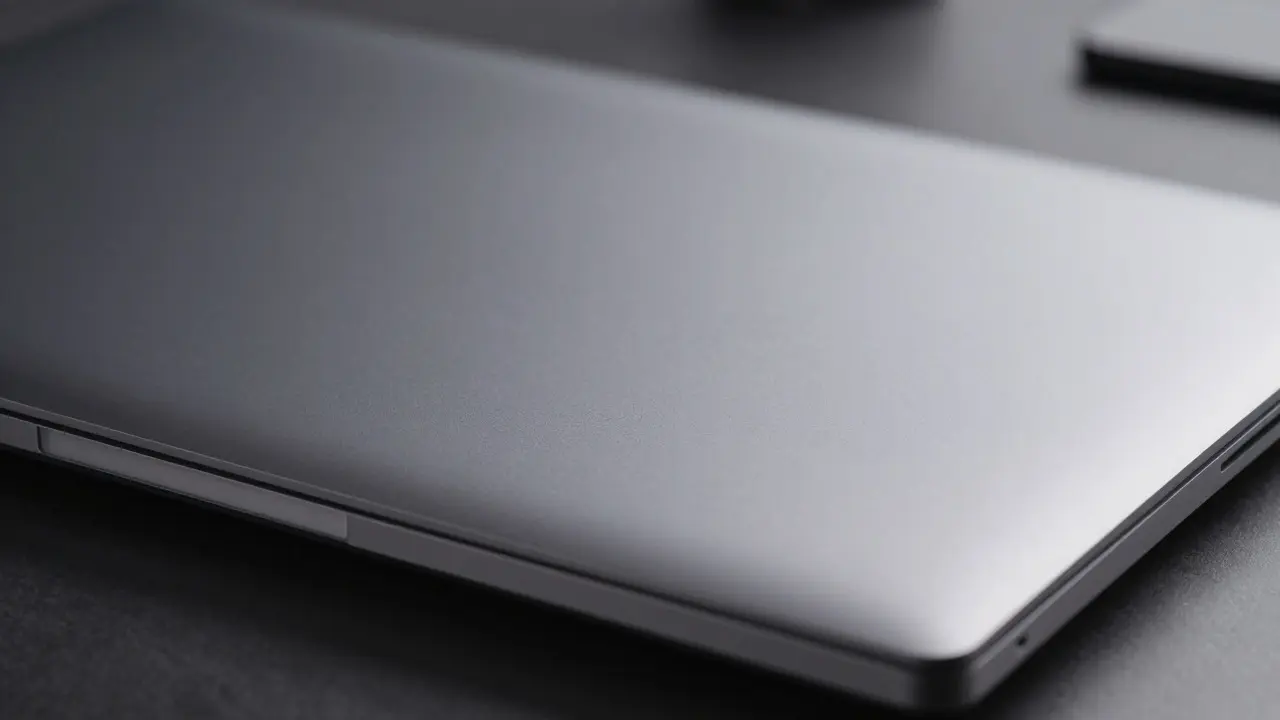
The unibody design set the standard for the industry. Even competitors who use different materials now aim for that seamless, rigid aesthetic. The influence extends beyond laptops. Smartphones, tablets, and even wearables have adopted similar principles of integrated, high-precision manufacturing. The lesson from Apple’s turn to aluminum is clear: in consumer technology, the manufacturing process is not just a backend operation. It is a core component of the user experience. When the engineering is invisible, the design speaks louder.
Today, as we look at newer devices, we see the evolution of this philosophy. Thinner bezels, stronger alloys, and more efficient cooling systems all trace their lineage back to that first 2008 MacBook Pro. The unibody wasn’t just a box; it was a statement that precision matters. It proved that if you control the atoms, you control the impression.
| Attribute | Plastic Composite | Magnesium Alloy | Aluminum Unibody |
|---|---|---|---|
| Weight | Lightest | Very Light | Moderate |
| Rigidity | Low (flexes easily) | High | Very High |
| Thermal Conductivity | Poor | Moderate | Excellent |
| Manufacturing Cost | Low | Medium | High |
| Aesthetic Perception | Consumer/Utility | Tech/Performance | Premium/Luxury |
Frequently Asked Questions
What is a unibody chassis?
A unibody chassis is a single-piece enclosure for a device, typically milled from a solid block of metal. Unlike traditional designs that use multiple joined parts, a unibody eliminates seams and fasteners, resulting in a more rigid and aesthetically clean structure.
Why did Apple choose aluminum over other metals?
Apple chose aluminum because it offers the best balance of weight, strength, machinability, and thermal conductivity. While titanium is stronger, it is too hard to machine economically. Magnesium is lighter but less rigid and more prone to corrosion. Aluminum allows for high-precision milling and effective heat dissipation.
How does CNC milling work in laptop manufacturing?
CNC milling uses computer-controlled rotating cutters to remove material from a solid aluminum billet. Five-axis machines allow the cutter to approach the workpiece from multiple angles, enabling the creation of complex internal cavities and external curves with micron-level precision.
Is the aluminum anodized or painted?
The aluminum is anodized, not painted. Anodizing creates a hard, porous oxide layer on the surface that is then dyed. This makes the color integral to the metal, providing superior resistance to chipping, scratching, and fading compared to traditional paint finishes.
Does the unibody design make repairs more difficult?
Generally, yes. Because the chassis is a single piece, accessing internal components often requires removing the entire bottom case or disassembling the whole unit. This contrasts with multi-part designs where specific panels can be removed independently. However, this trade-off contributes to the device's overall rigidity and premium feel.
What role does thermal management play in the unibody design?
The aluminum body acts as a passive heatsink. Heat generated by the processor travels through the metal chassis, distributing warmth across a larger surface area. This reduces reliance on active cooling fans and helps maintain stable performance levels during intensive tasks.