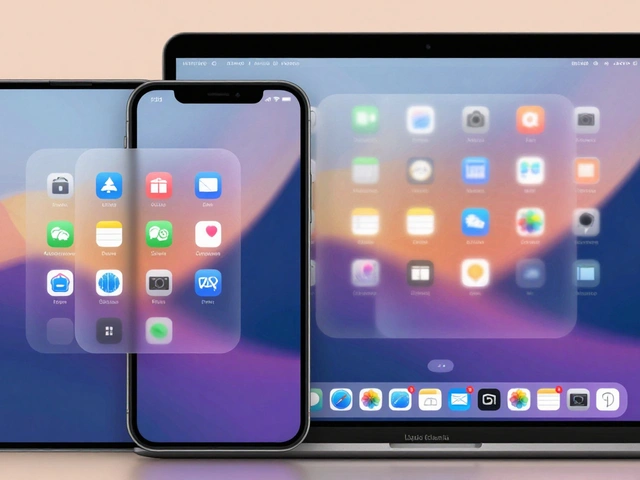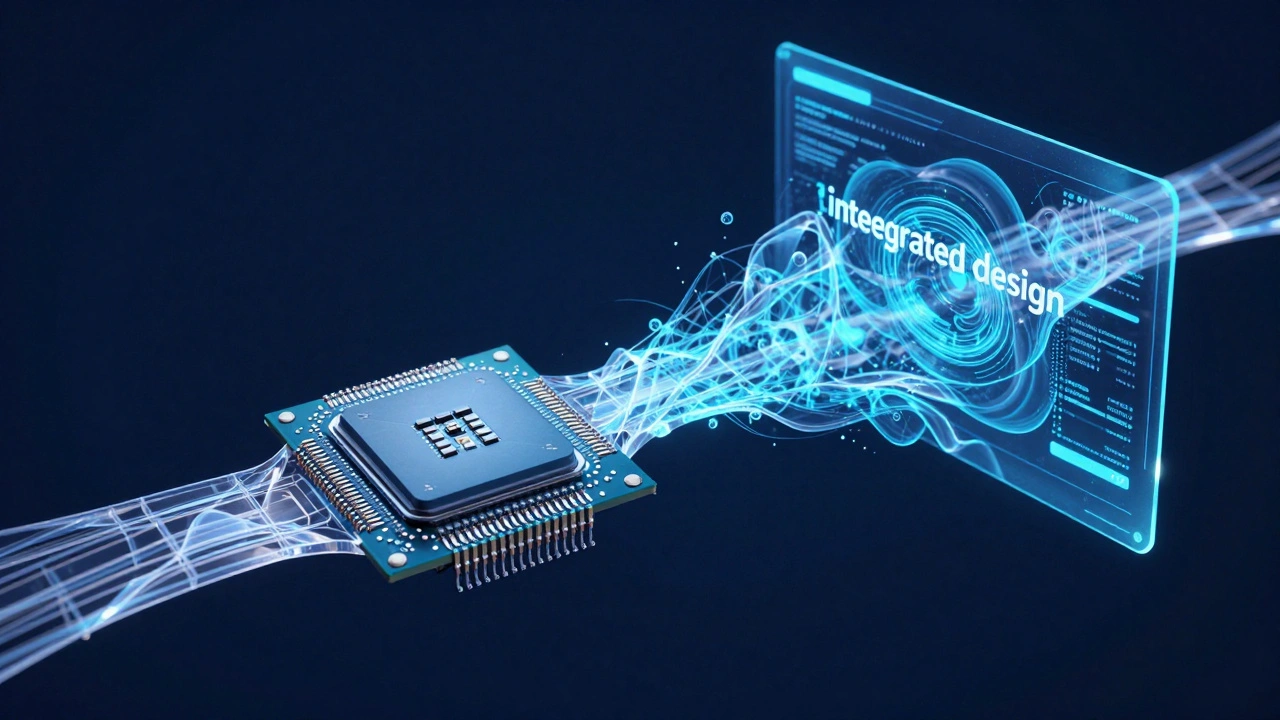

Most tech companies treat hardware and software like two different departments that meet occasionally for a status update. One team builds the box, and another team writes the code to make it work. But if you look at Apple, that boundary doesn't really exist. They don't just make a device and then find an OS that fits; they build the silicon, the circuit boards, and the code as a single, breathing organism. This is
When you use an iPhone or a Mac, you're not just using a piece of hardware with some apps on it. You're interacting with a system where the design goals-simplicity, speed, and intuition-dictate every single engineering choice. If a designer decides that a gesture needs to feel fluid, the engineers don't just try to optimize the software; they might actually change how the processor handles memory to make it happen. In this world, engineering doesn't lead design; design leads engineering.
The Secret Sauce: Vertical Integration
To understand why Apple's products feel different, you have to look at Vertical Integration is the strategy of controlling every stage of a product's production, from raw materials and chip design to the final software interface. Most manufacturers are "assemblers"-they buy a chip from Intel, a screen from Samsung, and license Windows from Microsoft. This creates a gap where the software has to be generic enough to work on thousands of different hardware combinations.
Apple does the opposite. By owning the entire stack, they remove the middleman. This means they can implement features that would be impossible for a company that doesn't control its own silicon. When the hardware and software are designed in the same room, you get synergy. For example, they can optimize the way a specific app uses the GPU because they designed both the GPU and the app's framework. It's the difference between buying a suit off the rack and having one custom-tailored to your exact measurements.
Apple Silicon: Hardware Built for Software
The transition to Apple Silicon is a series of custom-designed System-on-a-Chip (SoC) architectures based on ARM, used across Mac, iPad, and iPhone lineups. is the ultimate example of design dictating engineering. Before these chips, Macs relied on third-party processors. Now, Apple builds the silicon to support the specific needs of macOS and other operating systems.
Take security, for instance. Instead of relying solely on software-based antivirus or firewalls, Apple baked security directly into the metal. They created a Secure Enclave-a dedicated hardware block inside the chip that handles encryption and biometric data. Because the hardware is designed to protect the data, the software doesn't have to work as hard to secure it, which actually makes the device faster. The engineering is simply a tool to achieve the design goal of "invisible security."
| Feature | Component-Based (Generic) | Integrated Design (Apple) |
|---|---|---|
| Chipset | Off-the-shelf (Intel/AMD/Qualcomm) | Custom-designed (Apple Silicon) |
| OS Optimization | Broad compatibility for many devices | Hyper-optimized for specific hardware |
| Security | Software-heavy / Third-party patches | Hardware-level / Silicon-integrated |
| User Experience | Variable based on hardware specs | Consistent and predictable |
When Design Sets the Constraints
At most companies, an engineer might say, "We can't do that because the hardware doesn't support it." At Apple, the conversation is flipped. The design team presents a vision-like the seamless transition of a file from an iPad to a Mac-and the engineers are tasked with making the hardware and software collaborate to make it happen. This is a design-first philosophy.
This approach is visible in the Human Interface Guidelines, which act as the blueprint for how software should behave on their hardware. The goal is harmony. If you've ever noticed how the animations on an iPhone feel like they have "weight" and physics, that's not an accident. It's the result of software engineers tuning the code to match the physical refresh rate of the screen, creating a tactile feeling that mimics the real world. The engineering complexity is hidden to preserve the simplicity of the design.
The Ecosystem Effect: Beyond a Single Device
Integration doesn't stop at the edge of one device. The entire ecosystem is a massive exercise in coordinated engineering. Think about Handoff, the feature that lets you start an email on your phone and finish it on your laptop. To make this feel effortless, Apple has to coordinate the wireless hardware, the iCloud server architecture, and the software triggers across different operating systems like iOS and macOS.
This creates a powerful loop. Because the products work so well together, users are more likely to buy more of them. Each new device doesn't just add a new tool; it adds value to the devices you already own. This isn't just a marketing trick; it's an engineering achievement. They've built a shared language that all their hardware and software speak, which removes the friction usually associated with moving data between different gadgets.
Native Development and the Developer's Role
This integrated world also changes how apps are built. Developers who use Native Integration-building apps specifically for one OS-can tap into the hardware's full potential. When an app is built using Apple's own software development kits (SDKs), it can talk directly to the Apple Silicon's neural engine or the specific GPU cores.
Contrast this with cross-platform apps that try to work on everything. Those apps often feel "clunky" because they can't take advantage of the specific hardware shortcuts Apple has engineered. By providing powerful APIs and endpoint security tools, Apple allows third-party developers to plug into their integrated model without compromising the system's stability. They essentially give developers a curated sandbox that is already optimized for the hardware.
The Bottom Line on Integrated Engineering
Apple's success isn't because they have the "best" individual specs on paper. In fact, their RAM or battery capacity might sometimes be lower than a competitor's. The win is in the efficiency. Because they control the silicon, they don't need as much RAM to achieve the same speed. Because they control the OS, they can squeeze more life out of a smaller battery.
Ultimately, they've proven that when you stop treating hardware and software as separate entities, you stop fighting the limitations of the technology. Instead of asking "What can this chip do?", they ask "What does the user need?" and then build the chip to do exactly that. That is the core of integrated design: the technology exists to serve the experience, not the other way around.
Why is vertical integration better than using off-the-shelf parts?
Vertical integration allows a company to optimize every layer of the product. When you use off-the-shelf parts, you have to write software that is compatible with a wide range of hardware, which leads to inefficiencies. By designing their own chips and software, Apple can create shortcuts and optimizations that make devices faster, more secure, and more energy-efficient than generic alternatives.
Does Apple Silicon actually improve security?
Yes, because security is handled at the hardware level. With features like the Secure Enclave, encryption and biometric data are processed in a dedicated area of the chip, isolated from the main processor. This means even if the main operating system is compromised, the most sensitive security keys remain protected by the physical architecture of the chip.
What is the difference between native and cross-platform apps?
Native apps are written specifically for one operating system (like iOS) and can directly access the hardware's unique features, such as the neural engine or specific GPU optimizations. Cross-platform apps are designed to work across multiple systems (like Android and iOS), which means they often rely on a "middle layer" of code that can slow down performance and make the user interface feel less fluid.
How does "design dictating engineering" work in practice?
It means the user experience goals are decided first. For example, if the design goal is "instant-on" wake from sleep, the engineers must design the power management and the silicon to support that specific behavior. Instead of the engineers saying "this is the fastest we can make it," the designers say "it must feel like this," and the engineers find the technical solution to match that feeling.
Does this integration make it harder to switch to other brands?
Yes, this is often called "vendor lock-in." Because the features like Handoff and iCloud synchronization are so deeply integrated across Apple's own hardware, switching to a different ecosystem means losing those seamless connections. The high value of the integrated experience makes the "cost" of leaving the ecosystem higher for the user.