
Most tech companies pick a lane. They either build the chips, write the operating system, or create the apps. Apple is the rare outlier that insists on owning the entire stack. While critics often call this a "walled garden," from a design strategy perspective, it's actually a masterclass in ecosystem harmony. By aligning every single touchpoint-from the silicon in the processor to the way a notification slides onto a screen-Apple doesn't just sell gadgets; they sell a friction-less existence.
The Secret Sauce of Vertical Integration
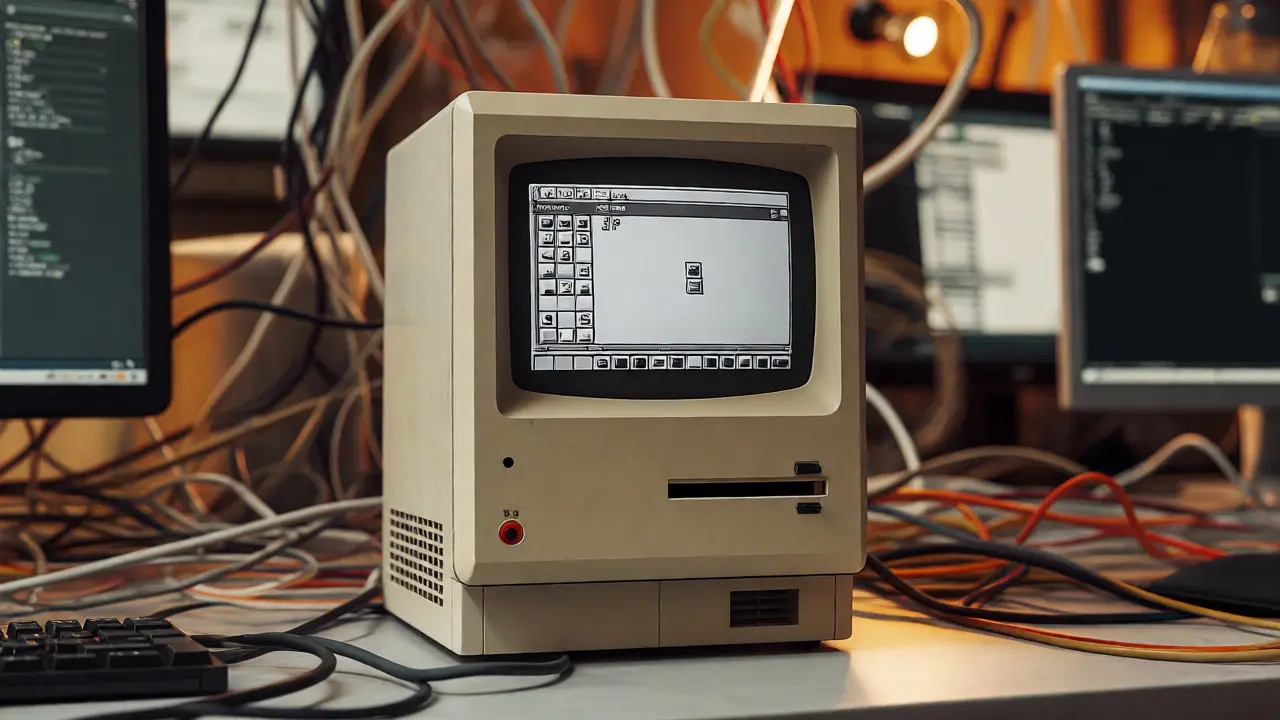
To understand why Apple's approach works, you have to look at Vertical Integration is a business strategy where a company controls multiple stages of its production process, from raw materials and components to the final software layer . Most of the industry relies on a fragmented model. For example, a typical laptop manufacturer might buy a chip from Intel, an OS from Microsoft, and a chassis from a third-party factory. This is fine, but it creates "seams" in the experience. You've probably felt those seams when a software update breaks a hardware feature or a driver crashes your system.
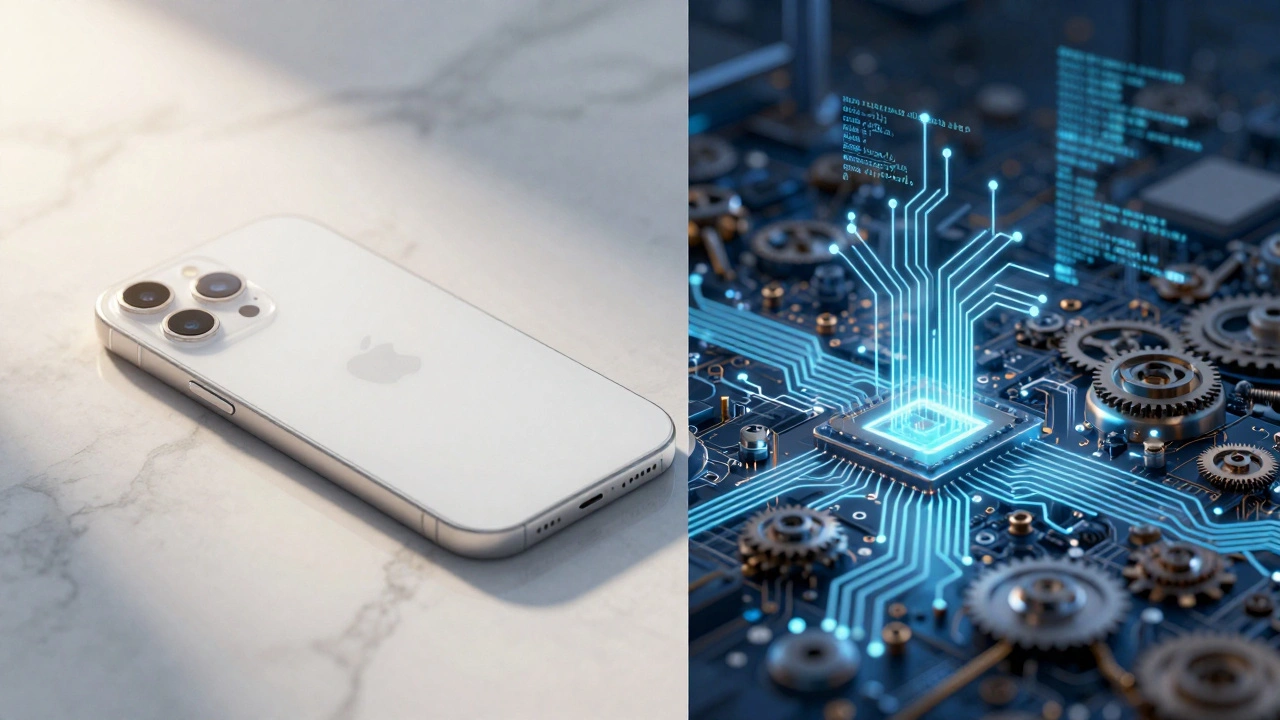
Apple eliminates these seams. Because they design the Apple Silicon (their custom M-series and A-series chips), they know exactly how much power the hardware can handle. They then write the iOS and macOS to exploit every single transistor. This is why an iPhone can often outperform a competitor's device with more RAM on paper; the software is speaking the hardware's native language perfectly. When hardware and software are designed by the same team, the result is a level of efficiency and reliability that is nearly impossible to replicate with a partnership-based model.
Creating a Seamless Web of Devices
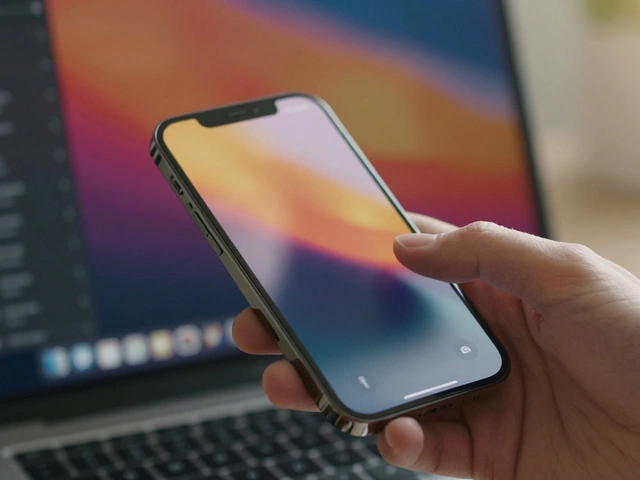
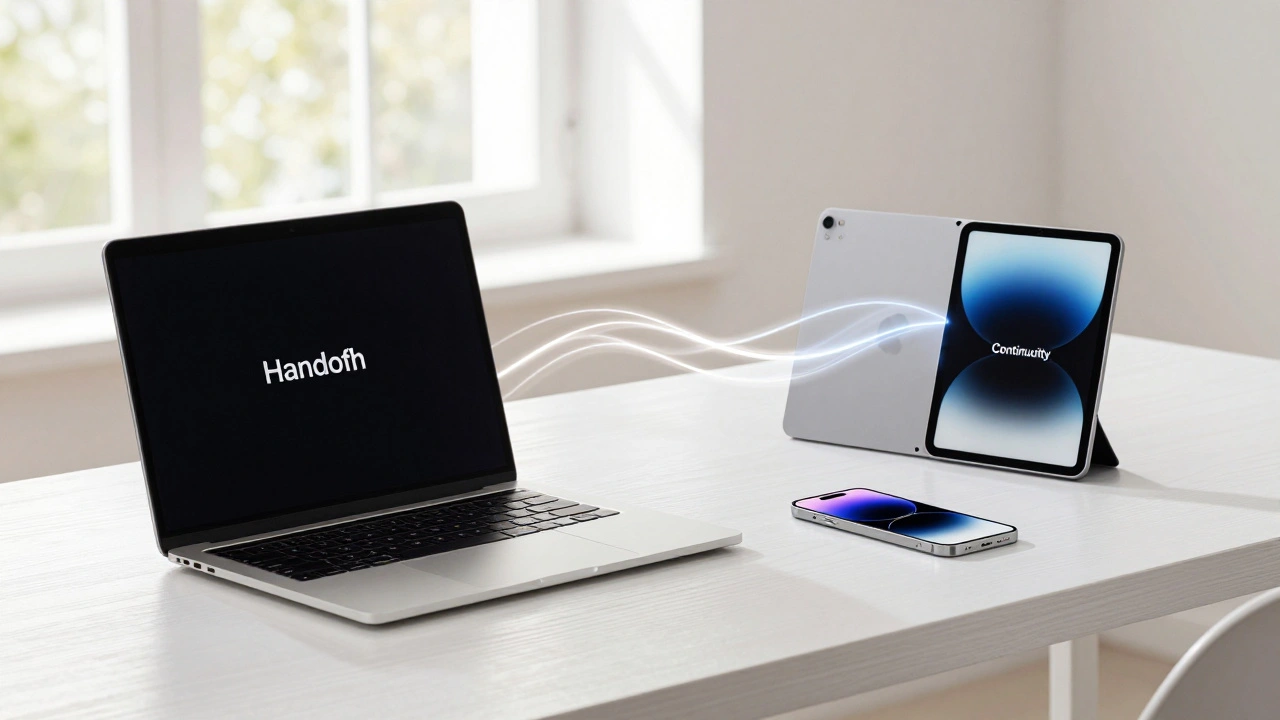
The real magic happens when you move from one device to another. Apple's strategy isn't just about making a great phone; it's about making the phone make the laptop better. They use a set of interconnected features that act as "connective tissue" between their products. Think about Handoff, which lets you start an email on your iPhone and finish it on your Mac with a single click. Or Universal Clipboard, which allows you to copy a link on your iPad and paste it directly into a document on your MacBook.
These aren't just "cool tricks." They are strategic hooks. When your devices collaborate this effectively, the cost of switching to another brand isn't just the price of a new phone-it's the loss of a workflow. This is the essence of the ecosystem moat. If you move to a different OS, you lose AirDrop for instant file sharing and Sidecar for using an iPad as a second monitor. You aren't just leaving a product; you're leaving an integrated environment.
| Feature | What it Does | Strategic Value |
|---|---|---|
| iCloud | Syncs data across all devices in real-time | Creates a single source of truth for user data |
| Handoff | Transitions tasks between devices | Removes friction from multi-device workflows |
| Continuity | Allows devices to act as one system | Increases the utility of every single device owned |
| AirDrop | Local wireless file transfer | Makes the ecosystem the fastest way to share content |
Services as the Glue
Hardware gets the headlines, but services provide the persistence. iCloud is the invisible backbone of the entire operation. It ensures that your photos, notes, and passwords are identical whether you're on a watch, a phone, or a desktop. This synchronization means that the user's digital identity is tied to the Apple ID, making the hardware essentially a window into their data.
By expanding into services like Apple Music and Apple TV+, the company creates more reasons for users to stay. But the real strategic play is the App Store. By controlling the marketplace where software is sold, Apple ensures that apps are optimized for their hardware and adhere to their design guidelines. This maintains the consistency of the user experience. You know that an app on an iPad will generally behave like an app on an iPhone, which reduces the learning curve and keeps the experience intuitive.

The Professional Edge: Operational Excellence
For businesses, this harmony translates into tangible productivity. IT departments don't have to spend weeks configuring every single laptop manually. Through the Device Enrollment Program, companies can automate the setup of Apple devices so they arrive at an employee's door ready for work. This drastically reduces the manual labor involved in deployment.
In a fast-paced professional environment, the ability to switch contexts without losing momentum is a competitive advantage. A designer can sketch a concept on an iPad with an Apple Pencil, use Sidecar to reference the sketch on their Mac, and then AirDrop the final version to a client's iPhone. The hardware isn't just a tool; it's a fluid extension of the creative process. When the tools get out of the way, the work takes center stage.
The Trade-off: Convenience vs. Control
Of course, this level of integration comes with a price. The 「walled garden」 means you play by Apple's rules. If you want to use a different cloud provider or a non-Apple smartwatch, you'll find that some features stop working. The synergy is high, but the flexibility is low. For most users, however, the trade-off is worth it. The peace of mind that comes from knowing your devices "just work" together is a powerful motivator.
Apple's strategy proves that in the modern tech landscape, the product is no longer the device itself. The product is the relationship between the devices. By owning the hardware, the software, and the services, Apple doesn't just compete on specs; they compete on the quality of the experience. That is a moat that no amount of raw processing power can easily bridge.
What exactly is a "walled garden" in tech?
A walled garden is an ecosystem where the provider controls every aspect of the user experience, including the hardware and the software. While this creates a very smooth and integrated experience, it makes it difficult for users to switch to competitors because their data and habits are deeply tied to that specific ecosystem.
How does vertical integration improve device performance?
Vertical integration allows a company to design software specifically for the hardware it's running on. Because Apple designs its own chips (like the M-series), they can create software instructions that use the hardware more efficiently, leading to better battery life and faster speeds compared to "general purpose" software designed to run on many different types of hardware.
Is Apple's ecosystem strategy beneficial for businesses?
Yes, particularly through tools like the Device Enrollment Program and the seamless integration of iCloud and productivity apps. It reduces IT overhead for deployment and allows employees to maintain a consistent workflow across different device types, which boosts overall productivity.
What is the difference between Handoff and Continuity?
Handoff is a specific feature that lets you start a task on one device and pick it up on another (like an email or a webpage). Continuity is the broader umbrella of features that allows devices to work together, such as using your iPad as a second screen for your Mac (Sidecar) or answering a call on your laptop that came into your phone.
Does the ecosystem strategy increase the cost of ownership?
While the initial purchase price of Apple hardware is often higher, the total cost of ownership is balanced by high resale values, long-term software support (updates for many years), and increased productivity. The durable design often means devices are replaced less frequently than budget alternatives.

Categories
Popular Articles