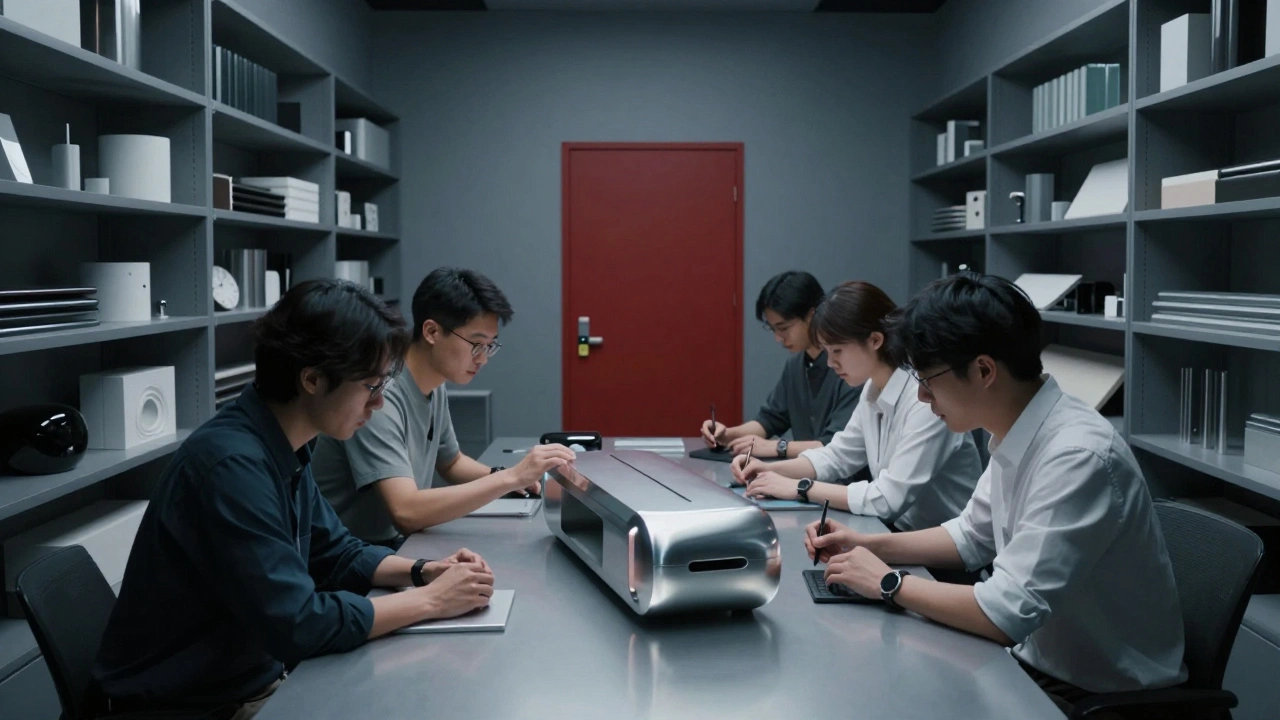

Apple doesn’t just build products. It builds experiences - ones that feel seamless, luxurious, and almost impossible to replicate. But behind every iPhone, AirPod, or MacBook is a hidden system of collaboration that few companies dare to attempt. It’s not about having the best designers or the cheapest factories. It’s about how those teams talk to each other - and who gets to say no.
The Design Team That Operates Like a Secret Society
At Apple, the design team doesn’t report to engineering. It doesn’t report to finance. It reports directly to the CEO. That’s not a metaphor. It’s a structural decision. When Jony Ive led the Industrial Design Studio, his team worked in a locked wing of Apple’s Cupertino campus. Only a handful of people had access. Even other Apple employees couldn’t walk in without permission. Why? Because Apple believed that if designers were constantly interrupted by cost concerns or manufacturing limits, they’d stop dreaming. This isolation wasn’t about secrecy. It was about freedom. Designers were told to ignore whether a part could be made, whether it would cost too much, or whether it could be assembled on a factory floor. Their only job: create something that felt perfect. That meant experimenting with materials no one else used - like machined aluminum that looked like glass, or ceramic backs that resisted scratches better than sapphire. When they came up with an idea, they didn’t ask, "Can we build this?" They asked, "Should we build this?"The 10 to 3 to 1 Rule: How Ideas Get Refined
Apple’s design process starts with chaos. For every product, designers create ten radically different concepts. No limits. No constraints. One might look like a phone made of wood. Another might have no buttons at all. A third might be shaped like a pebble. These aren’t prototypes. They’re ideas pushed to the edge. From those ten, three are chosen. Not because they’re easiest to make. Not because they’re cheapest. Because they’re the most compelling. Then, the real work begins. The three finalists go through peer reviews with engineers. These aren’t polite meetings. They’re intense, sometimes heated, sessions where engineers ask: "How do you plan to attach this?" "What happens if this cracks?" "Can we even get this material in bulk?" The goal isn’t to kill ideas. It’s to improve them. A designer might say, "I want the screen to curve into the frame." An engineer might respond, "That’s beautiful - but we can’t seal it without a leak." Then they work together. Maybe the curve stays, but the seal gets redesigned. Maybe the material changes. The result? A design that looks impossible - but is actually manufacturable.The EPM Mafia and the Supply Chain That Runs on China
Once a design is locked in, two people take over: the Engineering Program Manager (EPM) and the Global Supply Manager (GSM). Apple calls them the "EPM Mafia." They’re not designers. They’re not CEOs. They’re the glue. The EPM lives with the engineers. They track every component, every circuit, every firmware update. The GSM lives in China. They’re the ones working with Foxconn, Pegatron, and other manufacturers. They know which factories can handle ultra-precise laser cutting. They know which suppliers have the right quality control for titanium frames. They don’t just order parts. They build relationships - sometimes spending years training a factory just to make one hinge. Apple doesn’t own these factories. But it controls them. How? By being the only customer that demands perfection. A supplier might make 10,000 parts for Samsung. But for Apple? They make 10,000 - and then throw out 9,900. Only 100 pass inspection. That’s not paranoia. That’s the standard.
Every Monday, the CEO Sees Your Product
Every Monday morning, Apple’s top executives gather in a room with prototypes. Not mockups. Not renderings. Real, working units. Each product under development gets reviewed. If it doesn’t get reviewed this week, it’s guaranteed a spot next week. No exceptions. This isn’t a status meeting. It’s a quality checkpoint. Someone might say, "The camera bump feels too high." Or, "The hinge has too much play." Or, "The battery life dropped 5% in the last build." That feedback goes straight to the EPM and GSM. Within 48 hours, changes are made. The product is shipped back to China. Another batch is built. Then it’s flown back to Cupertino. And the cycle repeats. One iPhone iteration cycle can take six weeks. And Apple might do this six times before launch. That’s 36 weeks of testing, refining, and retesting - all before the product hits stores. Most companies do one or two cycles. Apple does six. Why? Because they’d rather delay a launch than ship something that feels "good enough."The Packaging Room: Where Unboxing Is a Science
Apple doesn’t just care about what’s inside the box. They care about how it feels to open it. The Packaging Room is one of the most secure spaces in Cupertino. No phones. No cameras. No notes. Just engineers, designers, and a handful of testers who open prototypes over and over again. They test the sound of the lid lifting. The resistance of the magnetic seal. The way the product slides out. The weight of the box. The texture of the paper. Even the smell of the ink. They’ve spent years tweaking these details because they know: the first moment a customer touches the product is the moment they form an emotional bond. This isn’t marketing. It’s engineering. And it’s why Apple’s unboxing videos go viral. People don’t just buy a phone. They buy the ritual.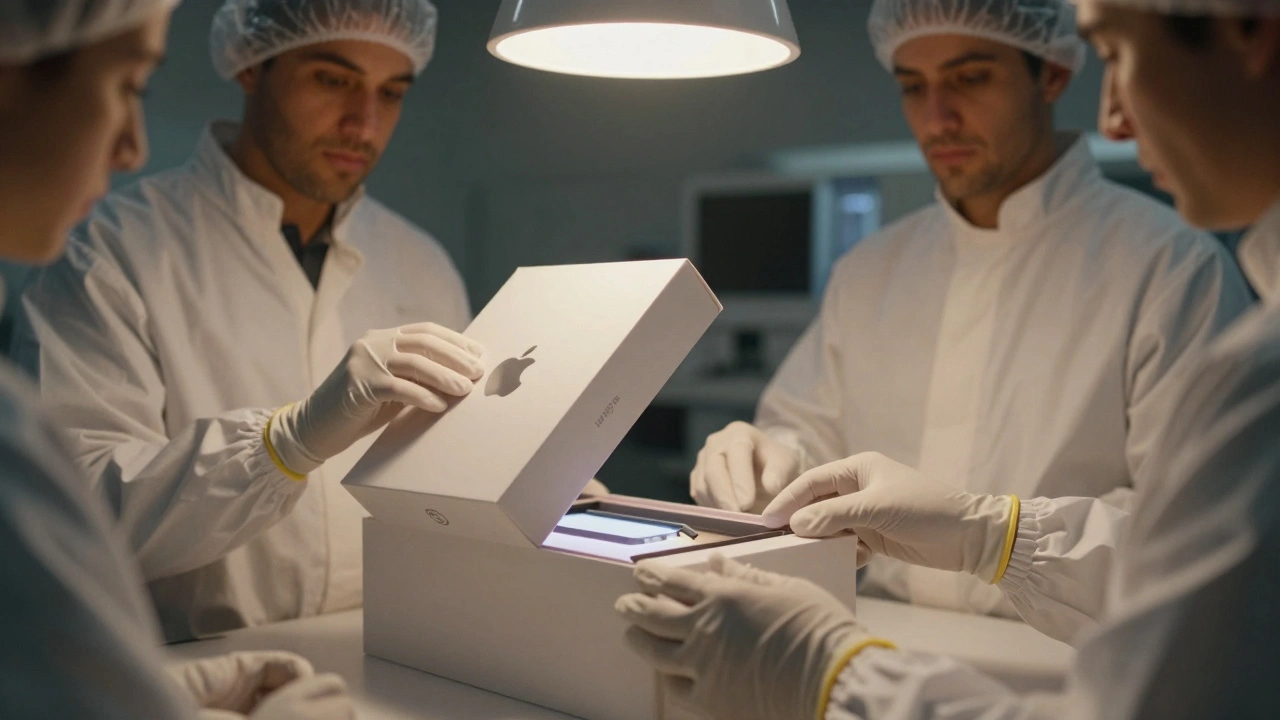
Why Apple Pays More to Build Better
Let’s be clear: Apple’s process is expensive. Each iteration costs millions. Shipping prototypes across the Pacific costs tens of thousands per trip. Testing materials in labs costs hundreds of thousands. And they’ve thrown away entire product lines because the finish wasn’t right. But here’s the truth: Apple doesn’t see this as a cost. They see it as insurance. Insurance against mediocrity. Insurance against being forgotten. When you’re competing in a market where phones look nearly identical, the only thing that sets you apart is how it feels to use one. Other companies try to copy Apple’s design. But they can’t copy the process. They want the sleek look. But they don’t want the six-month wait. They don’t want the 10,000 rejected parts. They don’t want the CEO reviewing every hinge. Apple’s secret isn’t talent. It’s discipline. It’s a system that says: if you want to make something extraordinary, you have to be willing to fail - over and over - until it’s perfect.What Happens When the System Breaks
There are stories - quiet ones - of Apple products that failed because the system broke. One iPad prototype had a screen that looked flawless… until it was exposed to sunlight. The color shifted. The team had to scrap the entire design. Another Apple Watch had a speaker that sounded amazing in the lab - but buzzed in real-world use. It was delayed six months while they redesigned the acoustic chamber. These aren’t failures. They’re proof the system works. If Apple had cut corners, those products would’ve shipped. And they’d have been remembered as "Apple’s mistake." Instead, they were quietly killed. And the next version? It became one of the best-selling devices ever.Why This Matters to Everyone
You don’t work at Apple. But if you’re building anything - a website, a tool, a service - this model still applies. The best teams don’t just work together. They protect their creative space. They force hard conversations. They iterate until the smallest detail feels right. Most companies optimize for speed. Apple optimizes for meaning. They ask: "Does this feel like it was made with care?" And if the answer is no - they start over. That’s not magic. It’s method. And it’s the only way to build something that lasts.Why doesn’t Apple let designers talk to engineers during early design phases?
Apple keeps designers and engineers separate early on to prevent practical concerns from killing bold ideas. If designers hear "That won’t work" too soon, they stop pushing boundaries. By delaying those conversations, Apple ensures the first ideas are pure - then engineers help make them real without diluting the vision.
How many iterations does Apple typically do before launching a product?
Apple often completes 6 to 10 full design and manufacturing iterations before launch. Each cycle takes 4 to 6 weeks and includes testing in Cupertino, feedback from executives, refinements, and a return to production. Some products, like the original iPhone, went through even more. Most competitors do 1 or 2.
Why does Apple use contract manufacturers like Foxconn instead of making products themselves?
Apple doesn’t own factories because it’s not good at mass production. It’s good at design, engineering, and quality control. By outsourcing manufacturing to experts like Foxconn, Apple focuses on what it does best: creating products people love. The contract manufacturers handle volume, logistics, and labor - while Apple maintains strict oversight through its Global Supply Managers.
What’s the "EPM Mafia" and why is it important?
The "EPM Mafia" refers to the Engineering Program Managers and Global Supply Managers who bridge design, engineering, and manufacturing. They’re the only people who work across all three areas full-time. Without them, Apple’s process would fall apart. They’re the ones who make sure a design that looks perfect on a screen can actually be built - and built consistently - at scale.
Does Apple’s process work for small companies?
You don’t need Apple’s budget to use its principles. Small teams can still isolate creative work early, force iterative feedback loops, and refuse to ship anything that feels "almost right." The real lesson isn’t about scale - it’s about discipline. If you’re willing to delay, rebuild, and test obsessively, you can build something that stands out - even with limited resources.