
Apple didn’t just shrink its boxes. It rebuilt them from the ground up. By 2025, more than 98% of Apple’s packaging is made from fiber-no plastic trays, no foam cushions, no cling films. The iPhone 16, Apple Watch, and MacBook all ship in boxes that look and feel different than anything before. And yet, they protect devices just as well. How? The answer isn’t magic. It’s material science, careful engineering, and a lot of trial and error.
Why Plastic Had to Go
Plastic packaging was everywhere in electronics. Thin films wrapped screens. Molded trays held phones in place. Foam cushions absorbed shocks. It was cheap, durable, and easy to mass-produce. But it was also nearly impossible to recycle. Most curbside programs don’t take plastic film. Even if they did, the mix of materials-plastic, glue, ink, foil-made sorting a nightmare. Apple saw this. And they knew that if they wanted real sustainability, they couldn’t just reduce plastic. They had to eliminate it.By 2015, Apple’s packaging was still 70% plastic. By 2025? Less than 1%. That’s not a small tweak. That’s a complete overhaul. The company didn’t just swap one material for another. They redesigned the entire system-from how the box is shaped to how the product sits inside it.
The Fiber Revolution: What Replaced Plastic
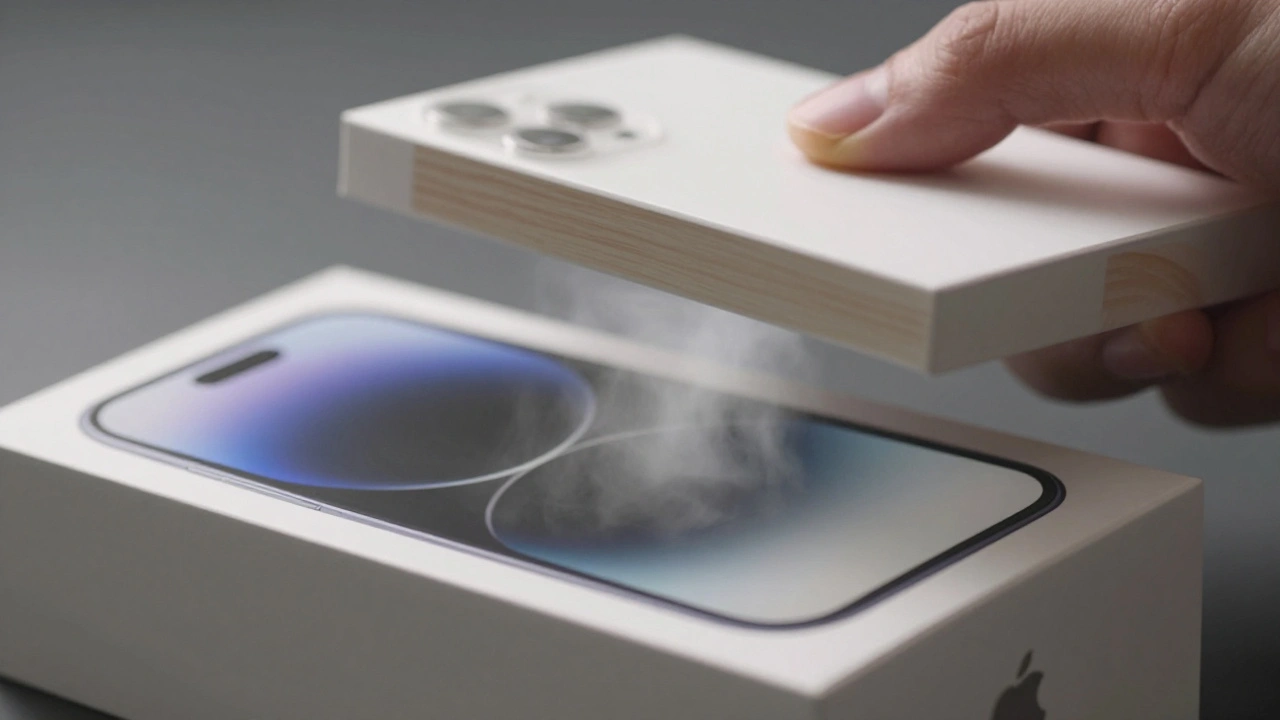
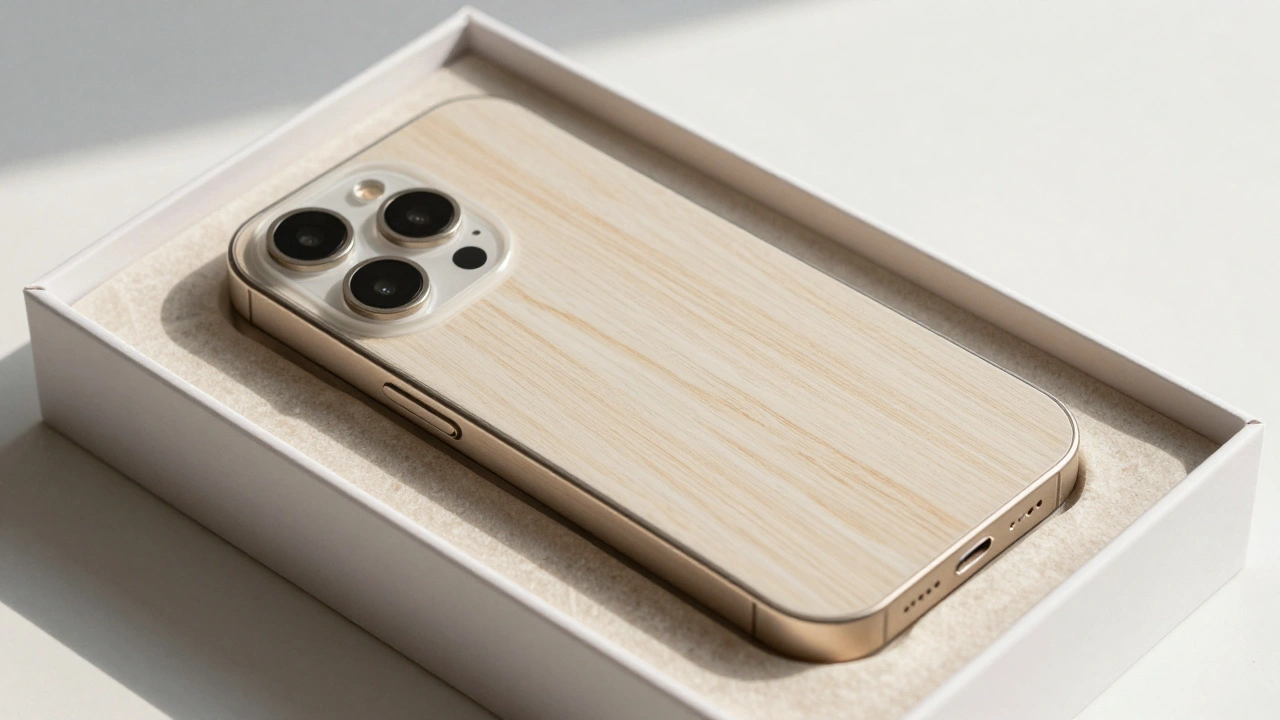
Apple didn’t turn to cardboard and call it a day. Cardboard is too flimsy. It doesn’t hold shape. It crushes under pressure. Instead, they turned to molded fiber pulp a dense, engineered material made from wood fibers pressed under heat and vacuum into precise shapes. This isn’t your grandma’s paper pulp. It’s made from a blend of 60% recycled fiber and 39% virgin fiber sourced from FSC- or PEFC-certified forests. The result? A tray that looks like plastic, feels like plastic, and performs like plastic.Here’s how it works: Wood fibers are mixed with water, then sucked into aluminum molds shaped exactly like the old plastic trays. Heat and pressure squeeze out the water, locking the fibers into place. The final product is rigid, lightweight, and shock-absorbent. It holds the iPhone snugly without needing a plastic clip. It protects against drops during shipping. And it’s 100% recyclable in standard paper recycling streams.
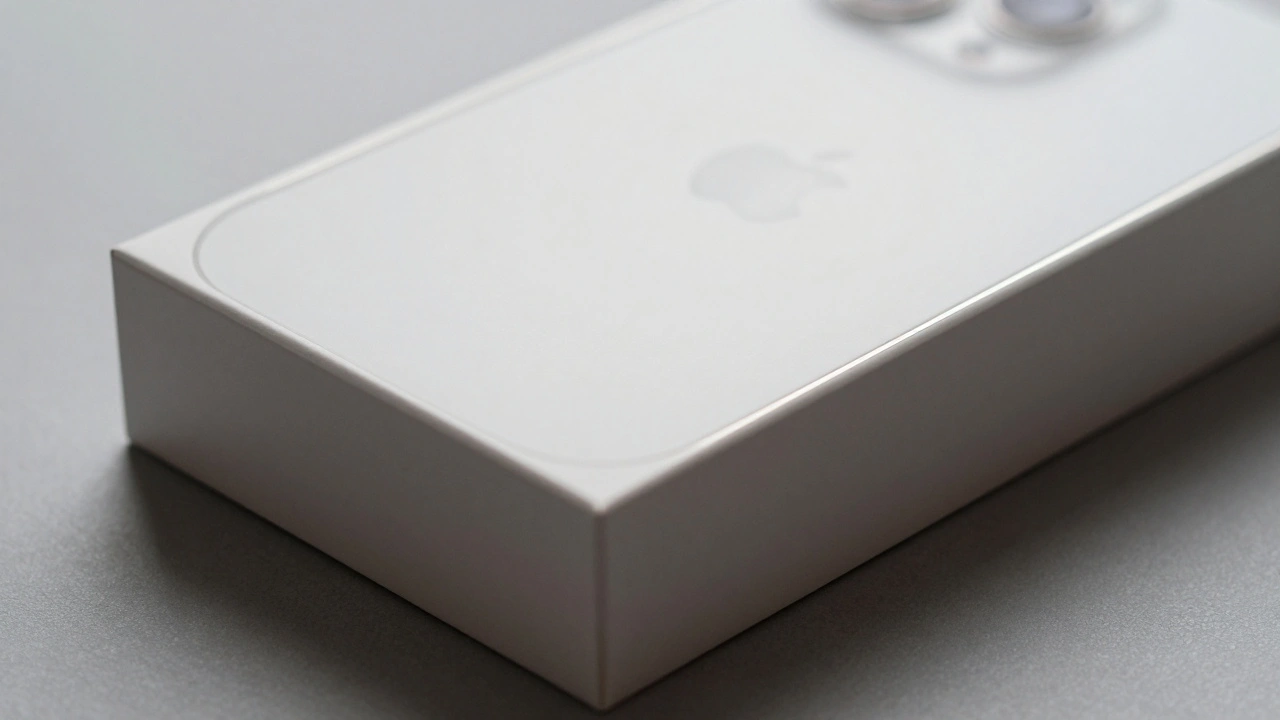
The feel matters. People notice. Open a new iPhone box. The tray doesn’t rattle. The phone doesn’t shift. The texture is smooth, almost polished. That’s because the aluminum molds are precision-engineered. The surface finish is controlled to within microns. It’s not just about function. It’s about experience. Apple didn’t sacrifice luxury for sustainability. They upgraded it.
Trade-Offs No One Talks About
Switching from plastic to fiber isn’t free. There are trade-offs.First, virgin fiber is still needed. Recycled fiber alone can’t achieve the strength and consistency required. Virgin fiber gives the pulp the right fiber length and alignment to hold shape under pressure. But sourcing it sustainably means working with certified forests-something Apple has done since 2017. That’s not cheap. It’s also not easy. Forests need to be managed, monitored, and certified. That’s a whole supply chain in itself.
Second, the molds are expensive. Aluminum tooling for each product model costs tens of thousands of dollars. That’s a big upfront investment. But Apple doesn’t make one box. They make hundreds of millions. Over time, the cost per unit drops. And with no plastic to source, ship, or dispose of, the long-term savings add up.
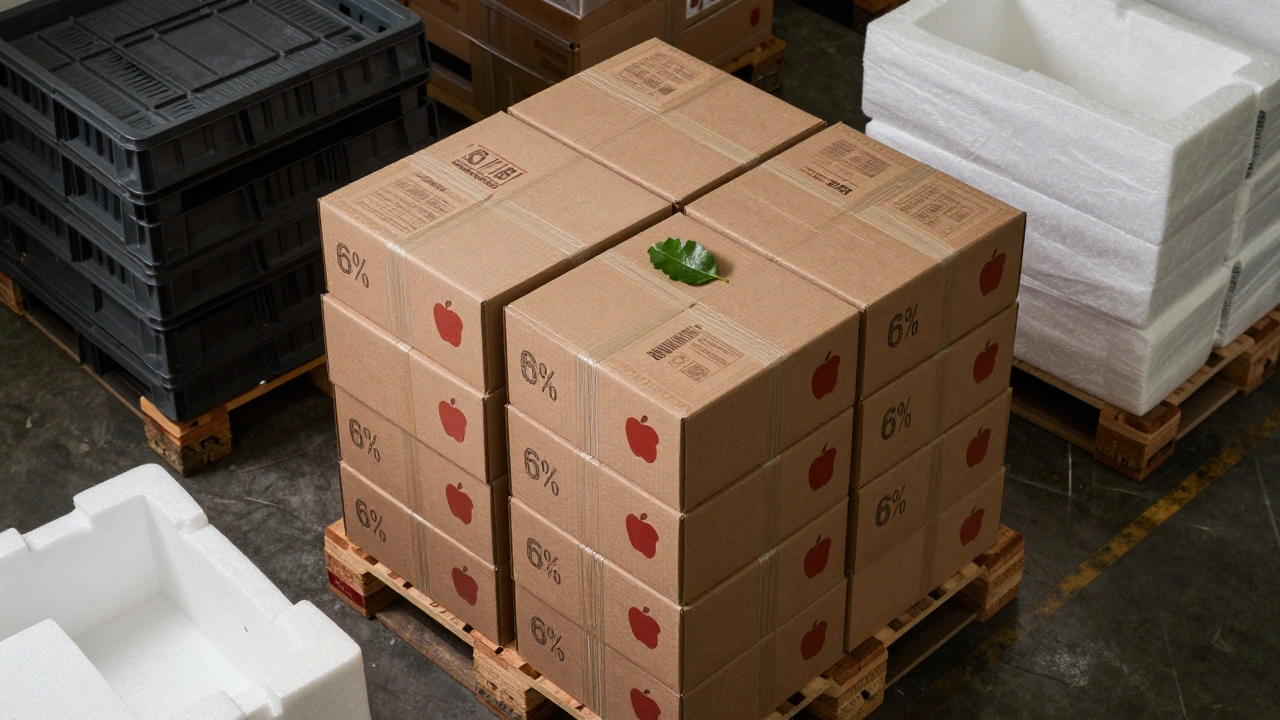
Third, the new boxes are 6% smaller. That’s not a marketing gimmick. It’s a direct result of removing plastic trays and foam. Smaller boxes mean more units fit on a pallet. Fewer trucks on the road. Less fuel burned. Less warehouse space needed. That 6% reduction adds up to millions of cubic feet of shipping space saved each year. And that’s where the real environmental win happens-not just in the box, but in the logistics chain.
What Got Eliminated
Apple didn’t just remove one plastic part. They removed dozens:- Screen films - replaced with paper-based protective layers
- Plastic trays - replaced with molded fiber pulp
- Foam cushioning - replaced with fiber inserts and tighter structural design
- Plastic lamination - replaced with water-based coatings
- Plastic labels - replaced with paper labels using soy-based ink
- Plastic wraps - replaced with paper seals
Each of these changes required a new material, a new supplier, and a new manufacturing step. Apple didn’t outsource this. They built the capability in-house. They worked with fiber suppliers, mold makers, and logistics teams to make sure every piece fit together perfectly.
How It Compares to the Rest of the Industry
Apple wasn’t the first to try. Dell experimented with recycled paper boxes in the early 2010s. But Apple made it mainstream. When Apple changed its packaging in 2020, the ripple effect was immediate.By 2024, Samsung switched the Galaxy S24 to 100% recycled paper packaging. Xiaomi followed in 2020. Even The Home Depot eliminated expanded polystyrene from its private-brand packaging in 2023. Lowe’s is targeting 100% recyclable or compostable packaging by 2030. These aren’t coincidences. They’re reactions.
Why? Because consumers noticed. People opened a new iPhone and thought, “This feels different.” They didn’t need a marketing campaign to tell them it was better. They felt it. And once consumers expect it, competitors have to follow-or risk looking outdated.
The Bigger Picture: Beyond the Box
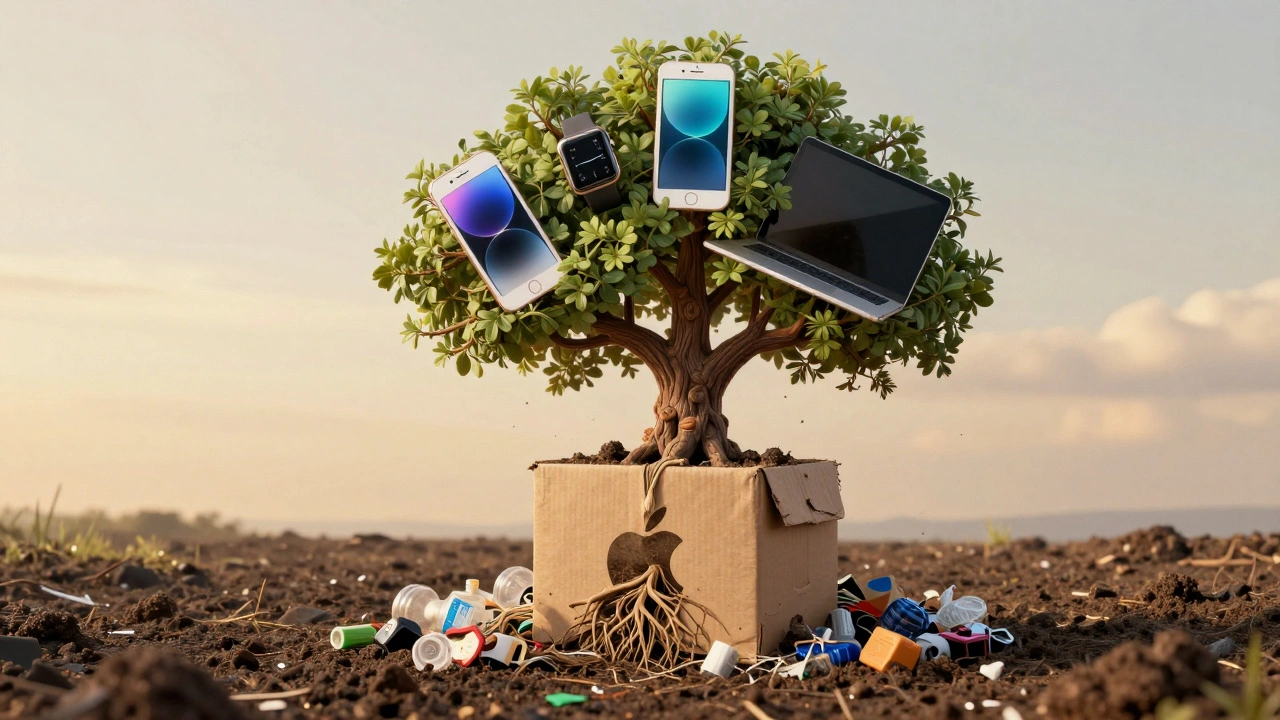
Apple’s packaging change is just one piece of a much larger puzzle. The company has cut its global carbon emissions by over 60% since 2015. It now uses more than 50% recycled content in MacBooks. Nearly all of its magnets use recycled rare earths. Its batteries use 99% recycled cobalt. The Restore Fund is investing in forests that will remove millions of tons of CO₂ each year.But here’s the key: Apple didn’t make these changes because they were trendy. They made them because they had to. The world is changing. Regulations are tightening. Indonesia bans plastic imports. New Hampshire passed a bill forcing manufacturers to reduce packaging waste. In five years, these might not be optional. They’ll be required.
Apple didn’t wait for the law. They got ahead of it. And in doing so, they proved that sustainability doesn’t mean compromise. It means innovation.
What’s Left to Fix
Even with 98% fiber-based packaging, there’s still work to do. The remaining 1-2% isn’t plastic trays. It’s glue. It’s ink. It’s tiny coatings on paper that keep the box from smudging. These are hard to replace because they’re invisible. But they’re still plastic. Apple is working on water-based alternatives. They’ve already removed over 600 metric tons of plastic from the waste stream. That’s the equivalent of 30 million plastic water bottles.And yet, the real win isn’t the number. It’s the precedent. Apple showed that a global tech giant can redesign its packaging without losing quality, without losing user trust, and without raising prices. That’s the message that matters.
What This Means for You
If you’re a designer, a brand, or even a consumer, here’s what to take away:- Plastic packaging isn’t necessary. It’s a habit.
- Material trade-offs aren’t about cost-they’re about creativity.
- Feel matters. People don’t just care about what’s inside. They care about how the box opens, how it feels in their hands, and whether it feels like a thoughtful experience.
- Sustainability isn’t a feature. It’s a design constraint-and constraints breed better design.
Apple didn’t just reduce plastic. They redefined what packaging could be. And now, everyone else has to catch up.