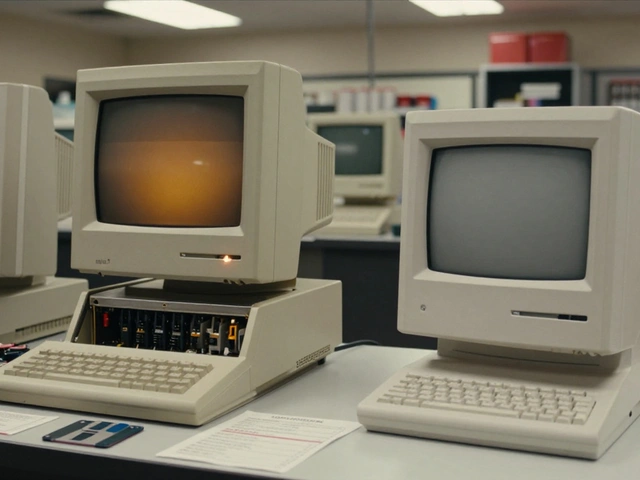

Most designers treat manufacturing limits as obstacles. They see a tight deadline or a tricky material and feel like the factory is fighting them. But at Apple is a technology company that integrates hardware, software, and services to create consumer electronics. Also known as Apple Inc., it operates one of the most vertically integrated supply chains in the world. The approach here flips the script. Instead of viewing manufacturing constraints as physical or logistical limits imposed by production processes, we treat them as creative inputs. When you know exactly what your machines can do, the design becomes sharper, not weaker.
Why Limits Create Better Products
Think about it this way. If you have infinite budget and time, you might design something overly complex. You add features just because you can. But when you hit a wall-say, a specific tolerance for a hinge or a limit on how thin a glass panel can be-you are forced to simplify. This simplification often leads to elegance. In industrial design, this is where the magic happens. The constraint forces you to ask: "Is this detail actually necessary?" If the answer is no, you remove it. The result is cleaner, more durable, and easier to assemble.
This mindset shift is crucial for teams working with high-volume manufacturers. It changes the conversation from "How do we make this possible?" to "What does this limitation teach us about the product's core function?" By embracing these boundaries early in the process, you avoid costly rework later. You stop designing for the drawing board and start designing for the factory floor.
Understanding Material Finishing Boundaries
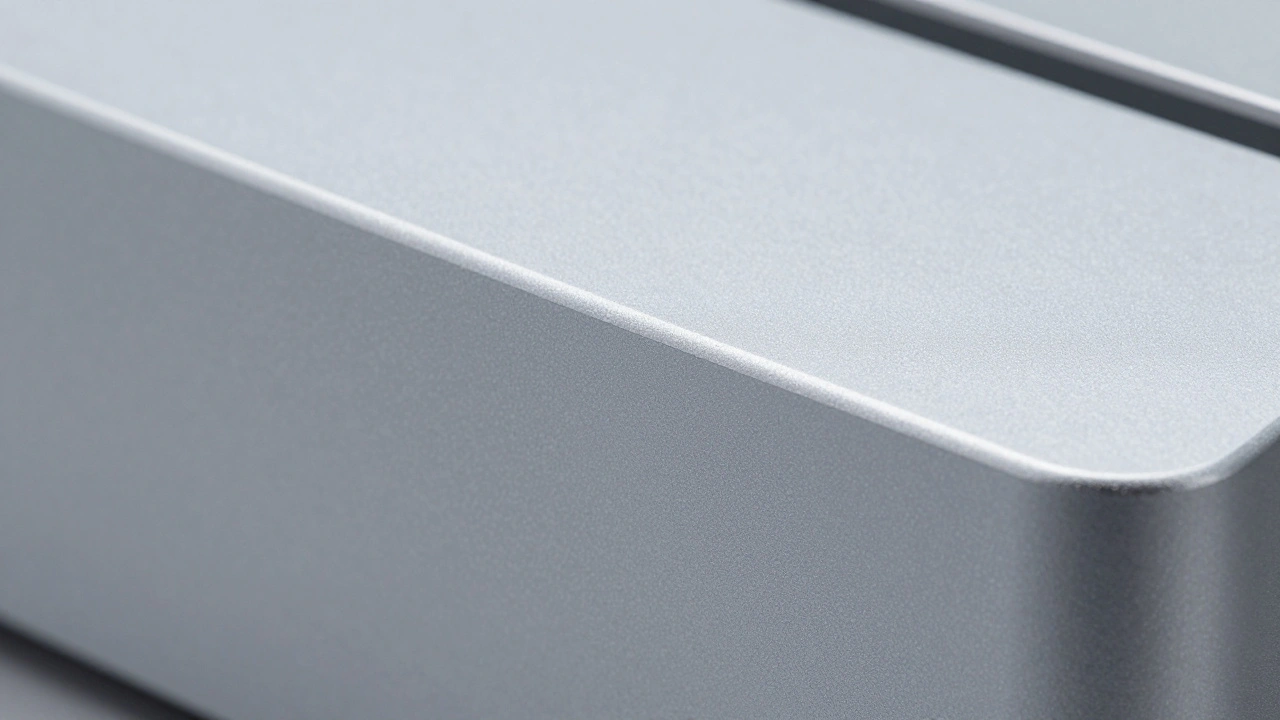
Material finishing is the surface treatment applied to raw materials to achieve desired aesthetic and functional properties. For Apple products, this is everything from the matte anodized aluminum on MacBooks to the ceramic coating on iPhone backs. Each finish has strict parameters. Anodizing, for example, requires precise control over voltage and chemical baths. If the thickness varies by even a few microns, the color consistency breaks down across millions of units.
Designers need to understand these technical realities. If you specify a brushed metal texture, you need to know if the current batch of suppliers can maintain that grain size uniformly. If you want a deep black finish, you must account for the fact that dark colors show fingerprints and scratches more easily. These aren't just aesthetic preferences; they are engineering decisions. Knowing the limits of anodizing allows you to choose a color palette that looks premium without requiring impossible maintenance standards for the user.
The Role of Supply Chain Realities
Design doesn't happen in a vacuum. It happens within a global network of suppliers. Supply chain management is the coordination of all activities involved in sourcing and procurement, conversion, and logistics management. At the scale of Apple, which ships hundreds of millions of devices annually, every component must be sourced reliably. This means designers cannot simply pick the rarest, highest-performance material available. They must select materials that can be produced at scale without quality drift.
Consider the switch to recycled aluminum. It wasn't just an environmental gesture; it was a move to secure long-term material stability. By controlling the input, Apple reduces dependency on volatile commodity markets. For a designer, this means knowing that your chosen material will likely remain available and consistent for several years. That stability allows for confident design language that doesn't need to change every year due to material shortages.
Tolerances and Assembly Logic
One of the biggest hidden constraints is tolerance, which refers to the permissible amount of variation in a physical dimension. In mass production, parts are never identical. There is always a margin of error. If your design requires two parts to fit together with zero gap, you will fail. You need to design for the worst-case scenario. This is why many Apple products have such clean, seamless lines. They are designed with tolerances that allow for slight variations while still looking perfect to the human eye.
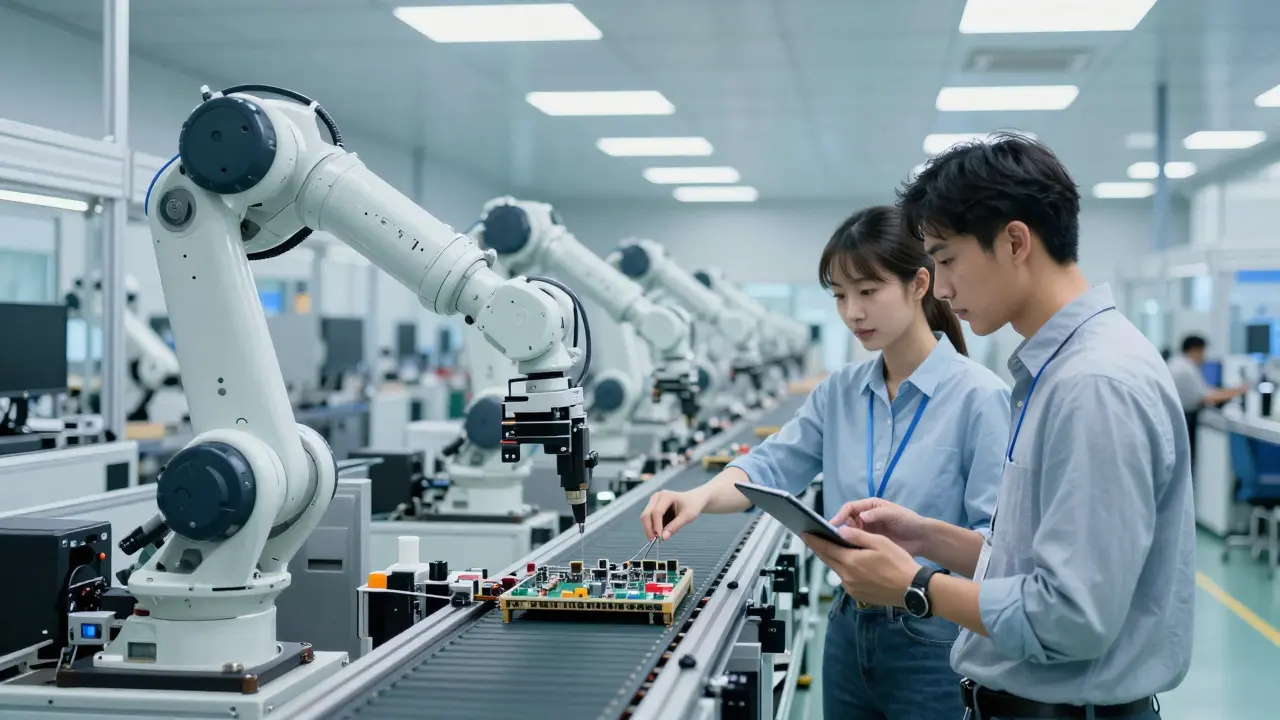
Assembly logic also plays a huge role. How many screws hold the device together? Can it be opened for repair? Every fastener adds cost and time. Designing a device that can be assembled quickly using automated robots rather than human hands is a major constraint. It influences the shape of internal components, the placement of ports, and even the curvature of the chassis. A curved edge might look beautiful, but if it makes it harder for a robot arm to insert a bracket, it gets flattened. The final form is a compromise between aesthetics and assembly efficiency.
Thermal Management and Form Factor
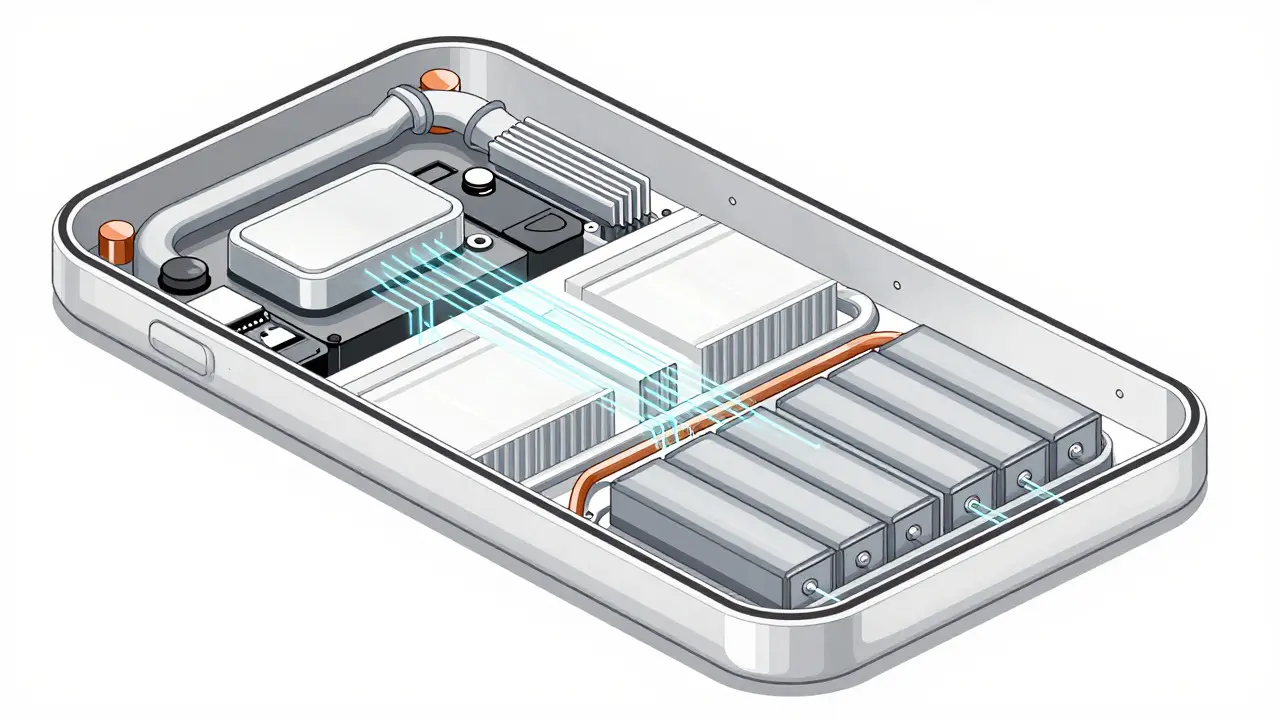
You can't ignore heat. As processors get faster, they generate more thermal energy. Thermal management is the system of techniques used to dissipate heat from electronic components. In thin devices like laptops and phones, space is the enemy. You have millimeters to route heat away from the chip. This dictates the placement of vents, the use of copper plates, and the type of cooling solution. Sometimes, this means accepting a slightly thicker bezel to accommodate a larger fan or heat pipe. Other times, it means limiting peak performance to keep temperatures under control.
Designers must collaborate closely with thermal engineers early on. If you design a sleek, sealed enclosure with no vents, you better be sure the internal layout can handle the heat load. Otherwise, the device will throttle its performance or shut down. The constraint here is physics, but the solution is design. You solve it by rearranging components, choosing different materials with higher thermal conductivity, or adjusting the power limits of the processor.
Comparing Constraint-Driven vs. Idealistic Design
To see the difference, let's compare two approaches. Idealistic design starts with a vision and ignores reality until the prototype phase. Constraint-driven design starts with the capabilities of the factory and builds the vision around them.
| Feature | Idealistic Design | Constraint-Driven Design |
|---|---|---|
| Starting Point | Aesthetic Vision | Manufacturing Capability |
| Material Selection | Best available quality | Scalable and consistent sources |
| Error Handling | Re-work during prototyping | Built-in tolerance margins |
| Cost Impact | High risk of overrun | Predictable unit costs |
| Time to Market | Variable and risky | Streamlined and efficient |
The table shows that while idealistic design can lead to innovative breakthroughs, it carries significant risk. Constraint-driven design, on the other hand, ensures that the product is viable from day one. It doesn't mean boring design. It means smart design. It means every curve serves a purpose, every material choice is backed by data, and every feature contributes to the overall value proposition.
Practical Steps for Designers
If you want to adopt this mindset, start by spending time on the factory floor. Visit the assembly lines. Talk to the technicians who put the parts together. Ask them what frustrates them. What causes delays? What parts are hardest to align? Their answers are gold. They know the real-world constraints that engineers often overlook.
Next, build a library of standard finishes and materials. Know their limits. Create a cheat sheet that lists the maximum thickness for each alloy, the minimum radius for bends, and the acceptable color variance for paints. Use this as a reference during the conceptual phase. If your idea falls outside these bounds, ask yourself if it's worth the extra cost and complexity.
Finally, iterate quickly. Make prototypes that test the limits. Don't wait for the final model to find out if a part fits. Test the worst-case scenarios early. If a screw head is slightly off-center, does it interfere with the next component? If the battery swells slightly, does it press against the screen? Answering these questions early saves months of headaches later.
Frequently Asked Questions
Does relying on manufacturing constraints stifle creativity?
No, it focuses creativity. Just like poetry has a meter and structure, design has physical laws. Working within these rules forces you to find elegant solutions rather than relying on brute force or expensive exceptions. Many iconic designs are praised precisely because they solved difficult problems beautifully.
What is the biggest mistake new designers make regarding materials?
Choosing materials based solely on appearance without considering durability or scalability. A material might look stunning in a single prototype but fade, scratch, or vary in color when produced in millions of units. Always test for long-term performance and consistency.
How important is supplier relationship in this process?
It is critical. Suppliers are partners, not just vendors. Good relationships lead to early access to new technologies, flexible terms, and honest feedback about what is feasible. If you treat suppliers as adversaries, you lose out on valuable insights that could improve your design.
Can small companies afford this level of integration?
Yes, but on a smaller scale. You don't need to own factories, but you do need to understand your suppliers' capabilities. Even small batches benefit from clear specifications and realistic tolerances. The principle remains the same: design for the process, not just the product.
How does sustainability factor into manufacturing constraints?
Sustainability is now a hard constraint. Regulations and consumer demand require recyclable materials and easy disassembly. This limits the use of glued joints or mixed-material composites. Designing for end-of-life recycling forces modular designs, which often lead to cleaner, more robust products anyway.