
The Hidden Battle for Cool
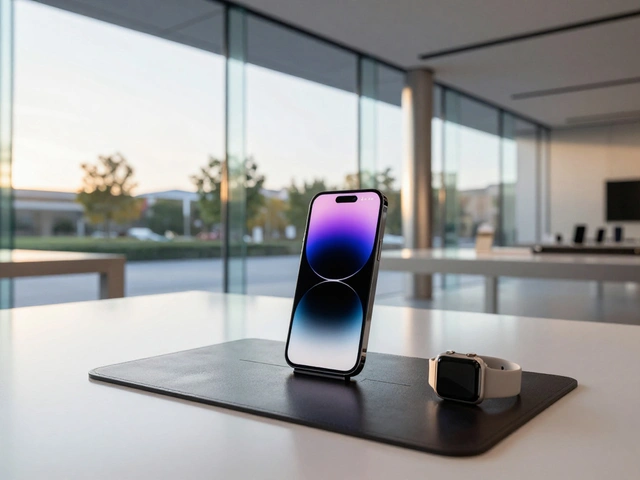
When you hold a modern smartphone, the last thing you want to feel is a device getting uncomfortably warm. Yet, under the metal or glass surface lies a fierce engineering challenge: how to pack immense computing power into a chassis barely thicker than two credit cards. For Apple, Thermal Management in iPhones is no longer just an afterthought; it is a core element of industrial design. As we move through 2026, the way heat moves inside these devices-what we call "thermal paths"-determines everything from the thickness of the frame to how smoothly artificial intelligence runs in the background.
This isn't just about adding a fan; it is about reshaping physics to fit a pocket-sized ecosystem. Every millimeter counts. When Apple engineers design a phone today, they are mapping exactly where heat will travel. They decide which component acts as a source, which layer acts as a barrier, and which surface finally rejects that heat into the air. The result is a delicate balance between performance and physical comfort.
Graphene: The Lightweight Solution for Mainstream Phones
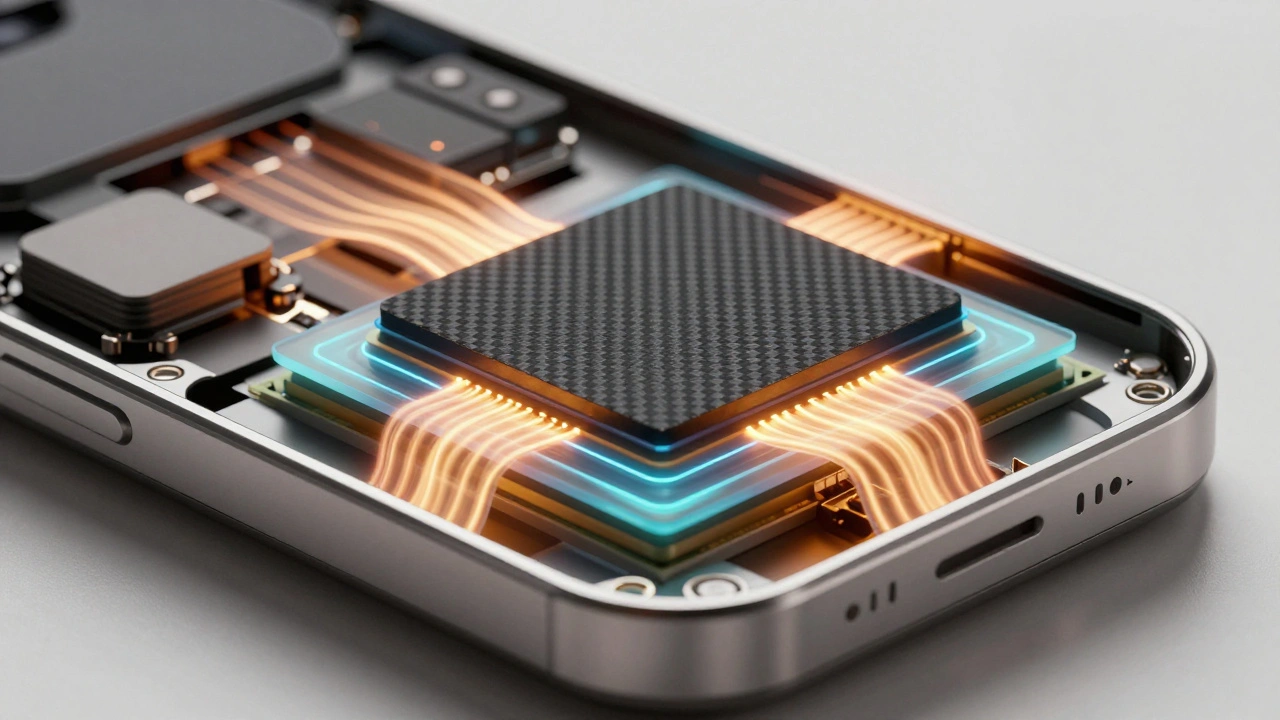
If you own an iPhone 16 series right now, the secret to its stability isn't a hidden liquid loop system. Instead, Apple has relied heavily on Graphene thermal pads conduct heat away from critical components using a single-atom-thick layer of carbon.Graphene Thermal Pads. This decision marked a strategic shift. While competitors often used bulky vapor chambers years ago, Apple found that for the standard usage patterns of most consumers, graphene offered a superior balance of cost and efficiency.
- Space Efficiency: Graphene sheets are incredibly thin, allowing more room for larger batteries without increasing phone thickness.
- Weight Savings: Every gram matters in a handheld device, and graphene adds negligible mass compared to traditional copper heat pipes.
- Dual Functionality: Beyond moving heat, these layers provide electromagnetic shielding. This means they stop interference from frying your signal while keeping the processor cool.
This approach works well for daily tasks like scrolling social media or streaming video. However, heavy gaming or continuous high-end video recording can push these pads to their limits. That is where the distinction between the mainstream "plus" models and the pro-tier devices becomes clear. The standard thermal path relies on conduction through the chassis, essentially turning the entire aluminum or titanium frame into one giant heat sink.
Vapor Chambers Enter the Premium Tier
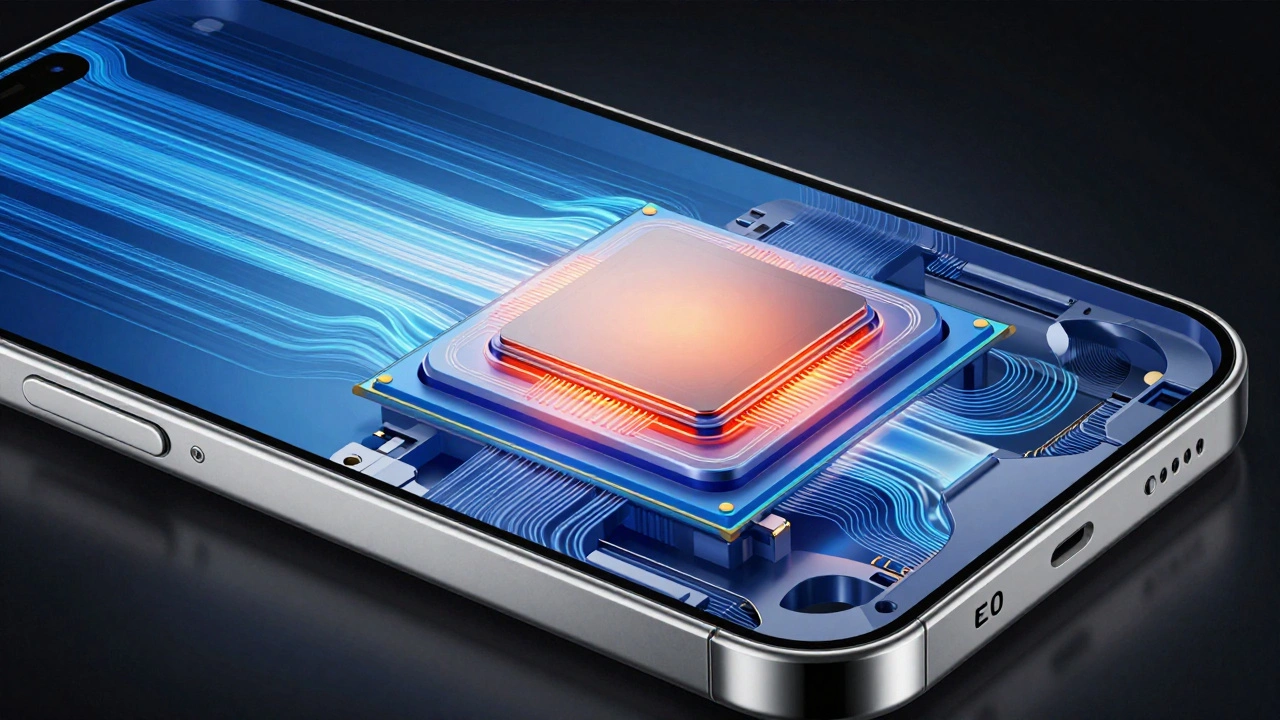
Looking ahead to the September 2026 launch window, things change for the enthusiasts. With the introduction of the iPhone 17 Pro and Pro Max, Apple is transitioning to Vapor Chamber Technology. Unlike the static pads in the iPhone 16, a vapor chamber is a closed-loop system containing a working fluid that evaporates near the hot spot and condenses at cooler areas, effectively spreading heat faster.
| Feature | Graphene Thermal Pads | Vapor Chambers |
|---|---|---|
| Thickness | Minimal (Ultra-thin) | Moderate (Requires depth) |
| Primary Use | Mainstream iPhone Models | Premium Pro / High Load Scenarios |
| Secondary Benefit | EM Interference Shielding | Rapid Heat Dispersal |
| Cost Factor | Lower production cost | Higher manufacturing complexity |
Why wait until the Pro models? Because the cost-to-benefit ratio favors vapor chambers only when performance loads are sustained. If you run 8K video rendering or intensive augmented reality apps for twenty minutes straight, a simple pad can't move heat fast enough. The Pro tier uses the A19 Pro chip, which generates significantly more thermal density. To prevent thermal throttling-where the phone slows down to protect itself-you need the active spreading capability of a vapor chamber.
The Chip Architectures Behind the Heat
Cooling systems don't work alone; they rely entirely on what creates the heat in the first place. We are entering an era defined by the TSMC 2-Nanometer Process. By late 2025, production began at scale, placing these chips in hands around mid-2026.
The jump from the 3-nanometer process to the 2-nanometer process is massive. On average, this architecture delivers about 10% to 15% better performance per watt. But here is the real kicker: it reduces heat generation by roughly 30%. When the silicon itself produces less heat, the thermal paths don't have to work as hard. This efficiency allows Apple to design thinner phones without sacrificing the battery capacity users expect. It changes the fundamental geometry of the device; you can shrink the internal volume because the thermal envelope is tighter.
Beyond the node size, there is the issue of memory architecture. Traditional phones stack memory next to the processor, requiring long connections that lose energy as heat. Rumors suggest Apple is experimenting with RAM-on-Wafer Configuration. By integrating memory directly onto the wafer alongside the CPU and GPU, latency drops, power consumption plummets, and-crucially-the overall chip footprint shrinks. Less chip size means less surface area for heat to build up, simplifying the job for the graphene pads or vapor chambers above it.
Specialized Forms: Folding and Air Thinner Devices
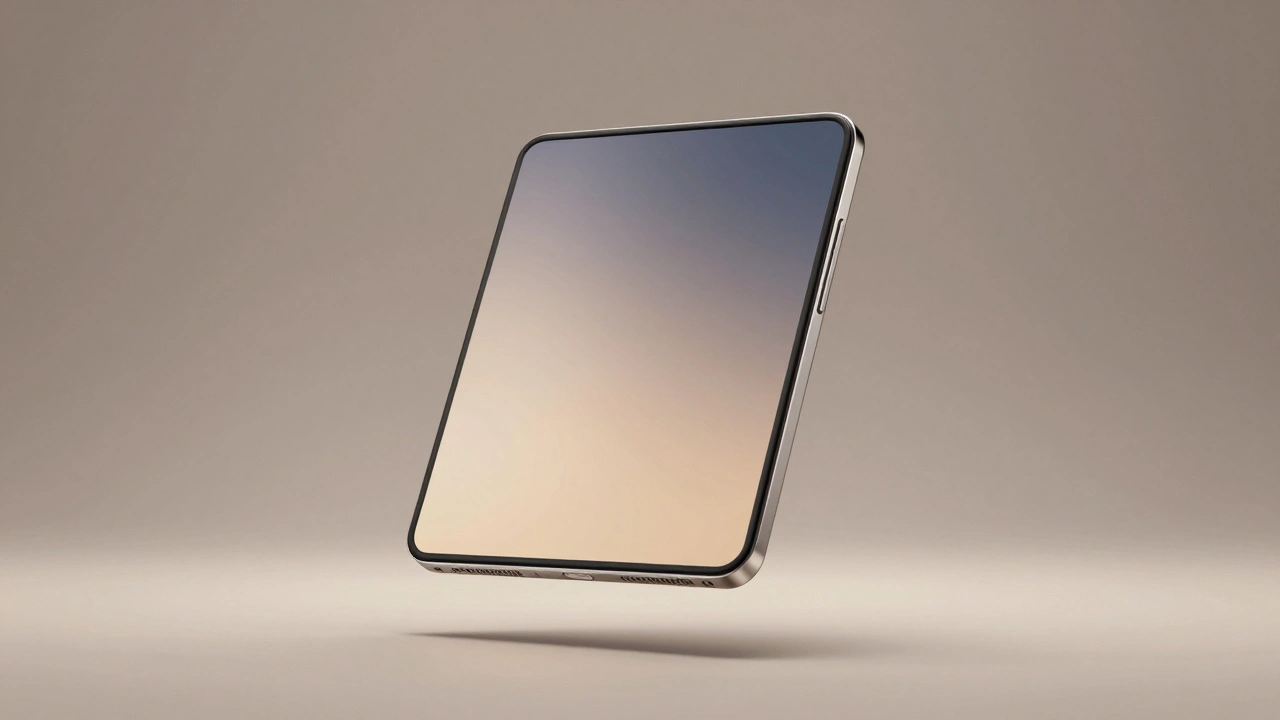
Innovation in heat management drives new form factors. Consider the highly anticipated Foldable iPhone expected in the 2026 cycle. A flexible screen cannot house thick vapor chambers or rigid graphite sheets without breaking the hinge mechanism. Here, custom silicon takes center stage. The A20 Pro chip, designed specifically for foldables, prioritizes extreme efficiency over raw brute force to manage thermal challenges unique to unfolding displays.
Then there is the concept of the iPhone Air. Replacing the 'Plus' model in some market analyses, this hypothetical device aims for featherlight portability. You cannot stuff a robust vapor chamber into an ultra-thin body and still maintain the structural integrity of the frame. Instead, these designs likely lean heavily on passive dissipation. The external casing material itself-whether it is aerospace-grade aluminum or titanium-becomes the primary radiator.
For the "Air" model, the strategy shifts from fighting heat to managing expectations. By utilizing the 2-nanometer efficiency gains, the phone stays cool during standard use even with a smaller internal battery. It forces a trade-off: if you run it too hard, it gets warm because the chassis is minimal, but for light usage, it feels premium and cold.
The Role of Artificial Intelligence
We cannot talk about thermal paths without addressing the elephant in the room: On-Device AI Processing. Modern smartphones are increasingly tasked with running large language models and computer vision locally rather than sending data to the cloud. These operations require sustained compute intensity.
If a phone tries to run a background agent for transcription, image analysis, and predictive typing simultaneously, the processor idles very little. Without advanced thermal management, those continuous background tasks would cause the device to heat up within minutes. The integration of AI necessitates robust cooling solutions. This is one of the primary reasons why the iPhone 17 Pro adopts vapor chambers sooner than predicted. It isn't just for gaming; it is to ensure that the AI features remain functional all day without the phone overheating during long-term use cases.
Conclusion
Thermal management has transformed from an invisible utility into a defining feature of modern smartphone design. From the choice of materials in the chassis to the microscopic architecture of the silicon, every decision impacts how heat flows. As we head further into 2026, the line between cooling technology and industrial design blurs. The coolest phone isn't just a marketing gimmick; it represents the pinnacle of engineering efficiency, allowing us to hold powerful computers that remain comfortable in our hands.
Categories
Popular Articles