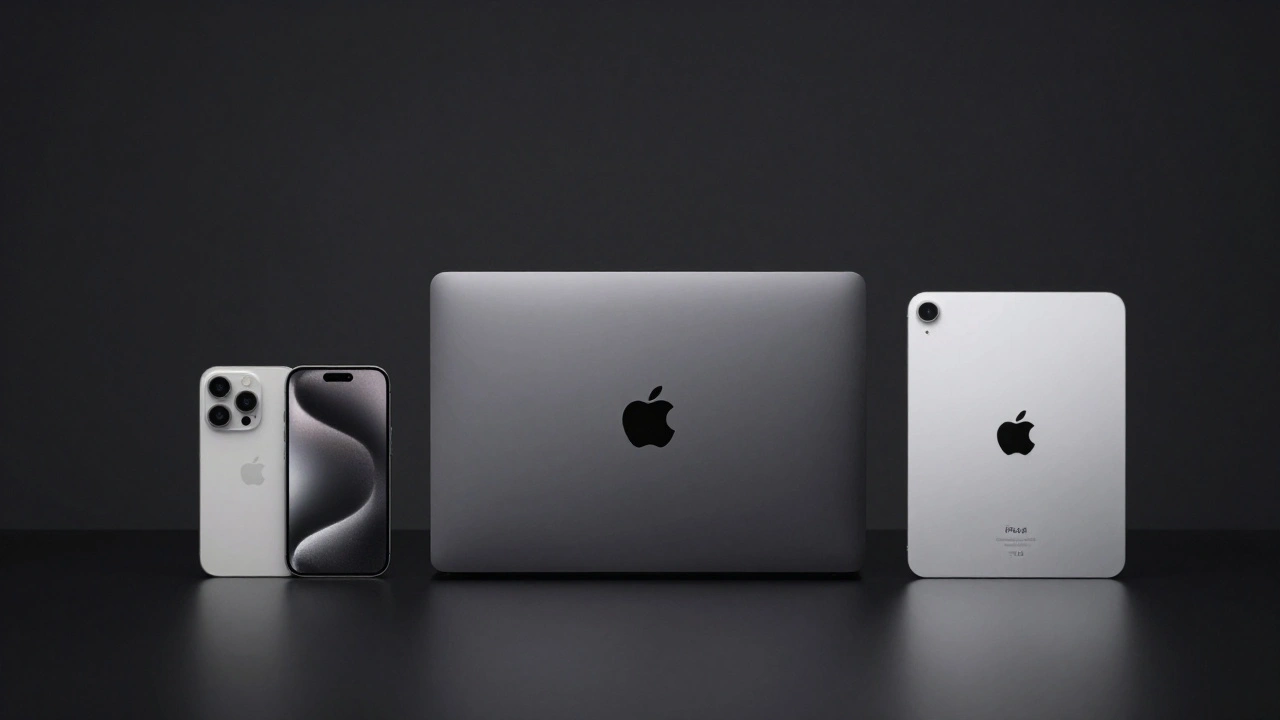

Walk into any electronics store, and you'll see two distinct vibes. On one side, manufacturers are shouting about megapixels, RAM speed, and refresh rates that most people can't even measure with their eyes. On the other, a white box sits quietly on a shelf. Inside is a device that does less than its competitors-but somehow feels like it does everything better.
This isn't accidental. It's the result of a deliberate, ruthless discipline known as the focus on essentials, a core tenet of Apple's design philosophy where functionality and user experience take precedence over raw specifications or feature counts. This approach dictates everything from the hardware engineers in Cupertino to the marketing team shooting ads against a stark white background. For decades, while other companies expanded their product lines into confusing sprawls, Apple has narrowed its focus to ensure every remaining feature serves a vital purpose.
The Philosophy of Radical Simplicity
You might think "simple" means easy to build. In reality, making something simple is incredibly hard. To execute this strategy, Apple employs what industry analysts call a "subtraction-based innovation" model. Instead of asking, "What else can we add?" the design teams ask, "What can we remove without breaking the experience?"
This mindset shifts the burden of complexity from the user to the engineer. When you hold a modern smartphone, the interface often hides layers of sophisticated technology behind a single gesture. If a feature doesn't contribute to that immediate, frictionless interaction, it gets cut from the roadmap. The goal isn't just aesthetics; it is cognitive load reduction. By eliminating clutter, Apple ensures that users don't have to learn how to use a device-they simply know how to use it immediately upon unboxing.
Consider the evolution of the remote control for streaming devices. Most legacy brands pack remotes with navigation buttons, menu keys, and volume rockers. Apple's TV remote strips this down to gesture controls and a play/pause button. While purists might miss the extra buttons, data suggests users find the simplified version less frustrating to navigate. This illustrates how product scope is defined not by what is technically possible, but by what is emotionally resonant.
Defining Product Scope Through Constraints
Every company faces the temptation to chase features. A competitor adds a fingerprint sensor, so Apple must too. Another adds water resistance, so Apple follows. This reactive cycle leads to "feature bloat," where a device becomes bloated with tools no one uses. Apple resists this by setting rigid constraints on their own scope.
A crucial element here is the definition of the product itself. The company treats hardware and software as a unified entity rather than separate units. Because they control the silicon, the operating system, and the physical chassis, they can make trade-offs that others cannot. If a feature compromises the battery life or the thermal efficiency, it is discarded regardless of how cool the spec sheet looks.
| Strategy Element | Traditional Competitor Approach | Apple's Essentialist Approach |
|---|---|---|
| Feature Selection | Add features to match or beat competition specs | Remove features unless essential to core experience |
| Product Lineup | Broad range targeting every price segment | Narrow lineup focused on premium segments |
| User Guidance | User manuals and complex settings menus | Intuitive gestures and seamless automation |
| Marketing Angle | Tech specifications (RAM, CPU speed) | Lifestyle outcomes and emotional benefit |
| Integration | Best-effort compatibility across OSs | Deep hardware-software integration |
This constrained scope allows for deep optimization. When you limit the number of configurations available, you can perfect the supply chain, refine the industrial design, and ensure rigorous quality control. This is why an iPhone has significantly fewer variants compared to Android flagships. By standardizing choices, the company focuses engineering talent on the details that matter-camera processing, screen brightness, and haptic feedback-rather than diluting effort across unnecessary variations.

Prioritizing Features via Empathy
If scope is about what you build, prioritization is about what you build first. Apple's method relies heavily on what is often called "empathetic observation." Before a line of code is written or a prototype is molded, designers observe how real humans struggle with current technologies.
The decision-making hierarchy is unique. Technical feasibility comes last. The primary filter is utility: Does this solve a genuine human problem? If yes, how can we deliver that solution without introducing complexity? For example, face recognition technology was introduced not because biometric sensors were trending, but because users found typing passcodes tedious and finding cameras dark. The solution needed to feel magical, not mechanical.
This prioritization also extends to software updates. You often notice that new operating systems don't add radical, game-changing tools immediately. Instead, they refine existing workflows. This is strategic. By keeping familiar interfaces intact, they respect the user's muscle memory. When they do change things, it usually takes years of R&D to ensure the change improves the fundamental task rather than just re-skinning it.

The Ecosystem Multiplier
One of the biggest drivers of their scope decisions is the interconnected nature of their devices. In the broader tech world, ecosystems often rely on open APIs where third-party developers glue pieces together. Apple builds a closed loop where continuity is baked in from the start.
A feature on the phone must complement the tablet, laptop, or watch. If adding a feature to one device creates friction for another, it is likely rejected. This creates the "walled garden" effect critics sometimes complain about, but it guarantees a consistent experience. Copying text on your Mac appears instantly on your iPad. Starting a video on the Apple TV sends it to your living room display seamlessly.
This integration acts as a powerful retention tool. Once you own multiple products, the friction of leaving increases because losing that connectivity costs more than the price of switching phones. Consequently, the scope of new products is evaluated strictly on how it strengthens the existing web. The Apple Watch, for instance, wasn't launched to compete with fitness trackers alone; it was designed to unlock doors, authenticate passwords, and extend the iPhone's capabilities. Every feature adds weight to the ecosystem, increasing the value of the whole.
Marketing the Experience Over Specs
The execution of this philosophy trickles down into how the products are sold. Look at a typical tech launch event. Competitors slide through spreadsheets showing benchmark scores and battery capacities. Apple's presentations tell stories. They show a filmmaker using a phone to shoot cinema-grade footage. They highlight a musician composing symphonies on a tablet.
By avoiding technical jargon, they lower the barrier to entry for non-technical users. They aren't selling you a processor; they are selling you the ability to create without limits. This narrative reinforces the essentialist strategy. The customer cares about the outcome (the photo, the song), not the tool used to get there. This alignment makes the marketing message consistent with the product design.
Furthermore, this storytelling approach drives brand perception. Because the focus is always on the premium experience, the pricing reflects that exclusivity. High prices act as a filter, ensuring the market perceives the product as high-value. When you pay a premium, you expect perfection. This expectation forces the company to maintain their high standards on quality, closing the feedback loop.
Does limiting features hurt power users?
It depends on the definition of "power user." For enthusiasts who value customization and granular control, yes, it can feel restrictive. However, the target demographic generally prefers reliability and ease-of-use over extensive customization. By removing complex options, Apple often delivers higher performance on standard tasks due to optimized resources.
How does Apple decide what constitutes an "essential" feature?
The criteria involve internal usability testing and cross-departmental review. A feature must pass a threshold of intuitive necessity-if users need training to understand it, it likely fails the test. It is driven by empathy research, observing actual daily behaviors rather than just asking consumers what they want.
Can other companies replicate this strategy successfully?
Replication is difficult without vertical integration. Apple controls both the hardware and software, allowing for deep optimization. Companies that outsource their chips or OS components often cannot achieve the same level of seamless simplicity because dependencies outside their control introduce complexity.
Why does focusing on fewer products work financially?
Fewer SKUs (Stock Keeping Units) mean higher manufacturing volume per unit, lowering marginal costs and improving yield rates. It reduces supply chain complexity and marketing waste, allowing profits to be reinvested into R&D for deeper innovation rather than breadth of options.
Is this strategy sustainable in the long term?
Historically, yes. As technology matures, the market trend moves toward consolidation and simplicity rather than fragmentation. Consumers generally crave convenience over novelty once basic needs are met, supporting a strategy built around reliable, high-quality essentials.