
For decades, the story of Apple’s hardware was tied to one name: Jony Ive, Apple's former Chief Design Officer who defined the company's aesthetic for over two decades. When he left in 2019, the industry held its breath. Who would replace the man who made the iPhone look like a piece of art? The answer wasn’t another celebrity designer. It was Evans Hankey, Apple executive and Vice President of Industrial Design from 2019 to 2023. But her tenure was short, quiet, and ended with a surprise that changed how we understand Apple’s internal power structure.
In October 2022, it was announced that Hankey was leaving. By early 2023, the bigger news dropped: Apple wouldn’t replace her. They didn’t just leave the seat empty; they eliminated the role entirely. This isn’t just a personnel change. It’s a fundamental shift in how the world’s most valuable company decides what its products should look like. If you’re watching Apple’s future hardware, you need to understand this transition. It marks the end of the "design-led" era and the beginning of an "operations-integrated" model.
The Three-Year Bridge: Evans Hankey’s Quiet Tenure
When Jony Ive departed to start his own firm, LoveFrom, A design studio founded by Jony Ive after leaving Apple., Apple faced a crisis of identity. Could anyone maintain the sleek, minimalist language that customers expected? Enter Evans Hankey. She had been at Apple for more than 20 years, working closely with Ive, but she was not a public figure. Unlike Ive, who gave interviews and appeared on magazine covers, Hankey stayed behind the scenes.
Her appointment as Vice President of Industrial Design in 2019 was strategic. She wasn’t there to reinvent the wheel; she was there to keep it turning smoothly. For three years, she oversaw the physical form, materials, and ergonomics of the iPhone, Apple's flagship smartphone series., iPad, Apple's tablet computer line., Mac, Apple's line of personal computers., and Apple Watch, Apple's smartwatch product line.. During this period, the design language remained consistent. We saw refinements-the return of color to the iMac, the stainless steel band on the Apple Watch Ultra-but no radical departures. This consistency was likely the point. Hankey provided stability during a transitional phase.
However, her low profile became part of the problem. In a company where design is a core brand pillar, having a leader who never spoke publicly created a vacuum. Mark Gurman, reporting for Bloomberg, noted that while Hankey was effective, the lack of a visible champion for design raised questions about the department’s influence within the C-suite. Her departure in late 2022, after only three years in the top spot, signaled that Apple was ready to move on from the "successor to Ive" narrative entirely.
The Shocking Decision: Eliminating the Role
Usually, when a VP leaves a major tech company, there is a search for a replacement. Apple did something different. In February 2023, reports confirmed that Apple would not hire a new Vice President of Industrial Design. Instead, they dissolved the position. This was a deliberate structural choice, not a temporary hiring freeze.
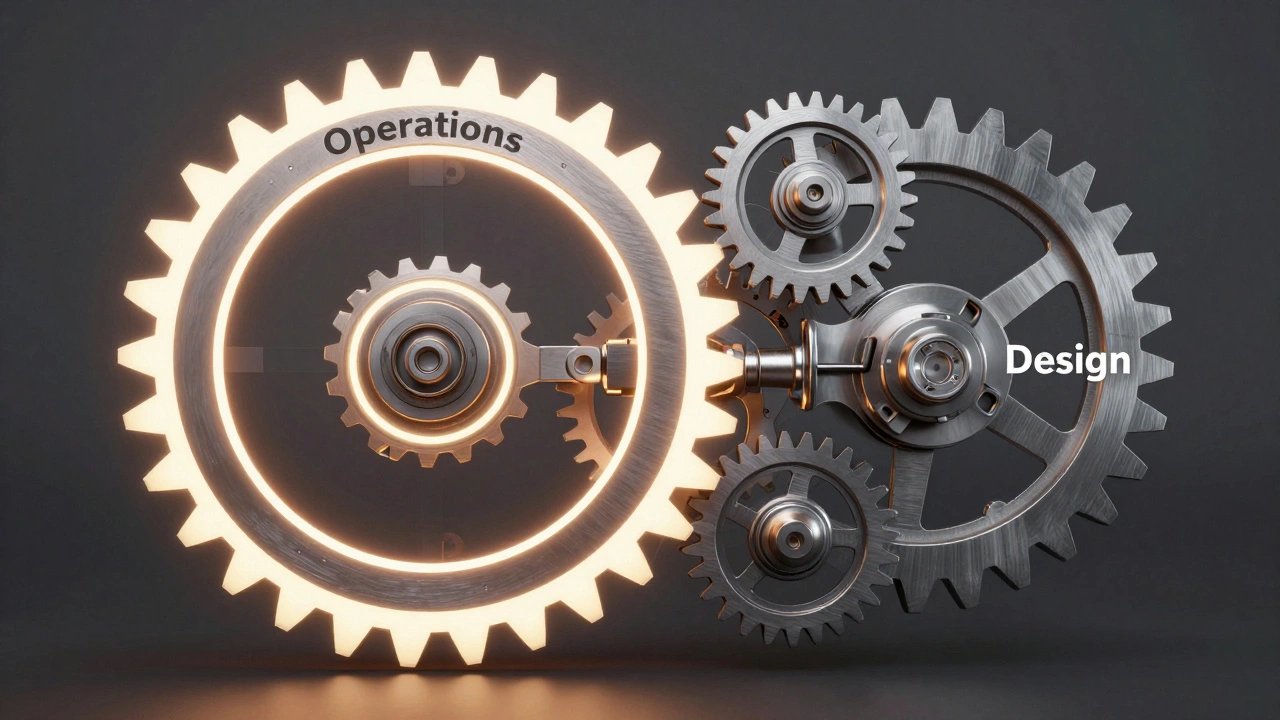
Why would a company famous for its "slick-looking products" remove the head of the team responsible for that look? The answer lies in the changing priorities of the business. As Apple has matured, its focus has shifted from breakthrough hardware innovation to operational efficiency, supply chain mastery, and services integration. By eliminating the VP role, Apple sent a clear message: design is no longer a standalone strategic pillar led by a creative visionary. It is now a function integrated into operations.
This decision also reflects a broader trend in tech. The era of the charismatic chief designer-like Ive or even Dieter Rams, German industrial designer who influenced Braun and later Apple's design philosophy. before him-is fading. Companies are realizing that great design requires collaboration across engineering, marketing, and operations, not just a single artistic director. Apple chose to embed design deeper into the machine rather than keeping it elevated above it.
New Reporting Lines: Jeff Williams Takes Charge
If there is no VP of Industrial Design, who does the team report to? The answer is Jeff Williams, Apple's Chief Operating Officer since 2015.. Williams, the COO, is known for his mastery of supply chains and manufacturing. He is the person who ensures that millions of iPhones can be built simultaneously without breaking the global logistics network. Under the new structure, the roughly 20-person industrial design team reports directly to him.
This creates a fascinating dynamic. Previously, design might have pushed back against manufacturing constraints to achieve a perfect aesthetic. Now, design sits under the wing of the operations chief. This doesn’t mean designs will become ugly. It means they will become highly optimized for production. Expect fewer experimental materials and more focus on durability, repairability, and cost-efficiency. The "look and feel" will still be premium, but the decisions will be driven by what is feasible to scale, not just what looks cool in a sketch.
Meanwhile, software design remains separate. Alan Dye, Vice President of Human Interface Design at Apple. continues as VP of Human Interface Design. This split reinforces the idea that hardware and software are now managed differently. Software is still treated as a creative platform, while hardware is treated as a precision-engineered commodity. This distinction is crucial for understanding why iOS updates often feel more innovative than new Mac models.
| Era | Key Leader(s) | Structure | Primary Focus |
|---|---|---|---|
| The Ive Era (1997-2019) | Jony Ive | Centralized CDO role overseeing both hardware and software | Radical innovation, minimalism, brand identity |
| The Transition (2019-2023) | Evans Hankey (Hardware) & Alan Dye (Software) | Dual VPs reporting to senior leadership | Continuity, refinement, stability |
| Current Model (2023-Present) | Jeff Williams (COO) & Alan Dye (VP H.I.D.) | Industrial design reports to COO; Software design remains separate | Operational efficiency, scalability, manufacturing integration |
What This Means for Future Products
You might be wondering: Will my next iPhone look different? Probably not immediately. Design teams don’t pivot overnight. The products currently in development were already influenced by Hankey’s final months and the transition plan. However, over the next few product cycles, the effects will become visible.
First, expect less risk-taking. Without a high-profile design champion advocating for bold moves, the committee-based approach under Jeff Williams will likely favor safe, incremental improvements. Think thinner bezels, better battery life, and stronger materials, but not a complete redesign of the form factor. The days of the butterfly keyboard or the removal of the headphone jack-a controversial move driven by strong design vision-are likely behind us.
Second, look for greater emphasis on sustainability and repairability. Operations leaders care about lifecycle costs. If the design team answers to the COO, they will prioritize designs that are easier to recycle, repair, and manufacture at scale. This aligns with Apple’s public commitments to environmental goals, but it also makes financial sense for the bottom line.
Finally, the separation of hardware and software leadership may lead to a divergence in user experience. Software will continue to evolve rapidly with new AI features and interfaces, while hardware evolves slowly. This could create a mismatch where the software expects capabilities that the conservative hardware design doesn’t fully support, or vice versa. Watch for how Apple integrates new technologies like AR/VR into existing form factors without disrupting the operational flow.
Community Reactions and Industry Implications
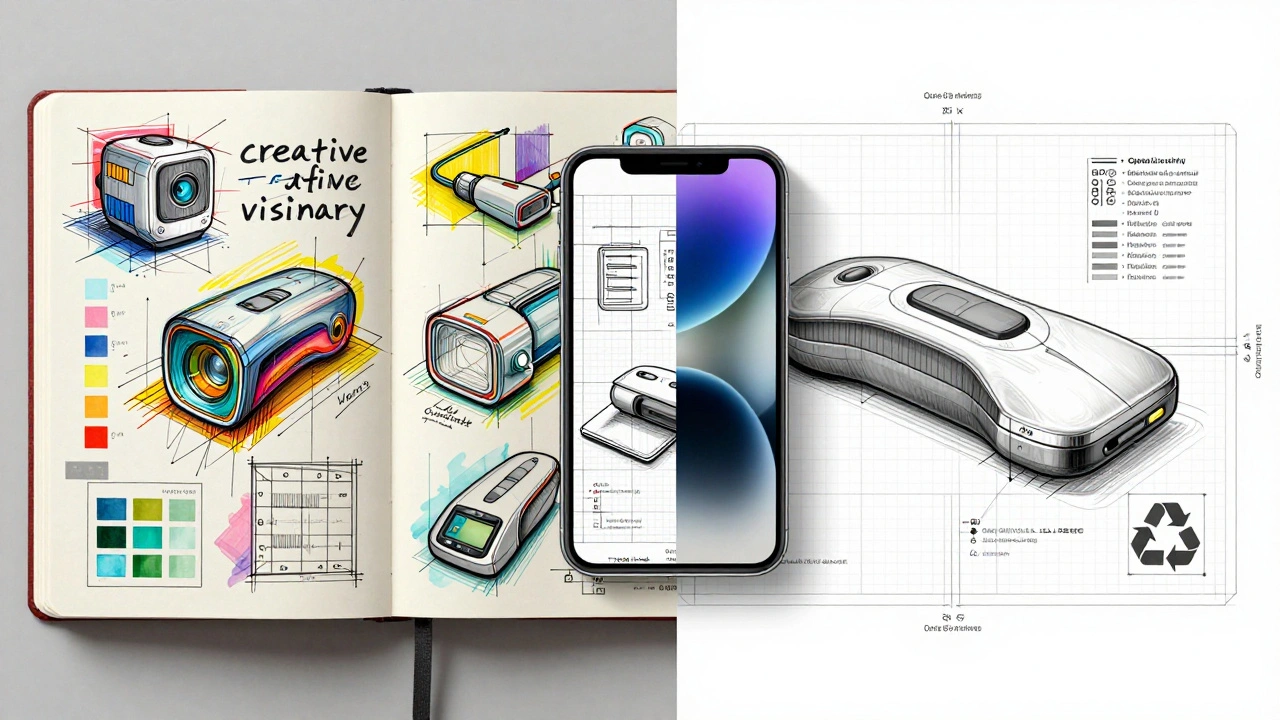
The design community reacted with mixed feelings. On forums like Core77, professional designers expressed concern that removing the VP title diminishes the status of industrial design within the company. Some feared that operations would stifle creativity, leading to generic, beige boxes. Others argued that this was a natural maturation. Apple is no longer a startup trying to prove itself through aesthetics; it is a trillion-dollar empire that needs stability.
For other tech companies, Apple’s move serves as a case study. Many firms struggle with the tension between creative vision and operational reality. Apple has chosen side B. They’ve decided that in the current market, execution matters more than inspiration. This validates the strategies of companies like Samsung and Dell, which have long prioritized manufacturing efficiency and feature density over singular design voices.
It also highlights the value of deep institutional knowledge. Evans Hankey wasn’t hired from outside; she was promoted from within. Her 20+ years at Apple meant she understood the culture, the constraints, and the legacy. Her departure without a direct replacement suggests Apple trusts its processes more than its personalities. The system works, so why change the leader?
Conclusion: A New Chapter for Apple Design
Evans Hankey’s tenure was brief, but its impact is lasting. She bridged the gap between the iconic era of Jony Ive and the pragmatic era of Jeff Williams. By eliminating her role, Apple has declared that design is no longer a luxury or a personality cult-it is a disciplined function essential to the machine. For consumers, this means reliable, well-built products that may not always surprise us, but will rarely disappoint. For the industry, it’s a reminder that as companies grow, their governance structures must adapt. The magic hasn’t disappeared; it’s just been moved from the spotlight to the boardroom.
Who replaced Evans Hankey at Apple?
No one directly replaced Evans Hankey. Apple eliminated the Vice President of Industrial Design role entirely. The industrial design team now reports directly to Chief Operating Officer Jeff Williams.
How long was Evans Hankey the head of industrial design?
Evans Hankey served as Vice President of Industrial Design for approximately three years, from 2019 until her departure in early 2023.
Why did Apple decide not to replace Evans Hankey?
Apple likely decided to integrate industrial design more closely with operations to prioritize manufacturing efficiency, scalability, and cost-effectiveness over independent creative direction. This reflects a shift from a design-led to an operations-led strategy.
Does Alan Dye still work at Apple?
Yes, Alan Dye remains the Vice President of Human Interface Design, continuing to lead the software and user interface design teams separately from the hardware division.
Will Apple products look different now?
Not immediately. Existing product designs are already in progress. However, future products may show less radical innovation and more focus on practical improvements, durability, and ease of manufacturing.
Categories
Popular Articles