
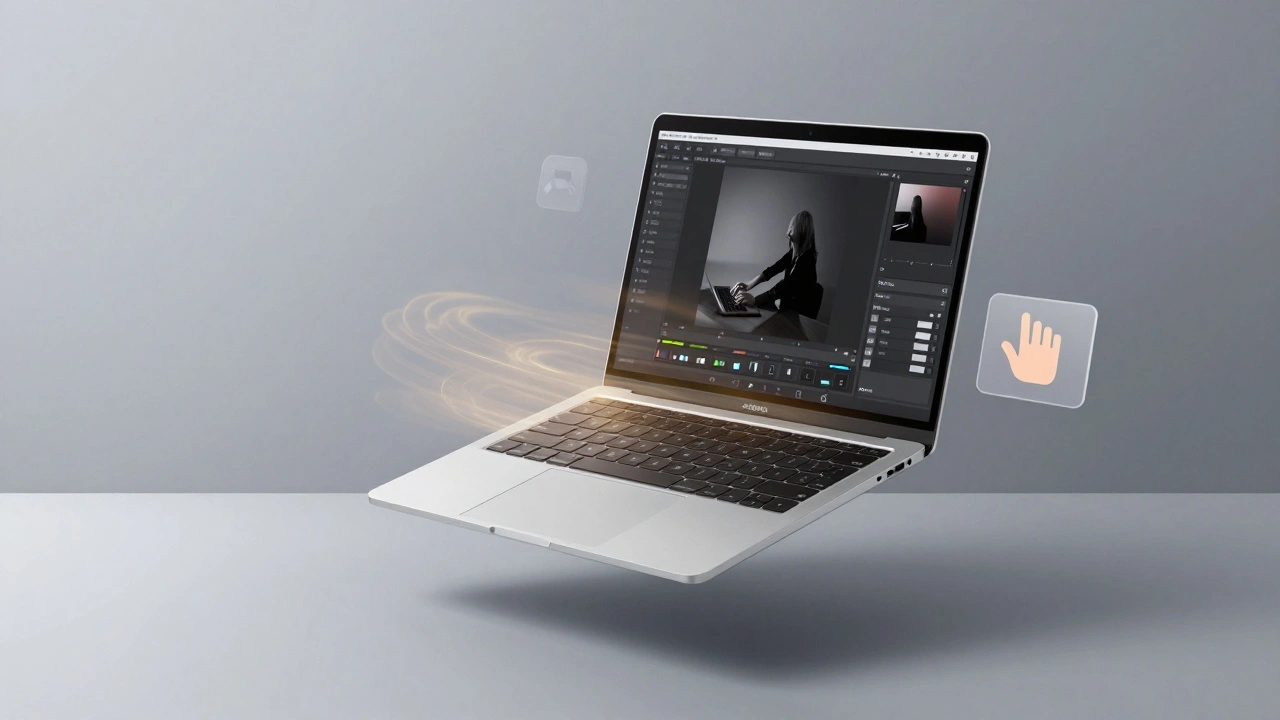
The MacBook Air isn’t just thin-it’s designed to be thin. Not because Apple wanted to make a fashion statement, but because millions of people carry it everywhere: from coffee shops to airports, from home offices to lecture halls. Its thickness isn’t an accident. It’s the result of a deliberate, years-long mission to build a laptop that disappears into your life instead of weighing it down.
Think about what you really need from a laptop when you’re on the move. You don’t want to carry a brick. You don’t want to hear a fan roar when you’re in a quiet meeting. You don’t want to wait for it to heat up before you can get work done. The MacBook Air answers all of that with one simple idea: do more with less. Less weight. Less bulk. Less noise. And somehow, still deliver performance that feels powerful.
Why Thinness Matters More Than You Think
Most people assume thinness is about looks. But for the MacBook Air, it’s about usability. A laptop that’s too thick or too heavy becomes something you avoid. You leave it at home. You don’t grab it on the way out. You stop using it as your main device. Apple’s design team knew this. So they measured what people actually carried. Backpacks. Messenger bags. Briefcases. The goal wasn’t to fit in a pocket-it was to fit without being noticed.
The 13-inch MacBook Air weighs just 2.7 pounds. That’s less than a bottle of water. Its height? Only 0.44 inch. That’s thinner than a standard pen. And it’s all made from a single piece of 100% recycled aluminum. No plastic shells. No flimsy hinges. Just a rigid, unibody shell that bends under pressure instead of cracking. That’s not just marketing-it’s engineering.
When you slide it into your bag, it doesn’t push other things out of place. It doesn’t add bulk. It becomes part of your routine, not an extra burden. That’s why students, writers, remote workers, and travelers keep choosing it-even when there are cheaper options.
The Fanless Secret Behind the Silence
One of the most surprising things about the MacBook Air? It has no fan. Not one. No spinning blades. No whirring noise. And yet, it doesn’t overheat.
This isn’t magic. It’s the M-series chips. The M4 chip, used in the 2024 model, and the upcoming M5 in March 2026, are built on a 3nm process. That means more transistors in less space, and much less heat generated per task. Apple paired this with an efficient cooling system: a thin graphite sheet that spreads heat across the aluminum body. No fans. No heat sinks. Just metal that naturally dissipates warmth.
What does this mean for you? If you’re typing, browsing, editing photos, or even coding, the MacBook Air stays cool. Silent. And responsive. No sudden slowdowns. No loud interruptions. It’s the kind of laptop you forget is running-until you realize you’ve been working for three hours without a single pause.
But here’s the catch: this system works best with short bursts of activity. If you’re rendering a 4K video for 30 minutes straight, or running multiple heavy virtual machines, the heat builds up. Apple knows this. That’s why the MacBook Air isn’t meant for professional video editing or 3D modeling. It’s built for productivity-not peak performance.
Display: Big Enough, But Not Too Big
The screen is 13.6 inches diagonally. That’s not huge. But it’s just right. Why? Because bigger screens mean heavier laptops. And heavier laptops get left behind.
The Liquid Retina display isn’t OLED. It’s a high-end LCD with 224 pixels per inch, 500 nits of brightness, and support for over a billion colors. It’s sharp. It’s bright enough to use outdoors. And it has True Tone, which adjusts the white balance based on your surroundings. That’s useful if you work in different lighting-sunlight, fluorescent office lights, dim evening lamps.
Apple could have gone with OLED. It’s thinner. It’s deeper in black. But OLED screens are more fragile, harder to repair, and cost more. For the MacBook Air, Apple chose durability and value over flashy pixels. And honestly? Most users can’t tell the difference in daily use.
The display also doesn’t wobble when you type. That’s because the hinge is stiff enough to hold the screen steady, but not so tight that it’s hard to open. It’s a small detail-but one that makes a big difference over time.
Ports, Power, and the Art of Less
Remember when laptops had five different ports? USB-A, HDMI, SD card, Ethernet, headphone jack? The MacBook Air has two. Two Thunderbolt 4 ports. That’s it.
That’s not a limitation. It’s a design choice. Every port you add adds thickness. Every port you add adds weight. Every port you add adds cost. Apple simplified everything. One port does charging. One port does video output. One port does data transfer. All through USB-C/Thunderbolt 4.
You can connect two external 6K displays. You can charge with a 30W adapter. You can plug in a mouse, a drive, or a monitor-all with the same cable. No dongles. No hubs. Just one cable. And because the ports are flush with the body, they don’t stick out. The laptop still slides into tight spaces.
Even the MagSafe connector uses 100% recycled cobalt magnets. That’s not just eco-friendly-it’s a subtle upgrade. The magnetic connection means if you trip over the cord, it pulls free instead of yanking your laptop off the table.
What’s Changing in the M5 MacBook Air (2026)
The M5 chip, expected in March 2026, won’t change the shape. The thinness won’t get thinner. The weight won’t drop. But under the hood? Everything gets smarter.
The M5 will still use TSMC’s 3nm process, likely the N3P refinement. That means better power efficiency. More AI performance. The Neural Engine jumps from 16 cores to 18 or more, making tasks like background blur in video calls or real-time language translation faster and smoother.
Storage and memory options will expand. The base model will likely stay at 256GB SSD and 16GB RAM. But now, you’ll be able to get 24GB or even 32GB of RAM in the same thin body. That’s huge for people who run multiple apps at once-researchers, coders, designers.
There might be a new anti-reflective coating on the screen. Maybe even a nano-texture glass option, like the ones on Pro models. That would help if you work in bright rooms or near windows. But don’t expect OLED. Apple isn’t ready to put OLED in the Air. Too fragile. Too expensive. Too much heat.
The design stays the same because it works. The goal isn’t to reinvent. It’s to refine.
The Trade-Off: Thinness vs. Thermal Limits
Let’s be honest: the MacBook Air’s fanless design has a weakness. It can’t handle long, heavy workloads. If you’re compiling code for 45 minutes straight, or editing 4K footage without breaks, the chip will throttle. Performance drops. It’s not broken. It’s just trying to stay cool.
Compare that to a MacBook Pro with a fan. It can sustain heavy work for hours. But it’s heavier. Louder. Bulkier. The Air gives up sustained power for everyday ease.
Apple has made thermal improvements on the iPhone and iPad. They’ve used vapor chambers, better heat spreaders, and layered materials. But they haven’t brought those to the Air. Why? Because adding them would make the laptop thicker. And that defeats the point.
This isn’t a flaw. It’s a trade-off. And for most people, it’s worth it. You’re not editing Hollywood films on your Air. You’re writing emails, taking notes, browsing, and occasionally editing a photo or two. The Air handles all of that without breaking a sweat.
Materials That Matter
Apple doesn’t just talk about sustainability. It builds it in. The entire chassis is made from 100% recycled aluminum. The trackpad uses recycled aluminum too. The battery? 100% recycled cobalt. The solder? Recycled tin. Even the packaging is 50% recycled fiber.
Over 30% of the electricity used to make each MacBook Air comes from low-carbon sources. It’s ENERGY STAR certified. That’s rare for a laptop.
Most people don’t notice these details. But they matter. When you choose the MacBook Air, you’re not just buying a device. You’re choosing a design philosophy that values longevity, repairability, and environmental responsibility.
Who Is This Laptop Really For?
The MacBook Air isn’t for everyone. If you’re a video editor running Premiere Pro all day, you need a Pro. If you’re a gamer with high-end specs, this isn’t your machine.
But if you’re someone who:
- Works from coffee shops, trains, or home offices
- Writes, researches, or manages spreadsheets daily
- Needs a laptop that doesn’t weigh you down
- Wants silence, not noise
- Values battery life over raw power
Then the MacBook Air isn’t just a good choice. It’s the best one.
It’s not flashy. It doesn’t scream for attention. But it does one thing better than almost any other laptop: it gets out of your way. You don’t think about it. You just use it. And that’s the whole point.
Is the MacBook Air too thin to be durable?
No. The unibody aluminum design is rigid and tested to withstand daily drops, bumps, and pressure. Apple’s design team stress-tests the chassis to ensure it won’t warp or bend under normal use. Many users carry their MacBook Air in backpacks with books, chargers, and other gear-without damage. It’s not indestructible, but it’s built to last.
Can the MacBook Air handle photo and video editing?
Yes-for light to moderate editing. Apps like Lightroom, Final Cut Pro, and DaVinci Resolve run smoothly on the M4 and M5 chips. You can edit 4K footage, apply filters, and export files without issues. But if you’re doing multi-track 8K video, heavy color grading, or rendering 3D animations for hours, you’ll hit thermal limits. For that, a MacBook Pro with a fan is better suited.
Why doesn’t the MacBook Air have an OLED display?
OLED screens are thinner and offer deeper blacks, but they’re more fragile, harder to repair, and more expensive to produce. Apple prioritizes durability, brightness, and cost-effectiveness for the Air. The Liquid Retina LCD is already excellent for daily use. OLED is reserved for Pro models where users pay more for premium visuals.
Will the M5 MacBook Air get a thinner design?
No. Apple has confirmed the 2022 design language continues through 2026. The M5 chip will fit into the same chassis. The goal isn’t to make it thinner-it’s to make it smarter. Improvements will come in efficiency, AI performance, and display coatings-not physical dimensions.
Is the MacBook Air worth upgrading to from an older model?
If you’re using a MacBook Air from 2020 or earlier, yes. The M1 chip was a huge leap. The M2, M3, M4, and M5 chips each improved battery life, speed, and AI features. Even if you’re not doing heavy tasks, the difference in responsiveness, app launch time, and battery endurance is noticeable. If your current Air is still running well, you can wait-but if you’re feeling sluggish, the upgrade is worth it.