
The iPhone 4 didn’t just update a phone-it reset what people thought a smartphone could look like. Before 2010, most phones were plastic, chunky, and built for function over form. Then Apple dropped the iPhone 4, and suddenly, everyone wanted a device that felt like a piece of jewelry. The secret? Two things: glass on both sides, and a screen so sharp it looked printed.
The Glass-and-Metal Design That Redefined Premium
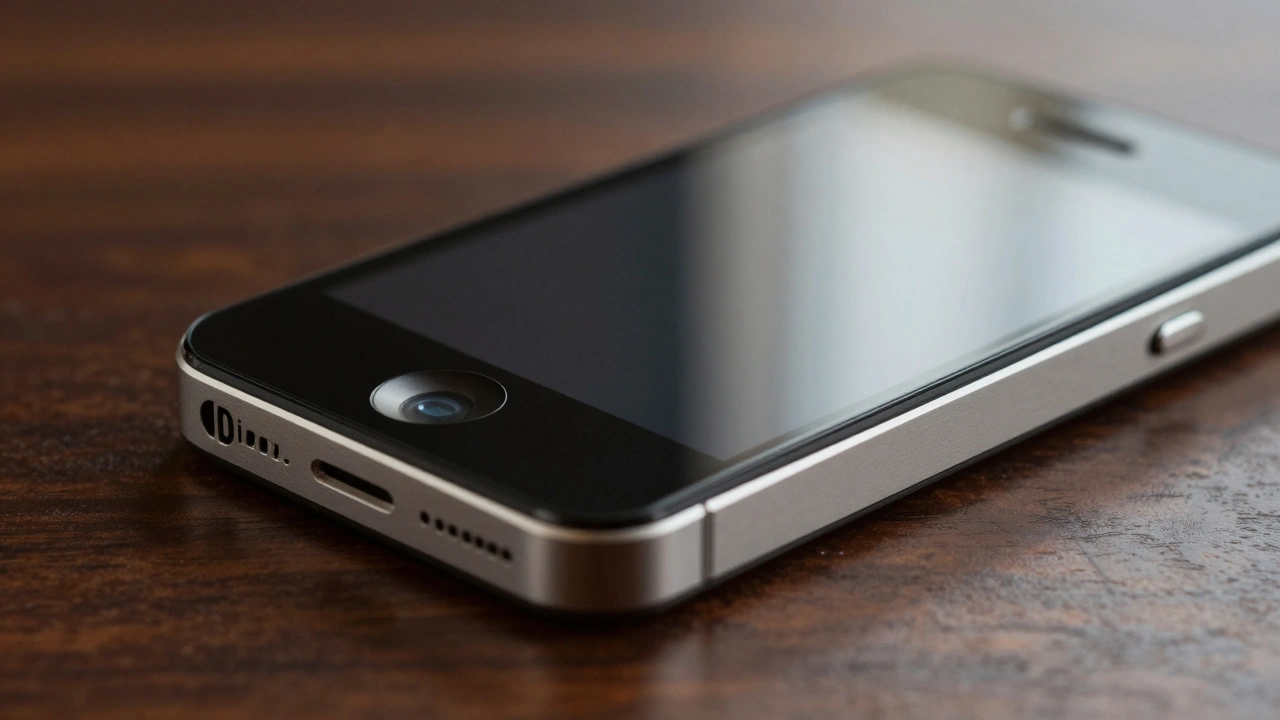
The iPhone 4 looked unlike anything else on the market. Its body wasn’t just a case-it was a single, seamless unit. A brushed stainless steel band wrapped around the edges, doubling as the antenna. That’s right-the metal frame wasn’t just for looks. It handled calls, Wi-Fi, and GPS signals. And on either side, Apple placed sheets of chemically strengthened aluminosilicate glass. Not plastic. Not polycarbonate. Glass.
Why glass? Because it felt better. It looked better. It didn’t scratch like plastic, and it didn’t look cheap under light. The front glass covered the screen and the black or white border around it. The back glass matched the color of the frame. Both surfaces had an oleophobic coating to repel fingerprints. It was a bold move. Glass breaks. Plastic doesn’t. But Apple bet that people would trade durability for beauty-and they were right.
For the first time, a phone didn’t just communicate. It expressed. Holding an iPhone 4 felt like holding something made with care. It wasn’t just a tool. It was a statement. And that statement echoed through the industry. Within a year, Samsung, HTC, and others started ditching plastic bodies. Glass backs became the new normal.
The Retina Display: When Pixels Vanished
The real game-changer, though, was the screen.
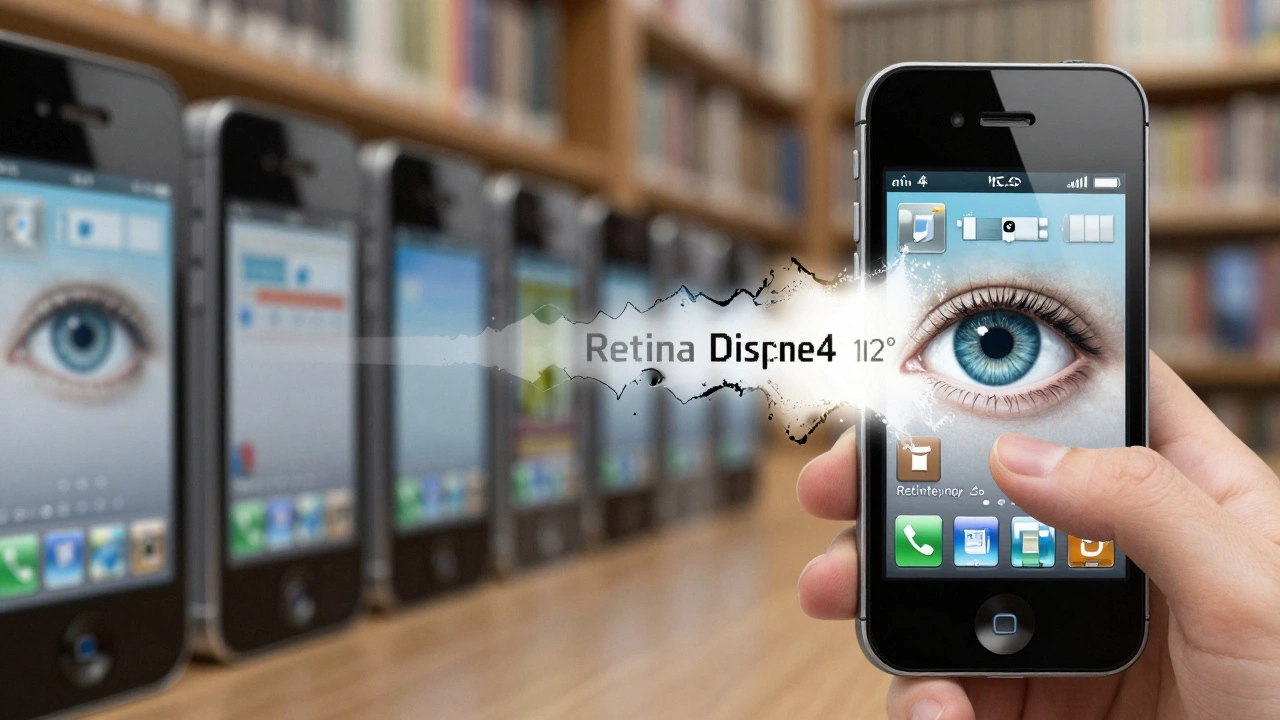
The iPhone 4 had a 3.5-inch display with 960 by 640 pixels. That’s 326 pixels per inch (ppi). Apple called it the "Retina display." Not because it was the highest resolution on the market-other phones had higher numbers-but because at 12 inches from your eye, your retina couldn’t tell individual pixels apart. It looked like ink on paper.
Before the iPhone 4, most smartphones had screens around 160-200 ppi. Text looked jagged. Images blurred. Apps felt pixelated. The iPhone 3GS had 163 ppi. The iPhone 4 doubled that. Four times the number of pixels. And the difference? Night and day.
Open a PDF. Read a book. Scroll through photos. On the iPhone 4, everything looked crisp. No more blurry fonts. No more jagged edges. The screen didn’t just show content-it made content feel real. Apple didn’t just upgrade the display. They redefined what a display should do.
LG manufactured the LCD panel under exclusive contract. It used LED backlighting and IPS technology for wide viewing angles. Contrast ratio hit 800:1. Brightness peaked at 500 cd/m². But none of that mattered as much as the 326 ppi. Because once you saw it, you couldn’t go back.
Why 326 ppi Was the Magic Number
Apple didn’t pick 326 ppi by accident. They tested it. They asked people: "Can you see the pixels?" At 305 mm (12 inches), most people couldn’t. That became the threshold. Not because it was the limit of human vision, but because it was the point where perception shifted. The screen stopped looking like a screen. It started looking like a window.
Competitors tried to match it. Some went higher. Others stuck with lower numbers, arguing that "you don’t need more." But consumers knew. Once you saw the iPhone 4’s screen, anything below it felt outdated. Even the iPhone 4S, released a year later, kept the same 326 ppi display. Why? Because Apple had found the sweet spot. It wasn’t about pushing limits. It was about meeting a psychological expectation.
That expectation became the new baseline. By 2012, every flagship phone had a Retina-level display. By 2015, even mid-range phones crossed 300 ppi. The iPhone 4 didn’t just lead the market-it created it.
The Camera, the Chip, and the Details
The display wasn’t the only upgrade. The iPhone 4 came with dual cameras. The rear one was 5 megapixels, backside-illuminated, with a 3.85mm f/2.8 lens. It could record 720p HD video-something most phones couldn’t do. It had an LED flash and tap-to-focus, letting you pick where to focus just by tapping the screen.
The front camera? 640×480 VGA. It wasn’t great by today’s standards, but it was the first front-facing camera on an iPhone. And it made FaceTime possible. Suddenly, you could video call someone across the country. It felt like science fiction.
Under the hood, the A4 chip ran at 800 MHz. 512 MB of RAM. PowerVR SGX535 graphics. It wasn’t the fastest chip ever, but it handled everything smoothly. The 3-axis gyroscope, accelerometer, and digital compass made motion sensing accurate. Wi-Fi 802.11n, Bluetooth 2.1, and GPS all worked reliably. The phone felt fast. Responsive. Alive.
And then there were the small things. The volume buttons clicked with satisfying precision. The home button had a smooth, tactile feel. Even the packaging felt different. It wasn’t just a phone. It was a complete experience.
How the iPhone 4 Changed the Industry
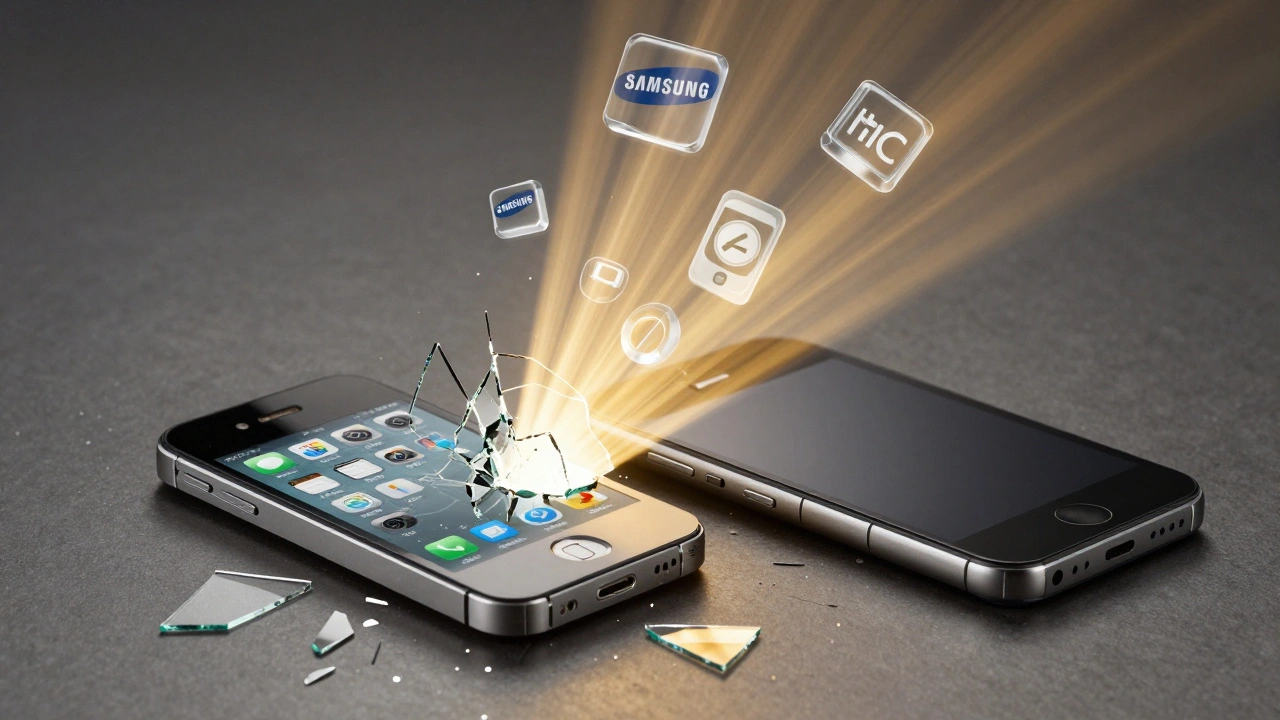
The iPhone 4 didn’t just sell. It influenced. Competitors scrambled to match its design. Samsung’s Galaxy S series copied the glass-and-metal look. HTC followed with sleek metal frames. Even Nokia, once the king of plastic, started using glass backs.
But the real legacy? The shift in how people talked about phones.
Before the iPhone 4, specs ruled: "1 GHz processor! 8 GB storage!" Afterward, people said: "Look at the screen. It’s so sharp." They didn’t care about megapixels or clock speed. They cared about how things looked. The term "Retina display" became a marketing weapon. It wasn’t just a technical spec-it was a promise: "This will look real."
That promise stuck. Today, every phone brand talks about display quality. OLED, HDR, 120Hz refresh rates-all of it traces back to that moment in 2010 when Apple showed the world that pixels could disappear.
The Enduring Influence
Even now, in 2026, you can see the iPhone 4’s shadow. The glass back? Still here. The metal frame? Still common. The obsession with pixel density? Still driving innovation.
Phones today have 4K screens. They have 144Hz refresh rates. They use microLEDs and LTPO panels. But the goal hasn’t changed. It’s still about making the screen feel invisible. About making the experience feel natural. About making you forget you’re looking at a screen at all.
The iPhone 4 didn’t just launch a new phone. It launched a new standard. And that standard? It’s still the one we live by.
Why did Apple choose glass instead of plastic for the iPhone 4?
Apple chose glass because it felt more premium, looked better under light, and resisted scratches better than plastic. Even though glass is more fragile, Apple believed users would value the aesthetic and tactile experience over durability. The glass also allowed for better signal transmission compared to plastic, which can interfere with antennas. The oleophobic coating helped reduce fingerprints, making the surface easier to clean and more pleasant to touch.
What made the Retina display so special compared to other screens at the time?
The Retina display had 326 pixels per inch (ppi), which was double the density of the previous iPhone models. At normal viewing distance (about 12 inches), the human eye can’t distinguish individual pixels, so text and images looked sharp and smooth-like printed material. Competitors’ screens were blurry in comparison, especially when reading small fonts or viewing photos. This perceptual leap changed how people judged display quality, shifting focus from raw resolution numbers to visual clarity.
Did other phones copy the iPhone 4’s design?
Yes, almost immediately. Samsung’s Galaxy S series adopted glass backs and metal frames within a year. HTC, LG, and even Nokia followed with similar designs. The iPhone 4’s glass-and-metal combo became the industry standard for premium smartphones. Even today, most flagship phones use this construction. The Retina display’s pixel density also set a benchmark-by 2012, every major brand had a phone with at least 300 ppi.
Why did the iPhone 4S keep the same display as the iPhone 4?
Apple kept the 326 ppi Retina display because it had already hit the perceptual limit for the 3.5-inch screen size. Increasing resolution further wouldn’t improve visual quality at normal viewing distances. Instead, Apple focused on upgrading the camera, processor, and software. This decision proved that Apple wasn’t chasing specs-it was chasing experience. The display was already perfect for its size.
How did the iPhone 4 affect smartphone camera development?
The iPhone 4 introduced a 5-megapixel rear camera with backside illumination and HD video recording-features that were rare on smartphones in 2010. It also added tap-to-focus and an LED flash, making photos more usable in low light. The front-facing camera enabled FaceTime, which popularized video calling on mobile. These features raised the bar for camera quality, pushing competitors to improve sensors, lenses, and software processing. Within two years, most phones had 8MP cameras and 1080p video.