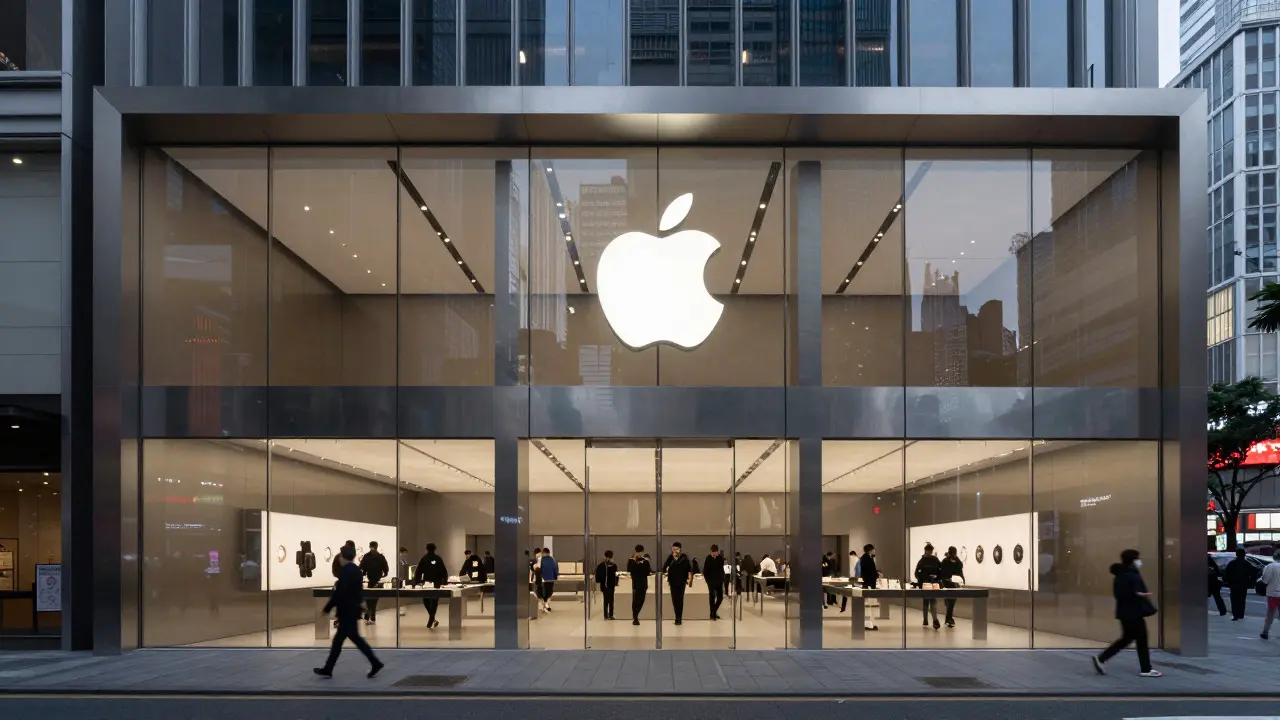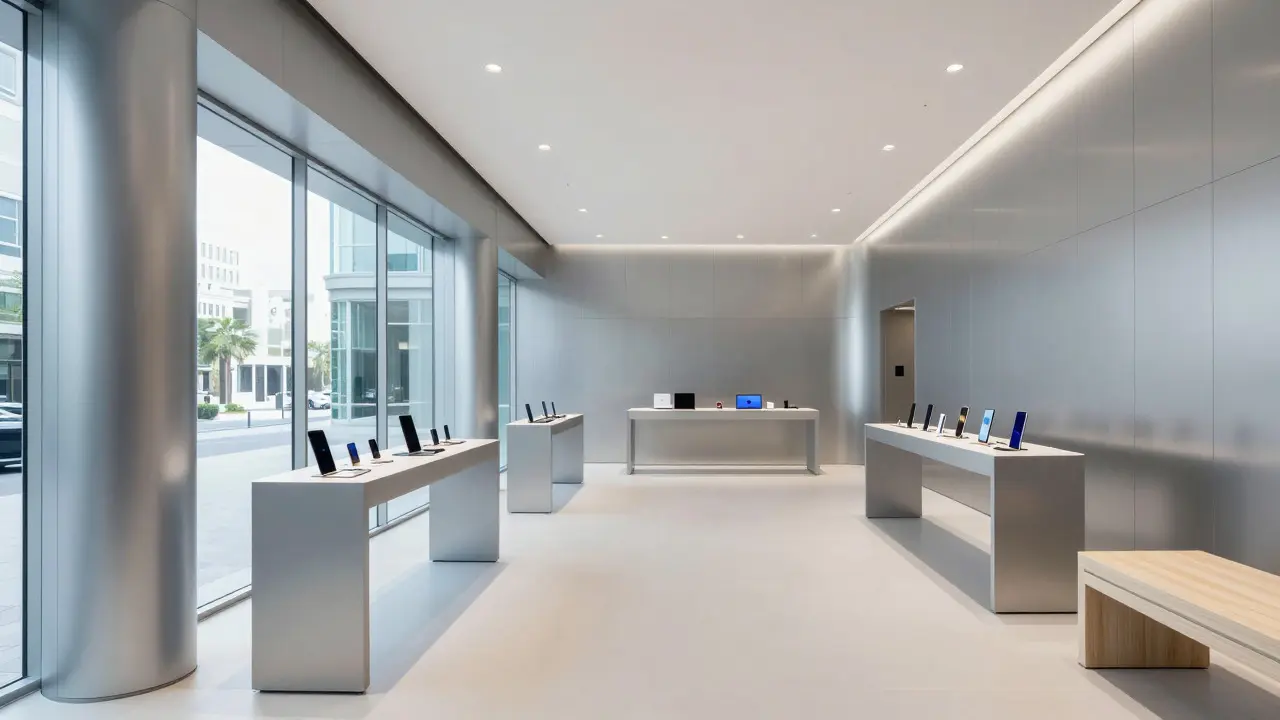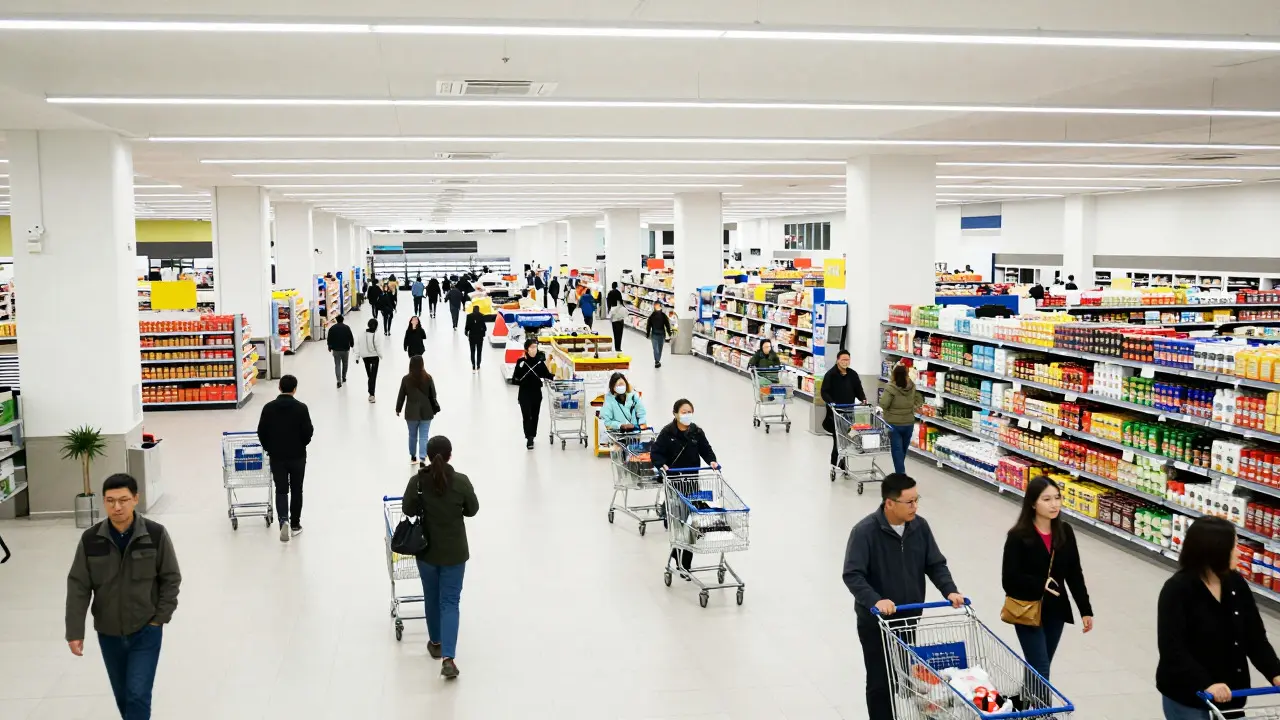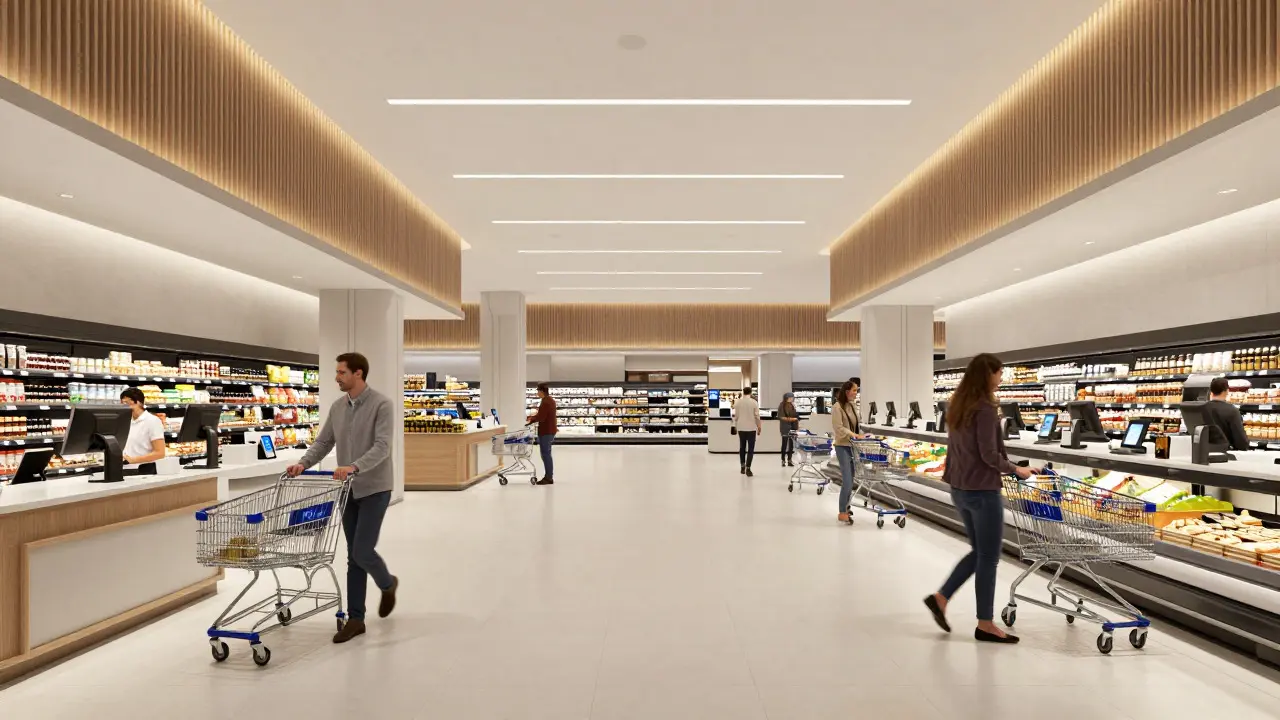

Imagine walking into a grocery store, grabbing your usual items, and leaving without ever stopping at a register. No lines, no scanning beeps, just a quiet exit. This isn't science fiction; it's the new reality for many modern retailers. The shift from traditional cash registers to mobile transactions is fundamentally changing how we design physical spaces. It’s not just about adding a payment app; it’s about rethinking the entire flow of customer movement.
For decades, the checkout counter was the anchor of retail architecture. It dictated where you entered, how you moved through aisles, and where you exited. Now, that anchor is dissolving. When you remove the fixed point of sale, the store becomes a fluid environment. This article explores how mobile payments act as a spatial design choice, altering traffic patterns, shelf placement, and even the psychological feel of a shopping trip.
The End of the Bottleneck
Traditional stores are designed around a "bottleneck" strategy. Architects place checkouts near the entrance or in a central hub to force customers to walk past impulse-buy zones. You see this in supermarkets where magazines and candy sit right next to the card readers. The logic is simple: if everyone has to stop there, everyone sees the products.
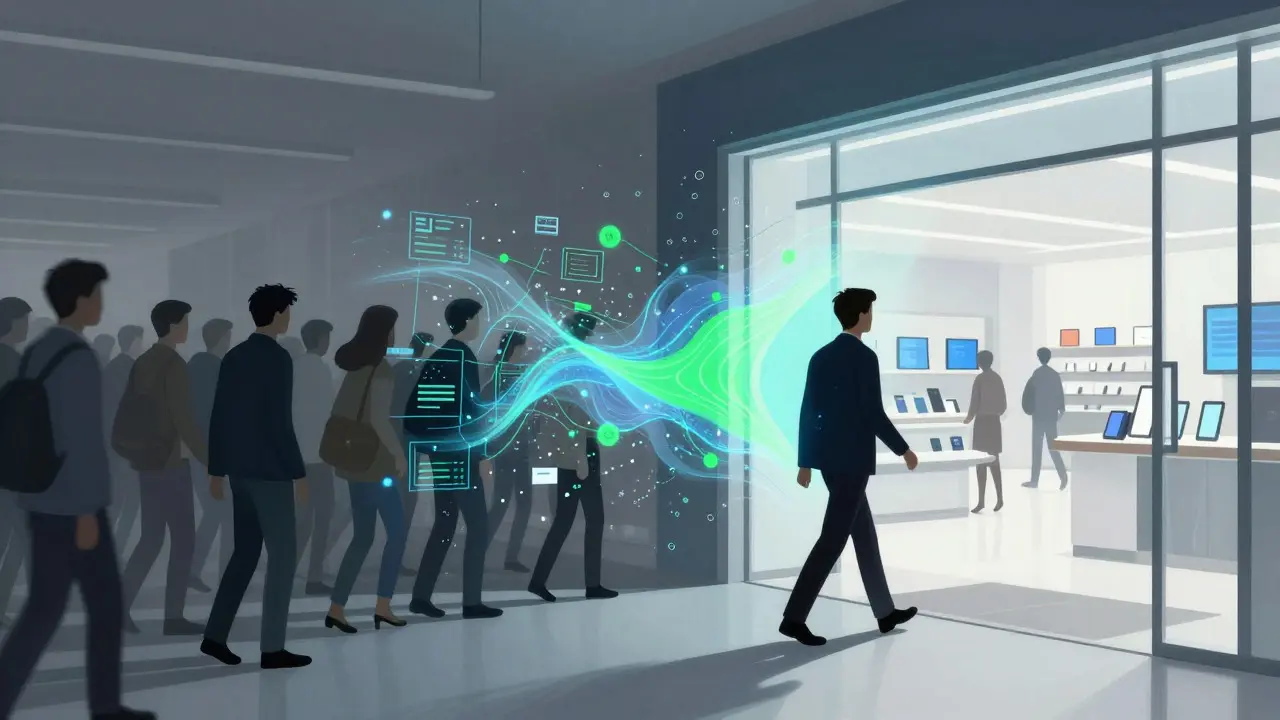
Mobile transactions break this logic. When payment happens via a smartphone scan or an RFID tag on your cart, the "stop" disappears. Customers can pay at the end of an aisle, in the parking lot, or even before they leave the store. This creates a paradox for designers: where do you put the high-margin impulse items if nobody stops? The answer lies in distributed micro-checkpoints rather than centralized counters.
| Feature | Traditional Counter Model | Mobile Transaction Model |
|---|---|---|
| Primary Flow | Linear, forced path to register | Organic, free-roaming paths |
| Impulse Zone Location | Adjacent to checkout lanes | Distributed throughout aisles |
| Staff Placement | Fixed behind registers | Roving, floor-based assistance |
| Queue Management | Physical lines, waiting areas | No visible queues, digital status updates |
| Exit Strategy | Single exit after payment | Multiple exits, seamless departure |
Redesigning Traffic Flow
Without a fixed checkout, the store layout must rely on magnetic points of interest rather than mandatory stops. Think of it like a museum. In a museum, you don’t line up to leave; you move from exhibit to exhibit based on curiosity. Retailers are adopting similar principles. Wide aisles replace narrow ones because carts with integrated scanners need room to maneuver. Corners become more important than straight lines, as these are natural decision points where shoppers might pause to scan an item.
Designers now use heat map data from mobile apps to identify where people naturally slow down. Instead of guessing, they place promotional displays exactly where foot traffic lingers. This precision allows for smaller, more targeted marketing spots instead of large, generic banner ads. The space becomes smarter, reacting to real-time behavior rather than static architectural rules.
The Psychology of Frictionless Movement
There is a psychological component to removing the counter. Waiting in line triggers a sense of loss-loss of time, loss of control. Mobile transactions eliminate this anxiety. Shoppers feel empowered, almost like they are taking the product home immediately upon selection. This changes the emotional tone of the store from transactional to experiential.
Stores that embrace this shift often reduce lighting intensity and increase ambient sound levels. Why? Because the absence of the harsh, bright register area allows for a more relaxed atmosphere. The store feels less like a place of exchange and more like a place of discovery. This aligns with the growing trend of "retail therapy," where the act of browsing is valued as much as the purchase itself.
Technology as Infrastructure
To make this work, technology must be invisible. If customers have to fumble with their phones to find a Wi-Fi signal or struggle with a glitchy app, the friction returns. Successful implementations integrate RFID Technology is a wireless identification method that uses electromagnetic fields to automatically identify and track tags attached to objects. Unlike barcodes, which require line-of-sight scanning, RFID tags can be read through packaging and from a distance. This allows for batch scanning of multiple items in seconds, reducing the time spent at any potential checkpoint. Systems also rely on robust local networks, often using mesh Wi-Fi or low-power wide-area networks (LPWAN) to ensure connectivity in dense environments.
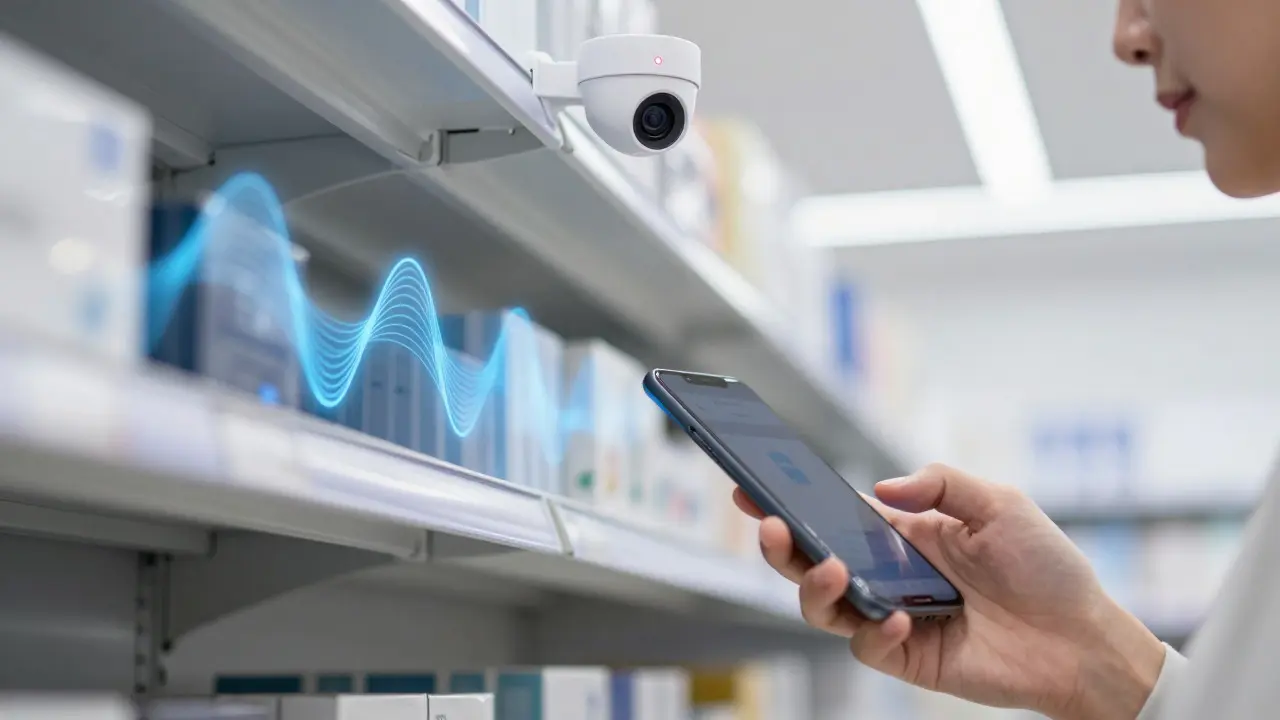
Another critical entity is Computer Vision is a field of artificial intelligence concerned with enabling computers to gain understanding from digital images or videos. In retail, computer vision cameras mounted on ceilings track hand movements and item picks. When combined with weight sensors in shelves, these systems can detect when an item is removed or returned without requiring the customer to do anything. This technology transforms the shelf into an active participant in the transaction process.
Challenges in Implementation
It’s not all smooth sailing. Removing counters doesn’t mean removing staff. It means changing their roles. Cashiers become concierges, helping with complex queries or handling returns. Training programs must adapt to this new skill set. Additionally, theft rates can initially spike in open-plan stores because the visual deterrent of a cashier is gone. However, data shows that once customers get used to the system, compliance improves, and theft stabilizes due to the pervasive presence of tracking cameras and sensors.
Cost is another factor. Retrofitting an existing store with RFID and computer vision infrastructure is expensive. New builds are easier to design with these systems in mind, but for legacy locations, the return on investment depends heavily on increased sales volume and reduced labor costs. Most brands report a break-even period of 18 to 24 months, driven by higher basket sizes and faster throughput.
Future Trends in Spatial Commerce
Where does this go next? We are seeing the rise of "dark stores" optimized entirely for mobile pickup and delivery, blurring the line between retail and logistics. These spaces are designed for robots, not humans, with narrow aisles and vertical storage. For human-facing stores, expect to see more hybrid models. Some areas may retain traditional counters for older demographics or complex services, while other zones offer fully mobile experiences.
The key takeaway is that mobile transactions are not just a payment method; they are a design tool. They allow architects and planners to create spaces that are more flexible, efficient, and user-centric. As technology continues to improve, the boundary between the digital and physical store will keep eroding, making every square foot of retail space more valuable and responsive.
Do mobile checkouts always increase sales?
Generally, yes. Studies indicate that frictionless checkout can increase average transaction values by 10-15% because customers are less likely to abandon items due to queue anxiety. However, this depends on the quality of the user experience and the clarity of the pricing model.
Is RFID better than barcode scanning for mobile retail?
For high-volume, fast-moving consumer goods, RFID is superior because it allows for bulk reading without line-of-sight. Barcodes remain useful for specialized items or lower-cost setups, but they require individual scanning, which slows down the process.
How does removing counters affect staff roles?
Staff shift from transactional processing to customer service and inventory management. They spend more time on the floor assisting customers, resolving issues, and maintaining product displays. This requires different training focused on soft skills and problem-solving.
What are the main privacy concerns with camera-based checkout?
Customers worry about constant surveillance. To mitigate this, stores should clearly display signage indicating camera usage and ensure data is processed locally where possible. Transparency builds trust, which is essential for adoption.
Can small businesses afford mobile transaction systems?
Yes, but the scale differs. Small shops can start with simple QR code scanning apps that integrate with existing POS systems. This low-cost approach captures some benefits of mobile payment without the heavy infrastructure of RFID or computer vision.