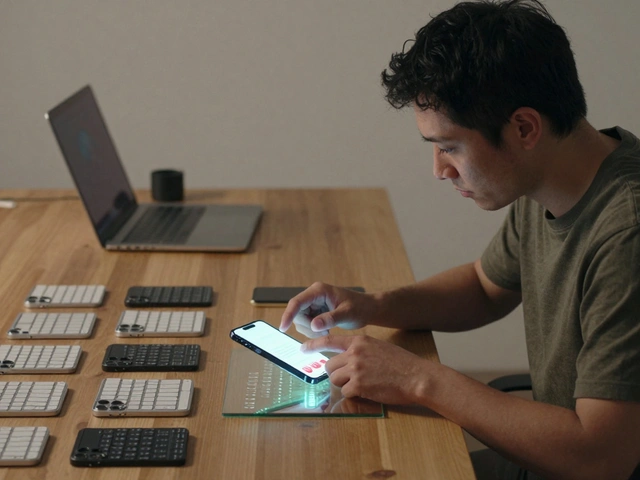

Apple doesn’t just make devices-it makes packaging part of the experience. And for years, that experience meant sleek white boxes, plastic trays, and shrink-wrapped accessories. But since 2015, Apple has quietly rebuilt its packaging from the ground up. No plastic. No waste. No compromise on feel. By 2026, over 98% of its packaging is made from fiber-paper, pulp, bamboo, and bagasse. The rest? Just inks, adhesives, and coatings that meet strict environmental standards. This isn’t a small tweak. It’s a full system overhaul.
How Apple Eliminated Plastic from Its Boxes
Plastic used to be everywhere in Apple packaging. It held the AirPods. It cradled the iPhone. It sealed the watch bands. In 2015, plastic made up nearly 25% of Apple’s packaging by weight. Fast forward to 2026, and that number is below 2%. How? They didn’t just swap plastic for paper. They redesigned the entire structure.
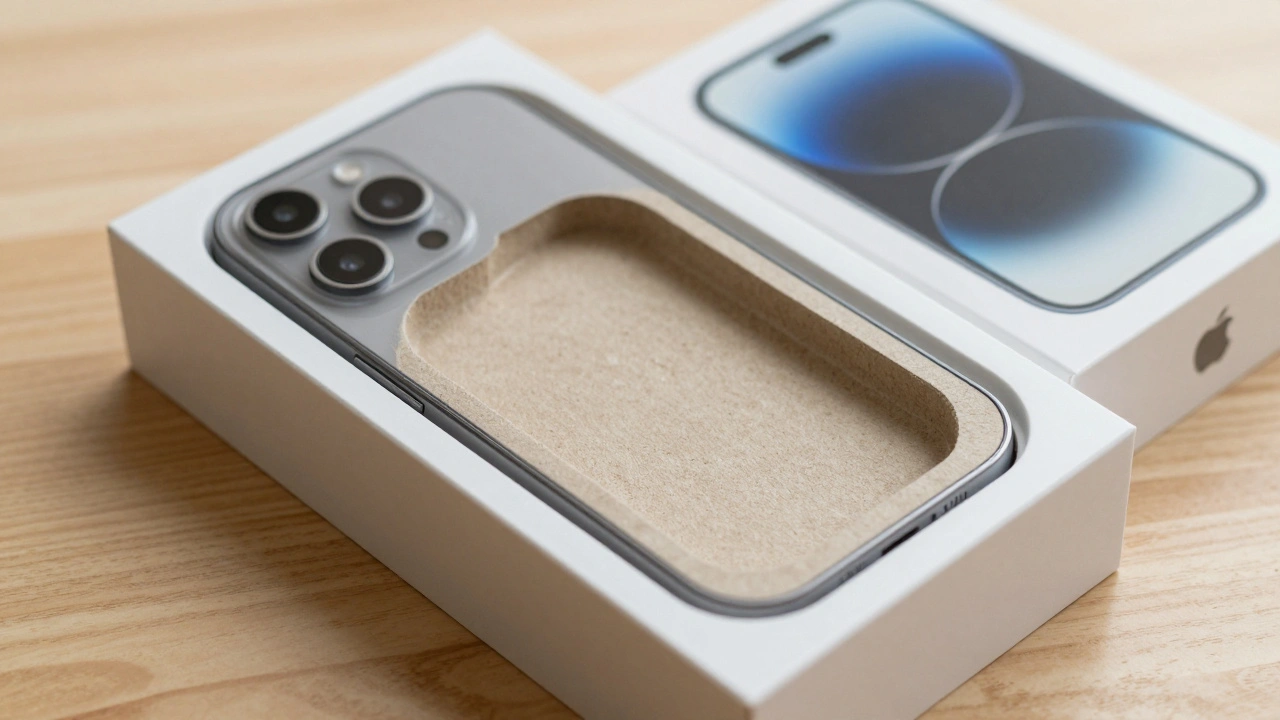
Take the iPhone. The old box had a plastic insert shaped like the phone, holding it in place with rigid, thermoformed plastic. The new version? A molded pulp insert made from recycled paper and agricultural waste like sugarcane fiber (bagasse) and bamboo. It’s shaped to fit the phone perfectly-no extra space, no extra material. It’s not just biodegradable. It’s compostable in home bins in most places.
Apple’s suppliers now use advanced pulp molding machines that shape fiber into precise, protective forms. These aren’t cheap, flimsy inserts. They’re strong, resilient, and designed to survive shipping without a single bubble wrap layer. The result? Apple removed over 600 tons of plastic from packaging in 2025 alone. That’s the weight of more than 400 midsize cars.
Where the Fiber Comes From-and Why It Matters
Not all paper is created equal. Apple doesn’t just buy any cardboard. Since 2017, every single virgin wood fiber in its packaging comes from forests certified by the Forest Stewardship Council (FSC). That means those trees were harvested with strict rules: no deforestation, no harm to wildlife habitats, and fair treatment for workers.
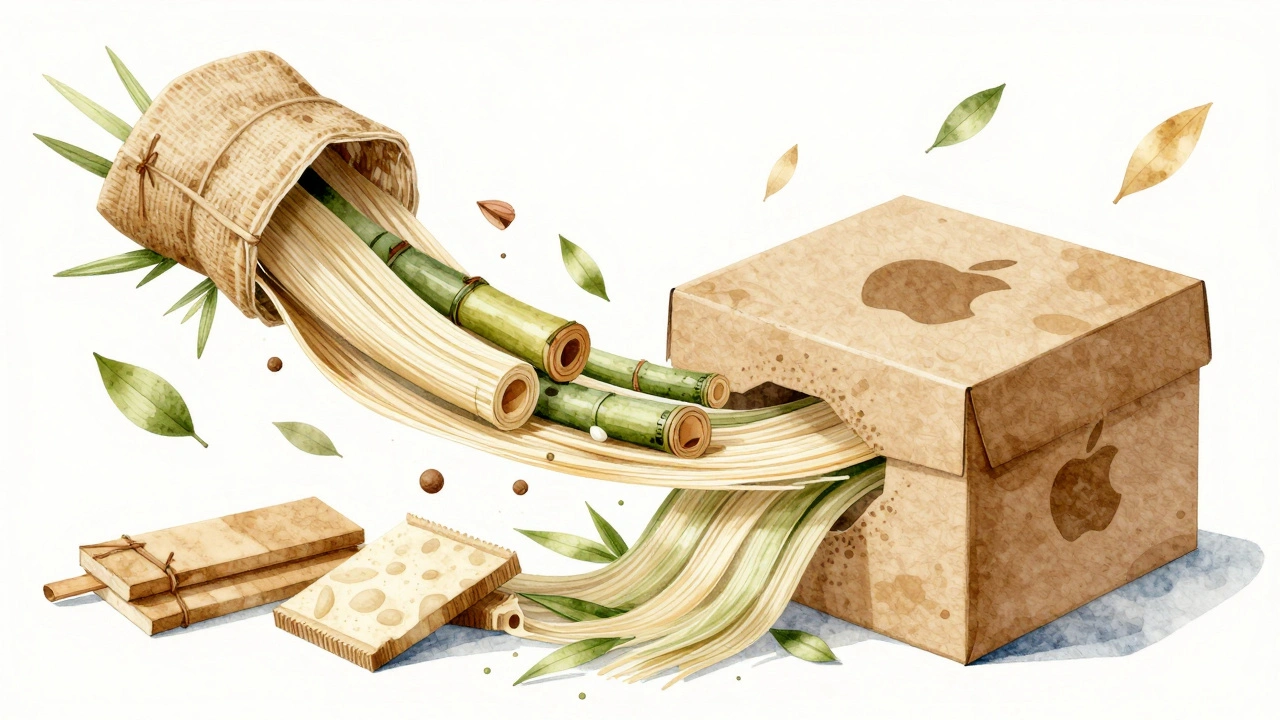
But Apple doesn’t stop at recycling trees. They use waste from other industries. Bagasse-the fibrous leftover from sugarcane processing-is now a key material. Bamboo, which regrows in 3-5 years instead of decades like oak, is used in watch bands and accessory boxes. Even the glue holding the box together? It’s water-based and non-toxic.
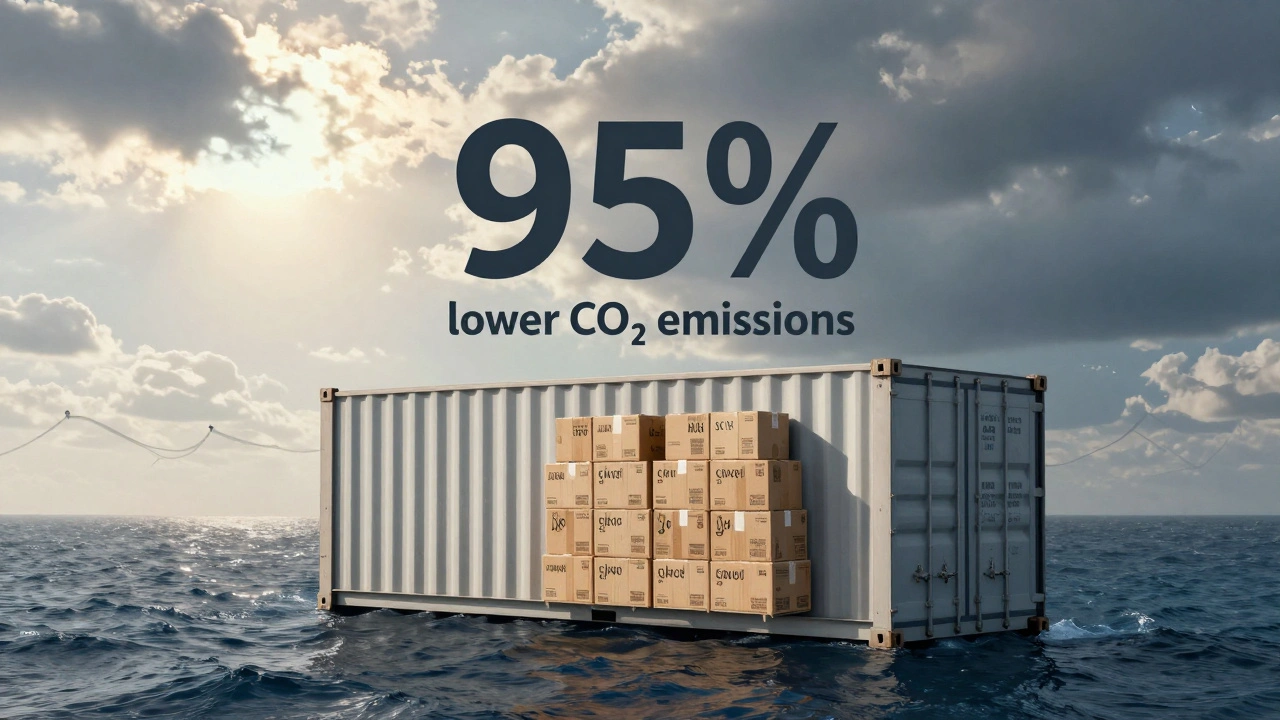
This isn’t just about being green. It’s about resilience. Fiber-based materials are lighter than plastic. That means fewer trucks on the road. Fewer emissions. Apple says ocean shipping emits 95% less CO₂ than air freight. And with lighter boxes, they can fit more units on each ship. That’s a double win: less material and less transport.
The Premium Feel Isn’t Lost-It’s Refined
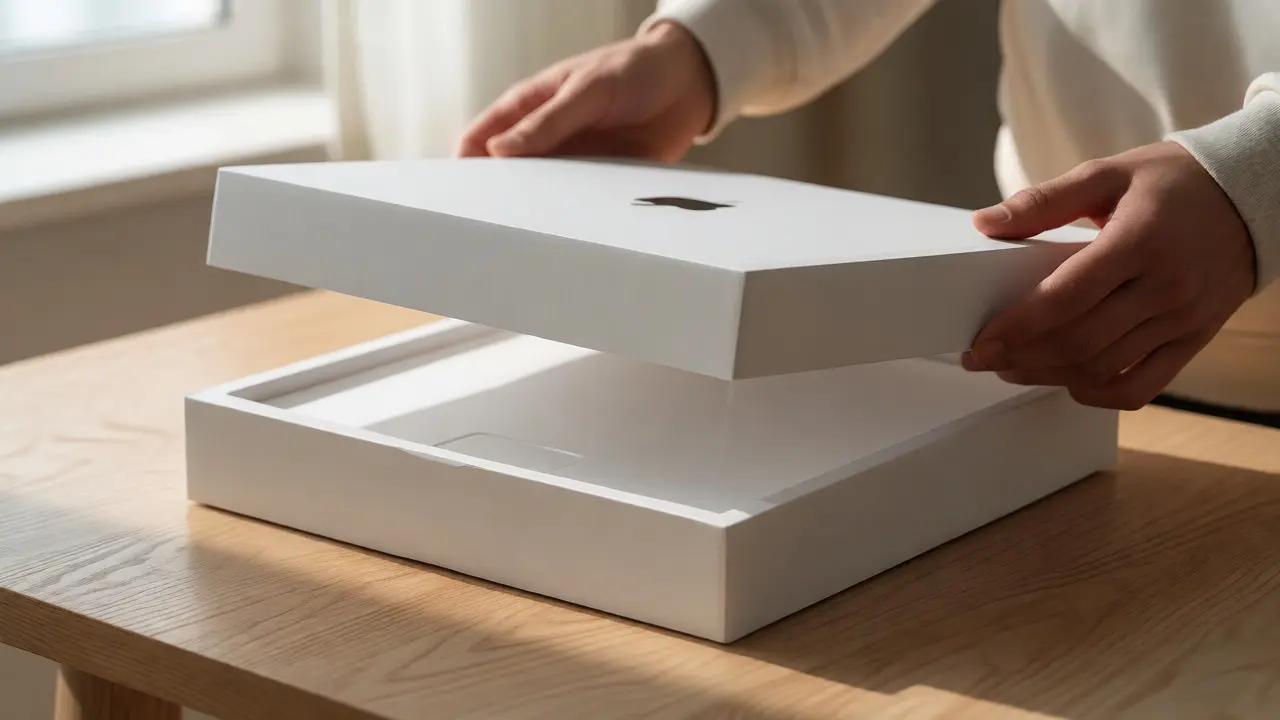
Here’s the biggest myth: sustainable means cheap. Apple proved that’s not true. The texture of the new fiber boxes? Smooth. Subtle. Almost luxurious. The corners are crisp. The printing is matte, not glossy. The opening feels deliberate-no tearing, no sticky plastic seals.
And it’s not just the box. The accessories changed too. The MagSafe wallet used to be leather. Now it’s FineWoven-a woven fabric made from 68% post-consumer recycled polyester. It has the same soft, suede-like touch, but with 70% lower carbon emissions. The Apple Watch bands? Same material. No plastic backing. No vinyl coating. Just fiber, woven tight, dyed with plant-based pigments.
Even the instruction cards are printed on 100% recycled paper with soy-based ink. The small booklet inside? It’s thinner, but still legible. No plastic sleeves. No glossy lamination. Apple didn’t cut corners. It cut waste.
Beyond the Box: How Packaging Fits Into a Bigger Plan
Apple’s packaging isn’t an isolated project. It’s part of a much larger mission: making every product carbon neutral by 2030. And packaging is just one piece.
Inside the iPhone? The enclosure is now 100% recycled aluminum. The logic board? 100% recycled tin. The magnets? 99% recycled rare earth elements. The battery? 100% recycled cobalt, pulled from old iPhones by Apple’s robot Daisy, which can disassemble 200 devices per hour.
And it’s not just materials. Apple rethinks the whole lifecycle. In 2021, 12.2 million devices were sent to new owners as refurbished units. That’s 12.2 million fewer new phones mined, built, and shipped. Apple’s repair program lets customers replace batteries, screens, and cameras without buying a whole new device.
Even manufacturing changed. Apple’s Supplier Clean Water Program now recycles 90% of the water used in production. Their Zero Waste program keeps 90% of manufacturing scrap out of landfills-reusing trays, recycling films, and turning scraps into new packaging.
Why This Matters Beyond Apple
When Apple changes its packaging, the whole industry watches. Retailers, startups, electronics brands-they all follow. Why? Because Apple proves you don’t need plastic to feel premium.
Before Apple, most companies said, "We can’t go plastic-free. Customers expect it." Apple showed they were wrong. The new fiber boxes are just as durable. Just as clean. Just as satisfying to open. And customers notice. Reviews mention the "elegant simplicity" of the packaging. Unboxing videos highlight the absence of plastic.
Even competitors are adapting. Samsung, Google, and Microsoft have all reduced plastic in their packaging since 2022. Some still use small plastic clips or windows. Apple doesn’t. They removed them all. And they did it at scale-shipping over 200 million devices a year with fiber-only packaging.
What’s Next? Coatings, Adhesives, and the Road to 2030
Apple’s next challenge? The last 2%. That’s not plastic-it’s coatings and adhesives. Even "eco-friendly" inks can contain microplastics or petroleum-based solvents. Apple’s engineers are testing water-based coatings that won’t peel or smudge. They’re developing bio-based adhesives from plant starches. By 2027, they aim to eliminate all fossil-fuel-derived coatings from packaging.
They’re also expanding this to accessories. AirPods cases, charging cables, even repair kits-all moving to 100% fiber-based packaging. Service parts for repairs? Same thing. No more plastic bags for screws or tools.
And beyond packaging, Apple launched its Restore Fund in 2025. It’s not about offsetting emissions-it’s about actively removing carbon from the atmosphere. The fund invests in verified projects that restore forests, wetlands, and soil health. These aren’t carbon credits. They’re permanent, measurable, and tied to biodiversity.
By 2030, Apple wants every product to be carbon neutral-not just the packaging, but the whole life cycle. That includes mining, manufacturing, shipping, and even the energy used when you charge your device. It’s ambitious. But Apple has already proven they can do the hard things.
Regulatory Shifts and the Future of Green Claims
Apple made headlines in August 2025 when it removed "carbon neutral" labels from packaging. Why? New EU rules. Starting September 2026, companies can’t use that term unless they prove full lifecycle emissions are zero-and offset them with permanent removals, not temporary credits.
Apple didn’t wait to be forced. They changed first. That’s leadership. Other brands still slap on "eco-friendly" stickers. Apple just ships cleaner boxes and lets the design speak for itself.
It’s a quiet revolution. No fanfare. No greenwashing. Just better materials, better design, and better outcomes.
Did Apple completely remove plastic from its packaging?
Yes-by the end of 2025, Apple removed plastic from nearly all of its packaging. Over 98% of its packaging is now fiber-based, made from recycled paper, bamboo, and bagasse. The remaining 2% consists only of inks, adhesives, and coatings that are not classified as plastic under Apple’s own definition. All new products, including iPhones, iPads, Macs, and Apple Watches, now ship in 100% fiber-based boxes.
What materials are used in Apple’s new packaging?
Apple uses fiber-based materials like recycled paper, bamboo fiber, and bagasse (a sugarcane byproduct) for boxes and inserts. Molded pulp technology shapes these fibers into protective cushions that replace plastic trays. All virgin wood fiber is FSC-certified. Inks are soy-based, adhesives are water-soluble, and coatings are being phased out in favor of plant-derived alternatives.
Is Apple’s packaging truly recyclable?
Yes. Apple’s fiber-based packaging is accepted in nearly all curbside recycling programs. Unlike plastic film or mixed-material packaging, these boxes can be flattened and recycled like cardboard. The molded pulp inserts are compostable in home compost bins in many regions. Apple also encourages customers to return packaging for reuse in its repair and refurbishment programs.
How does Apple maintain a premium feel without plastic?
Through design innovation. Apple uses high-density fiberboard with smooth, matte finishes that feel more refined than glossy plastic. The molded pulp inserts are precision-molded to fit devices snugly, creating a satisfying, tactile experience. Accessories like MagSafe wallets use FineWoven-a recycled fabric with a soft, suede-like texture. The result is a premium unboxing experience that feels intentional, not cheap.
Does Apple’s packaging strategy reduce environmental impact?
Significantly. By switching to fiber, Apple cut over 600 tons of plastic from packaging in 2025 alone. Lighter boxes mean fewer emissions during shipping. Using recycled and renewable materials reduces demand for virgin resources. Combined with Apple’s use of 100% recycled aluminum, cobalt, and tin in devices, the packaging shift is part of a broader effort that helped the company cut total emissions by 60% since 2015.