
When you pick up a new MacBook or iPhone, you don’t just feel metal or glass-you feel a story. That story is written in the materials Apple chooses. It’s not just about looks. It’s about what’s underneath: how much carbon was saved, how many mines were avoided, and whether the material in your hand was ever trash before. This is Color, Material, and Finish (CMF)-and Apple turned it into a silent promise of performance and responsibility.
Aluminum: The Backbone of Sustainable Design
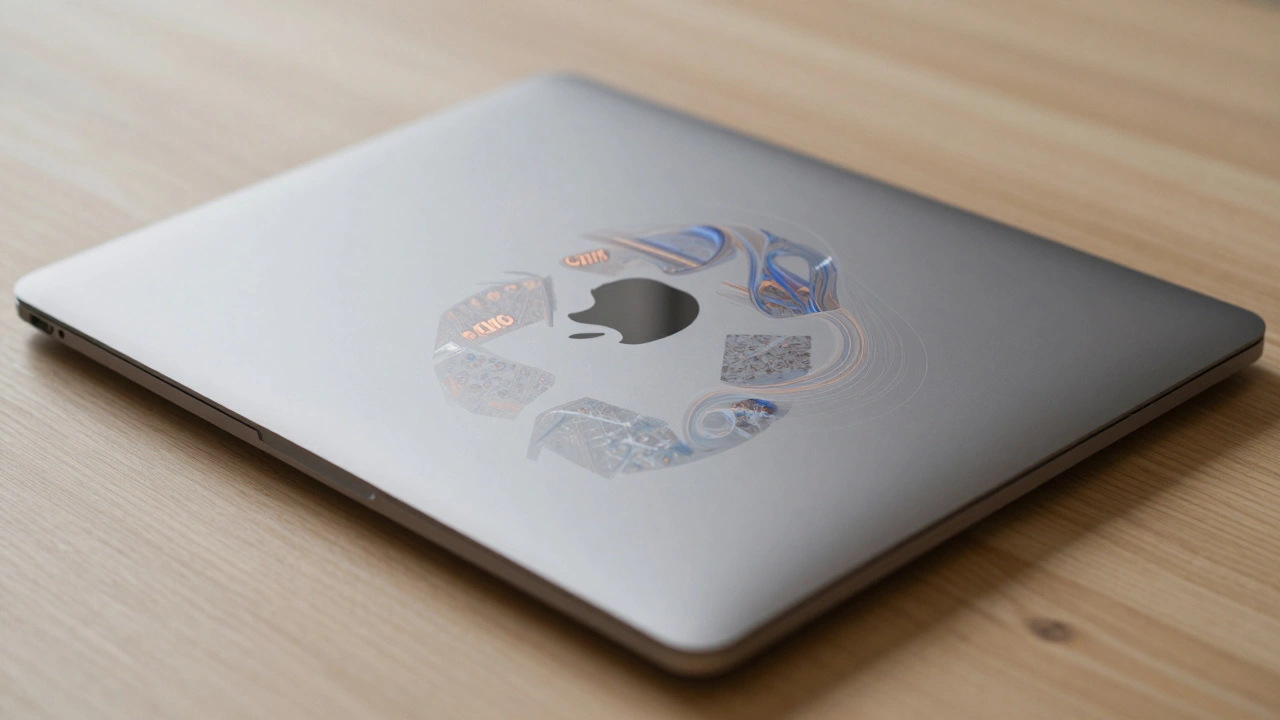
Apple’s aluminum enclosures aren’t just sleek. They’re the result of one of the most aggressive material shifts in consumer electronics. In 2015, aluminum made up 27% of Apple’s total manufacturing emissions. By 2024, that number dropped below 7%. How? By using 100% recycled aluminum.
Virgin aluminum requires mining bauxite, refining it at high heat, and smelting it with massive energy use. Recycled aluminum? It takes 95% less energy. Apple doesn’t just buy recycled scrap. It engineers it. Suppliers like Hydro provide aluminum with at least 75% post-consumer content. But Apple pushes further-its custom alloy, used in MacBook Pro chassis, is made entirely from recycled sources. No virgin ore. No new mining. And it still meets the rigidity, thermal conductivity, and surface finish standards that professionals demand.
That’s the trick: performance isn’t sacrificed. It’s enhanced. Recycled aluminum is just as strong. Just as durable. Just as beautiful. And that’s the message: sustainability doesn’t mean compromise. It means innovation.
Cobalt and Lithium: Cleaning Up the Battery Chain
Batteries power your devices-but they’ve long been tied to ethical and environmental damage. Cobalt mining in the Democratic Republic of Congo has been linked to child labor and toxic runoff. Lithium extraction drains aquifers and scars landscapes.
Apple changed that. In 2023, 56% of the cobalt in Apple batteries came from recycled sources. By 2024, that jumped to 99%. The company sources cobalt from end-of-life batteries and industrial scrap, not mines. Same with lithium: 24% of the lithium in 2023’s batteries was recycled. That’s not a rounding error. It’s a breakthrough. For the first time, a major electronics brand is closing the loop on battery materials.
This isn’t just about ethics. It’s about supply chain control. By building a circular system for these materials, Apple reduces dependency on volatile global markets and avoids the hidden costs of extraction. The result? Batteries that perform just as well-with a conscience.
Copper: The Invisible Hero
You don’t see copper in your iPhone. But it’s everywhere: in the Taptic Engine, the circuit boards, the thermal systems. Virgin copper mining destroys forests, pollutes water, and uses huge amounts of energy. Apple’s solution? 100% recycled copper.
Since the iPhone 15 and 16-inch MacBook Pro, every copper component has been sourced from recycled scrap. No new mining. No new environmental damage. And crucially-no drop in performance. Recycled copper conducts electricity and heat just like the virgin kind. Apple didn’t settle for "good enough." They demanded identical specs. And they got them.
This is the quiet power of CMF: it’s not always about the shiny parts. Sometimes, it’s about the hidden ones. And Apple made sure those hidden parts don’t cost the planet.
Rare Earth Elements: A U.S. Recycling Revolution
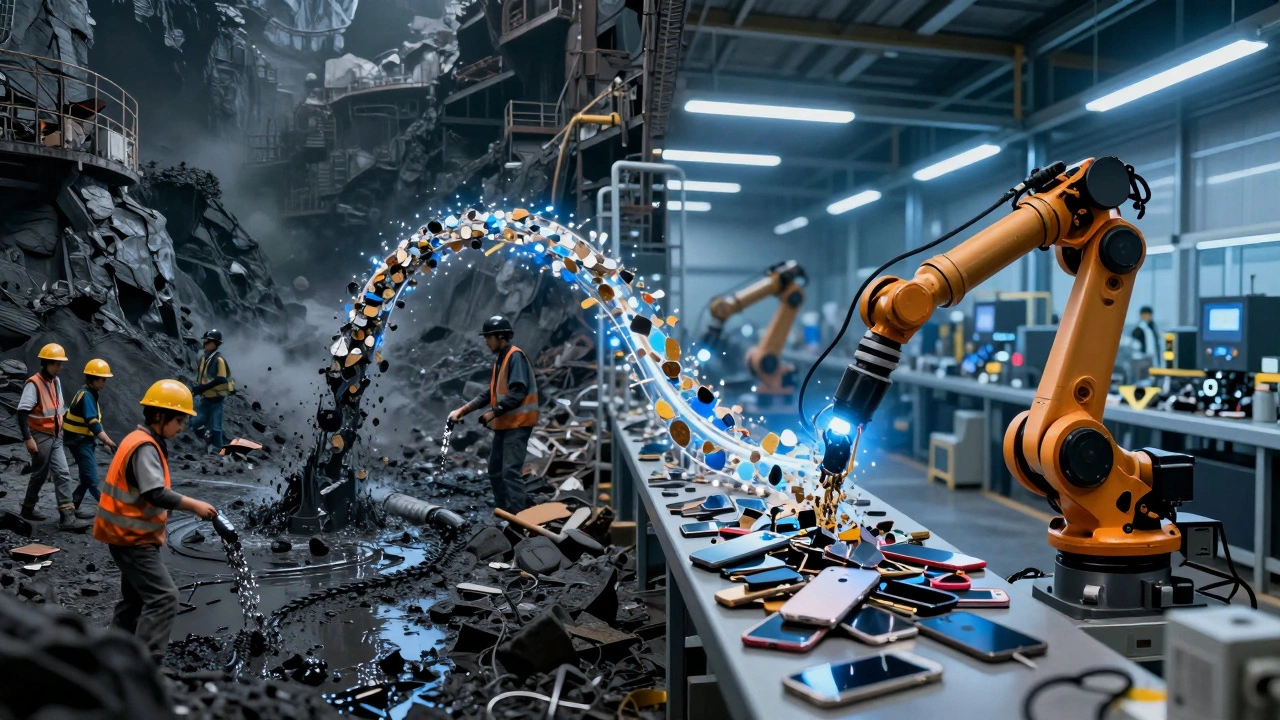
Rare earth elements are the secret sauce behind magnets in iPhones, AirPods, and laptops. They’re hard to mine. Hard to separate. And almost never recycled-until Apple stepped in.
In 2019, Apple introduced the first-ever recycled rare earth magnets in the iPhone 11’s Taptic Engine. Today, nearly all Apple devices use 100% recycled rare earths. But they didn’t stop there. In July 2025, Apple announced a $500 million partnership with MP Materials to build a recycling facility in Mountain Pass, California. This is the first facility in the U.S. designed to recover rare earths from old electronics and turn them into high-purity material that meets Apple’s exacting standards.
This isn’t charity. It’s strategy. By investing in domestic recycling infrastructure, Apple reduces reliance on foreign supply chains, creates U.S. jobs, and sets a new industry standard. Other companies will have to follow-or fall behind.
The MacBook Air M3: A 50% Recycled Milestone
Apple’s most significant CMF achievement? The MacBook Air with M3. It’s the first Apple product made with 50% recycled material by weight. That includes aluminum, copper, cobalt, lithium, and rare earths-all recycled.
Think about that. A premium laptop, designed for professionals, with half its mass coming from recycled sources. No trade-offs in battery life. No compromise in cooling. No sacrifice in build quality. This proves that high-performance design and circularity aren’t just compatible-they’re inseparable.
Before this, most manufacturers treated sustainability as a side project. Apple made it the core.
Packaging: Less Plastic, More Fiber
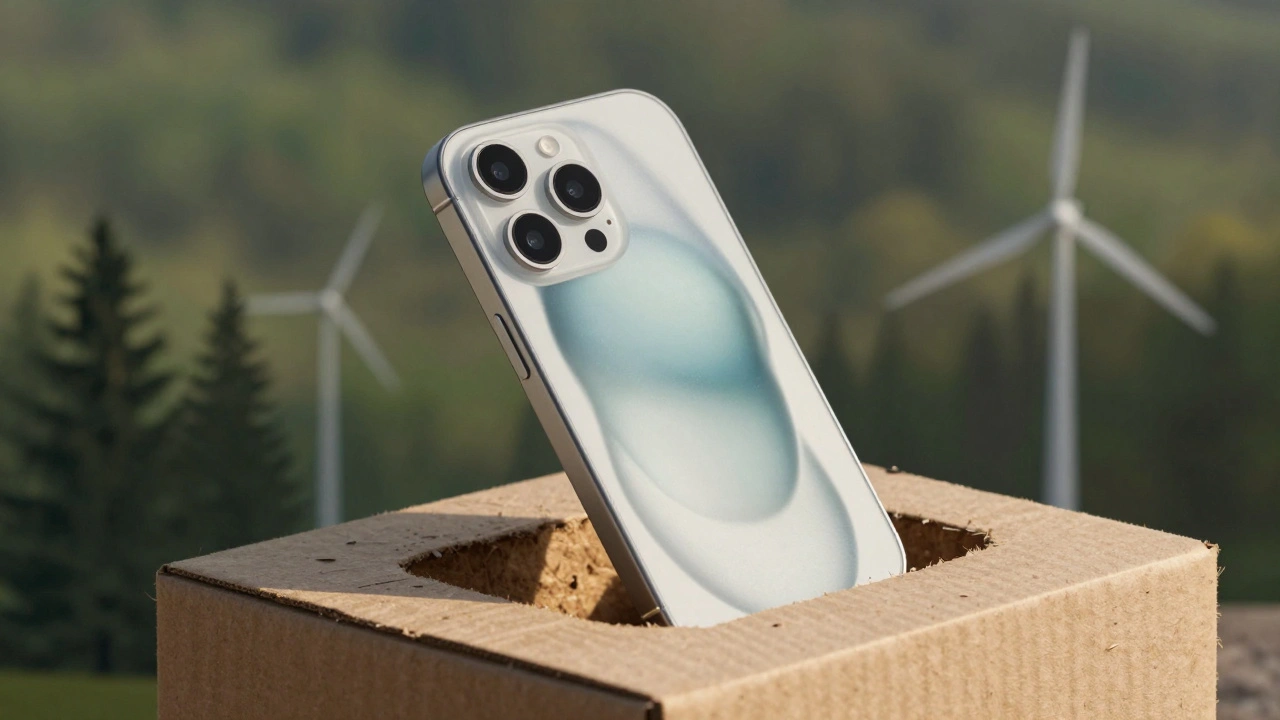
Even the box your device comes in tells a story. In 2023, only 3% of Apple’s packaging contained plastic. Compare that to the industry average of 40-60%. Apple replaced plastic with fiber-based materials, developed with help from the University of British Columbia and Sweden’s RISE Research Institutes.
They didn’t just swap materials. They redesigned entire packaging systems. Foam inserts? Gone. Replaced with molded pulp. Plastic trays? Replaced with recycled paper. Even the adhesive on the box is plant-based. The result? Packaging that’s not just recyclable-but designed to be composted in industrial facilities.
It’s a small detail. But it adds up. Apple avoids millions of pounds of plastic waste every year. And it sends a clear message: every part of the product journey matters.
The Bigger Picture: Beyond Materials
Apple’s CMF strategy doesn’t stop at materials. It extends to how those materials are made.
Display manufacturers now use advanced systems to cut fluorinated greenhouse gas (F-GHG) emissions by over 90%. Apple’s suppliers have installed scrubbers and closed-loop systems that capture and destroy these potent climate pollutants at the source. That’s not optional-it’s required.
And then there’s energy. In 2024, Apple’s global supply chain used 18 gigawatts of renewable energy-enough to power 1.6 million homes. That’s not a goal. That’s a reality. Factories in China, Taiwan, and the U.S. now run on wind and solar. The carbon footprint of manufacturing is shrinking because the electricity powering it is clean.
Even Apple’s data centers have changed. Waste diversion jumped from 64% to 90% in five years, thanks to reusable filters developed with K&N, an automotive filtration company. They didn’t just buy filters-they co-designed them.
The Restore Fund: Healing the Earth
Some emissions can’t be eliminated. Apple’s answer? Restore them.
The Restore Fund invests in regenerative agriculture and ecosystem restoration. Projects include olive farms in Portugal, almond orchards in Spain, and sugarcane fields in Australia converted into macadamia nut farms-all using water-smart, soil-building practices. These projects don’t just offset emissions. They rebuild biodiversity, improve water cycles, and support local communities.
Over 150,000 acres of forest are now sustainably managed. Another 100,000 acres of native ecosystems are protected. This isn’t carbon offsetting. It’s restoration. And it’s part of Apple’s plan to hit a 75% emissions reduction by 2030.
Why It Matters
Most brands talk about sustainability. Apple shows it-in the weight of the product, the feel of the finish, the silence of the supply chain. Their CMF choices aren’t marketing. They’re engineering. And they’re working.
Every recycled aluminum chassis, every cobalt-free battery, every fiber-based box adds up. In 2023 alone, Apple’s initiatives avoided 1.7 million metric tons of CO2. That’s like taking 370,000 cars off the road.
Apple didn’t wait for regulations. They didn’t wait for consumers to ask. They redefined what premium design means. It’s not just about how something looks. It’s about how it was made-and what it leaves behind.
What does CMF stand for in Apple’s design strategy?
CMF stands for Color, Material, and Finish. At Apple, it’s not just about aesthetics-it’s a core engineering and sustainability framework. Every material choice, surface texture, and color tone is selected to communicate performance, durability, and environmental responsibility. For example, a matte aluminum finish isn’t just stylish-it signals that 100% of the aluminum used is recycled, reducing emissions by up to 95% compared to virgin material.
How much of Apple’s products are made from recycled materials?
As of 2024, Apple uses 24% recycled or renewable materials by weight across all products shipped. The MacBook Air with M3 was the first device to reach 50% recycled content. Apple targets 100% recycled and renewable materials by 2030. Materials like aluminum, copper, cobalt, lithium, and rare earth elements are now sourced almost entirely from recycled streams.
Does using recycled materials affect Apple product performance?
No. Apple’s material science team spends years testing recycled materials to ensure they meet the same performance standards as virgin materials. Recycled aluminum is just as strong. Recycled copper conducts heat and electricity identically. Recycled rare earth magnets deliver the same magnetic force. Performance isn’t compromised-it’s matched through innovation. The goal is to make sustainable materials perform better than ever.
How does Apple ensure its recycled materials are ethically sourced?
Apple avoids mining entirely for key materials like cobalt and rare earths. Instead, it sources from post-industrial scrap and end-of-life device recycling. The company works with certified recyclers who trace material back to its origin. For cobalt, 99% of supply in 2024 came from recycled batteries-not mines. Apple also partners with suppliers who meet strict labor and environmental standards, and audits them annually.
What role does packaging play in Apple’s sustainability strategy?
Packaging accounts for a significant portion of waste in electronics. Apple reduced plastic in packaging to just 3% by 2023, replacing it with fiber-based materials developed with research institutes. The new packaging is 100% recyclable, uses no plastic films, and is designed to be composted in industrial facilities. Even adhesive and ink are plant-based. This shift avoids millions of pounds of plastic waste annually.