
When you buy an Apple Watch, you’re not just buying a smartwatch-you’re buying a platform for self-expression. The real magic isn’t in the screen or the sensors. It’s in the strap. That simple piece of material you slip around your wrist is where technology meets personality. And Apple didn’t treat it as an afterthought. They built it into the core of the hardware design.
Straps Aren’t Accessories. They’re Part of the Device.
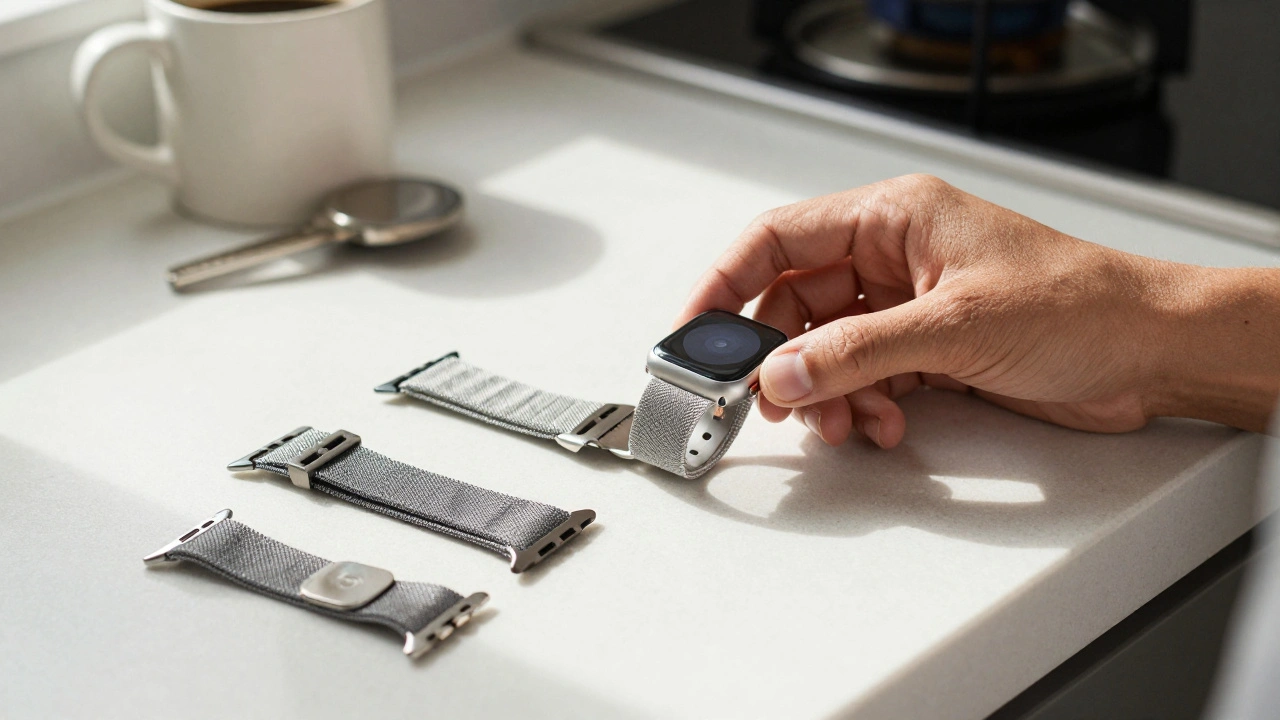
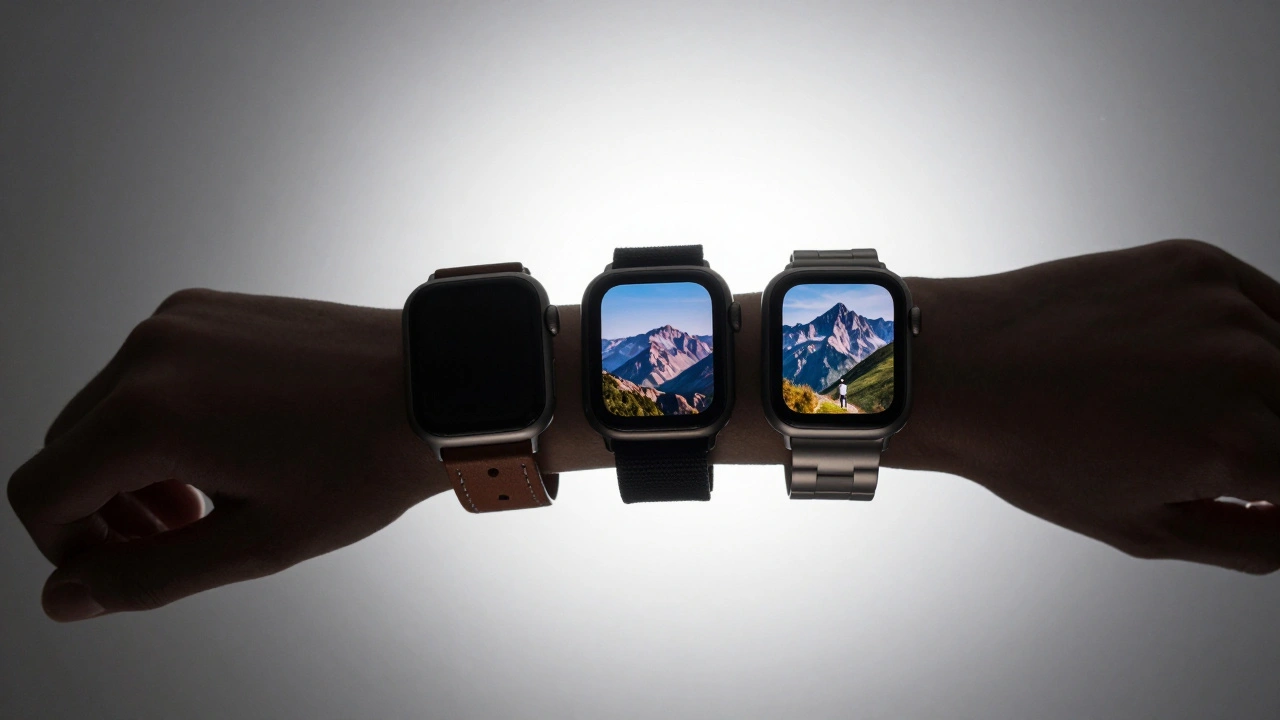
Most companies make watches with fixed bands. Apple made theirs interchangeable. That decision changed everything. Suddenly, your Apple Watch could be a fitness tracker at the gym, a sleek accessory at a business meeting, and a colorful statement piece on a weekend hike-all without switching devices. The band isn’t just something you add. It’s how you define the watch.
Apple’s system is simple: bands for 38mm, 40mm, and 41mm cases work together. Bands for 42mm, 44mm, and 45mm cases work together. The Apple Watch Ultra and Ultra 2 share the same size as the 44mm and 45mm models, so their bands are fully compatible. No tools. No confusion. Just slide off one, snap on another. It’s designed so anyone can do it, even if they’ve never touched a watch before.
Material Matters More Than You Think
Not all straps are created equal. The material determines how it feels, how it lasts, and even how well your watch works.
Apple’s Sport Loop is made from a soft, woven nylon with reflective threads and a quick-pull tab. It’s made for sweat. For runs. For long days where comfort matters more than looks. The Braided Solo Loop goes further-no clasp, no buckle. Just stretchy yarn woven with silicone threads that hug your wrist like a second skin. It’s one of the most popular bands because it’s so easy to put on and take off.
Then there’s the Titanium Milanese Loop, exclusive to the Apple Watch Ultra. It’s not just a band. It’s a piece of aerospace engineering. Made from titanium that resists saltwater corrosion, it uses a magnetic clasp inspired by parachute harnesses. It costs $199. People buy it because they want something that lasts, looks expensive, and feels like it was built for adventure-not just decoration.
For everyday use, Apple’s fluoroelastomer bands (the rubber-like ones) are tough, waterproof, and easy to clean. They’re the default for most people because they don’t snag, fade, or crack. Leather bands? They look sharp in the office, but they don’t handle sweat or rain well. Faux leather from third-party makers offers a similar look without the upkeep.
Color and Finish: Your Wrist, Your Canvas
Apple gives you black, white, silver, gold, graphite, and a few branded options like Nike or Hermès. But the real customization happens outside Apple’s store.
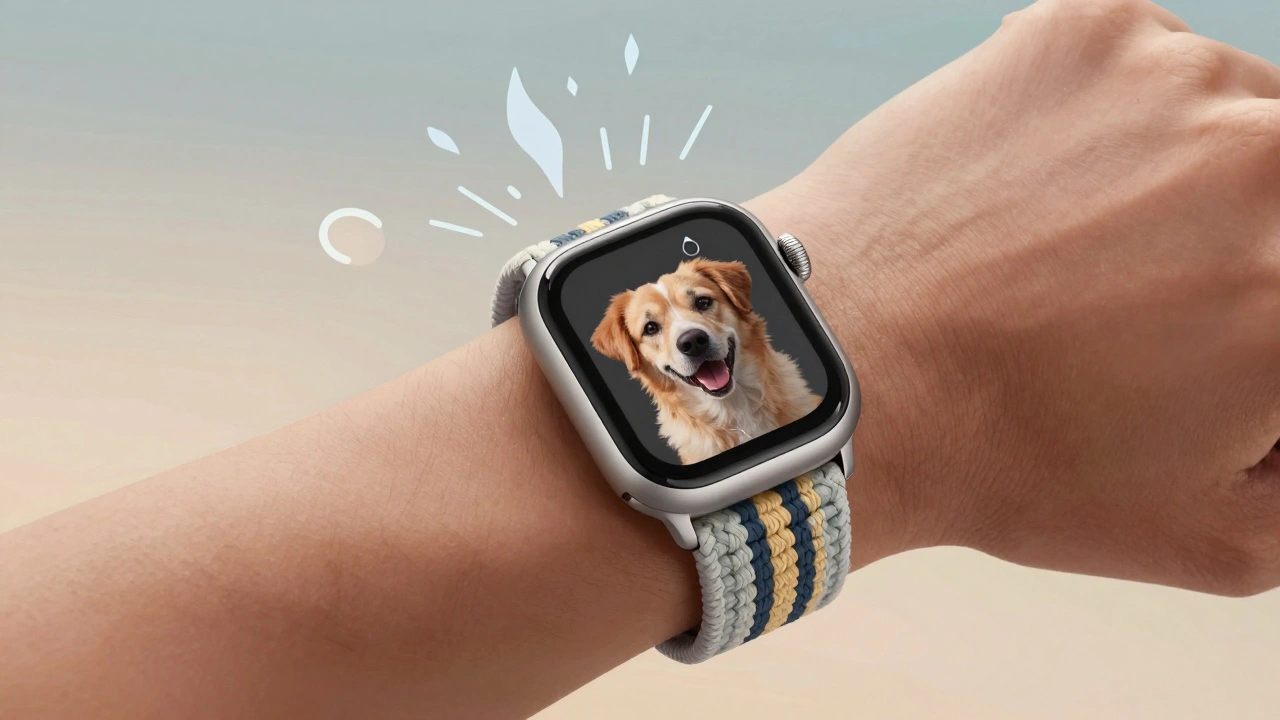
Companies like Buckle & Band and CaseStation let you pick colors, textures, and even stitch patterns. Want a red strap with gold stitching? Done. A black band with your initials engraved? Easy. Some even let you upload a photo and turn it into a custom pattern. One user ordered a band with a picture of their dog. Another chose a design from a favorite album cover.
And it’s not just about looks. The finish affects function. A matte band won’t show smudges. A glossy one catches the light and looks more formal. A mesh band breathes better than solid silicone. These choices aren’t cosmetic-they impact how the watch feels all day.
Function Over Form? Not Anymore
Here’s the catch: your strap has to work with the watch, not against it.
The heart rate sensor, blood oxygen monitor, and wrist detection all need direct skin contact. If the band is too loose, the sensors can’t read properly. Too tight? You’ll feel pressure, and your skin won’t breathe. Apple says wear it snug but not tight-enough to stay in place when you move, but loose enough that you can slide a finger under it.
That’s why some third-party bands fail. They’re too thick. Too stiff. Too padded. A band that looks great might ruin your sleep tracking or make your workouts inaccurate. The best custom bands are designed with sensor alignment in mind. They use thin, flexible materials that sit flush against the back of the watch. You can’t just slap any strap on and expect it to work.
Third-Party Customization Is a Full Industry Now
Apple started the trend. But now, dozens of companies are building businesses around it.
Handdn makes handmade straps with over 50 thread colors. MyCustomCase lets you design every pixel of the band. SandMarc offers grade 5 titanium bands that weigh less than a AA battery. Facer and Clockology don’t make straps-but they let you change the watch face to match. Pair a black Milanese loop with a dark-themed watch face, and you’ve got a minimalist masterpiece.
These companies aren’t just selling straps. They’re selling identity. Someone might spend $200 on a titanium band because it reminds them of a hiking trip. Another buys a floral pattern because it matches their wedding outfit. These aren’t gadgets. They’re personal artifacts.
Why This Design Works So Well
Apple’s strap system succeeds because it removes friction. No screws. No adapters. No app downloads. Just snap and go. That’s the key. Personalization shouldn’t require effort. It should feel natural.
Compare that to other smartwatches. Some require special tools to change bands. Others have proprietary connectors that only work with their own straps. Apple’s magnetic pins are universal, reliable, and easy to replace. Even if you break a band, you can buy a new one in minutes from any Apple Store.
And the variety? Apple added over 30 new color options in the last two years. That’s not a minor update. That’s a commitment. They’re betting that people don’t just want a watch-they want a wearable that evolves with them.
How to Choose the Right Strap for You
Here’s how to think about it:
- For workouts: Sport Loop, Braided Solo Loop, or fluoroelastomer. They breathe, dry fast, and won’t slip.
- For work: Leather, Milanese Loop, or stainless steel. Clean lines. No distractions.
- For style: Try a third-party band with custom colors, patterns, or textures. Make it yours.
- For travel: A lightweight, durable band that doesn’t tangle. Titanium or nylon works best.
- For comfort: Avoid anything rigid. Go for stretchy, flexible materials. The Braided Solo Loop is the gold standard.
Don’t just buy one. Buy three. Keep one for each major part of your life. Swap them like you swap outfits. That’s the point.
What’s Next?
Apple hasn’t stopped. Rumors suggest future models might include magnetic attachment points for even more accessories-like tiny lights, scent dispensers, or health sensors built into the band itself. The strap could become more than a cover. It could become an extension of the device.
For now, the message is clear: your Apple Watch is only as personal as the strap you choose. It’s not about having the latest model. It’s about having the right one-for your body, your style, your day.
Can I use a 44mm band on a 41mm Apple Watch?
No. Bands are grouped by size: 38mm, 40mm, and 41mm are compatible with each other. 42mm, 44mm, and 45mm are compatible with each other. A 44mm band won’t fit a 41mm case because the connector spacing is different. Always match the band size to your watch case size.
Do third-party straps work with Apple Watch sensors?
Some do, some don’t. The best third-party bands are designed to sit flush against the back of the watch, just like Apple’s. If the band is too thick, has a rigid backing, or doesn’t allow skin contact, your heart rate monitor and wrist detection may fail. Look for bands labeled "sensor-compatible" or check reviews for real-world testing.
Why is the Titanium Milanese Loop so expensive?
It’s made from aerospace-grade titanium, which is stronger and lighter than stainless steel. The mesh is woven using the same technique as high-end Swiss watches. The clasp is precision-engineered to handle saltwater, sweat, and heavy use. It’s not just a band-it’s a premium tool built for extreme conditions, which is why it costs $199.
How often should I replace my Apple Watch strap?
It depends on usage. Sport and nylon bands last 1-2 years with daily workouts. Leather bands can last longer if cared for, but they degrade faster with sweat. Metal and titanium bands rarely wear out. Replace your strap if it becomes stiff, frayed, or starts to smell. Don’t wait for it to break-comfort and sensor performance come first.
Can I customize my Apple Watch strap without buying a new one?
Not directly from Apple. But third-party services like CaseStation and Handdn let you upload images, choose colors, and add text to create a fully custom band. You’re not modifying the original-you’re ordering a new one designed just for you. It’s the closest thing to customization without Apple offering it natively.