
Most people throw away boxes the second they get home. But if you’ve ever owned an Apple product, you’ve probably kept the box. Not because you needed it. Not because it was useful. But because it felt right. Like something worth holding onto. That’s not an accident. It’s strategy.
Apple doesn’t see packaging as a container. It sees it as the first moment of truth between you and the product. And that moment? It’s engineered to stick.
The Box That Stays
Here’s a number most brands would kill for: 87%. That’s the percentage of Apple customers who keep their product boxes after opening them. Think about that. Most companies are happy if you even notice the box. Apple makes you want to save it.
Why? Because the unboxing isn’t just about revealing a phone or earbuds. It’s about triggering a feeling. A slow, deliberate, almost ritualistic experience that turns a simple act - opening a box - into something memorable. People don’t just open Apple boxes. They pause. They breathe. They watch.
And it’s not just luck. Apple has a whole team of designers whose only job is to test how boxes open. Hundreds of times. With different materials, different shapes, different weights. They’re not designing for cost. They’re designing for sensation.
The Science of the Satisfying Pull
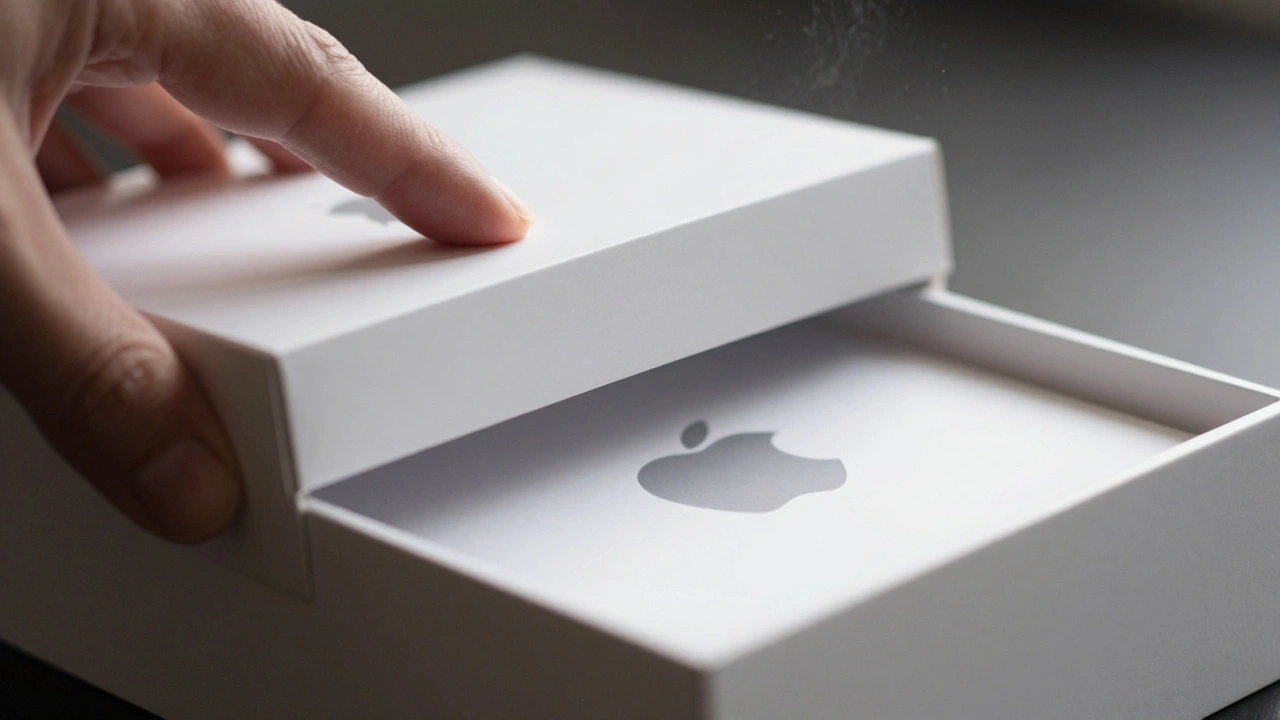
Ever notice how the top of an iPhone box lifts off with just a slight resistance? Not too easy. Not too hard. Just enough to make you hesitate. That’s not a flaw. That’s a feature.
When you lift the lid, you’re not just separating plastic from cardboard. You’re breaking a seal - a physical and psychological one. Air rushes out with a soft whoosh. The surface tension between the lid and base creates a tiny moment of friction. It’s subtle, but your body notices. Your fingers feel it. Your ears hear it. Your brain registers it as something intentional.
This isn’t magic. It’s physics, refined over months of testing. Apple’s designers open prototype boxes until they get the exact right balance of resistance and release. Too little, and it feels cheap. Too much, and it feels broken. The sweet spot? That’s what makes you think, "This was made with care."
Less Is More - And It Works
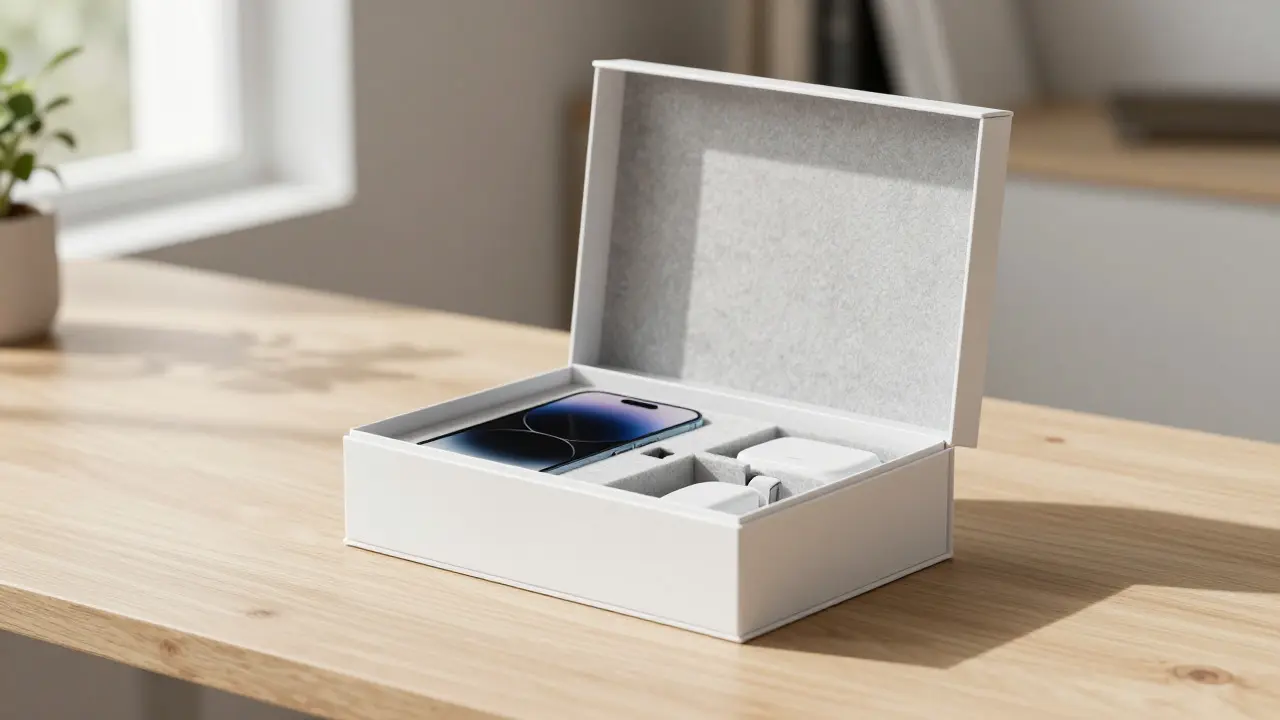
Walk into any electronics store. You’ll see boxes covered in logos, bullet points, barcodes, certifications, and tiny fine print. Apple’s? Clean white. One logo. No text. Just the product inside.
Why? Research shows people spend about five seconds looking at a product box before deciding what to do next. Fill it with info, and you overwhelm. Strip it down, and you focus attention where it matters: the product, and the feeling it evokes.
That minimalist design isn’t just aesthetic. It’s cognitive. No clutter means no distraction. The white box says, "This is different." It doesn’t shout. It whispers. And in a world full of noise, that whisper becomes louder than any ad.
The Delay That Builds Desire
Here’s the most brilliant part: Apple doesn’t want you to get to the phone fast. It wants you to slow down.
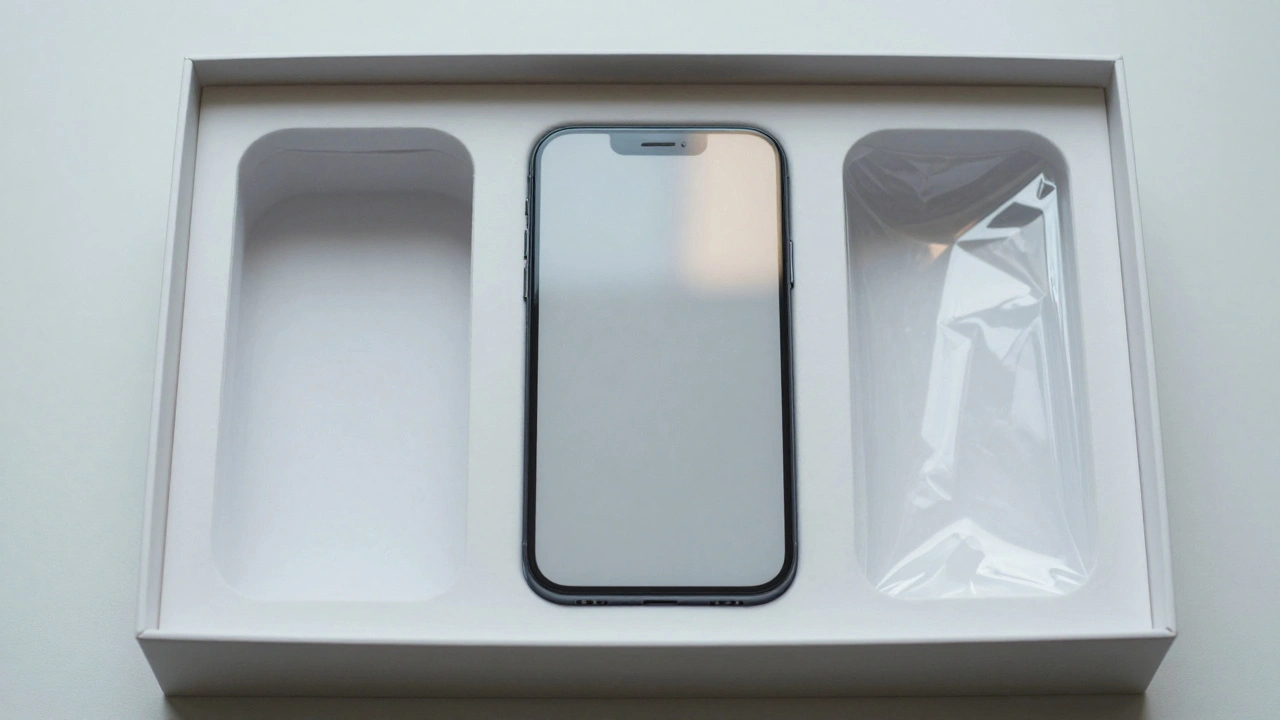
The packaging is layered. First, the outer box. Then the inner tray. Then the foam. Then the plastic wrap. Each layer takes time. Each one reveals something new. You don’t just pull out a phone. You uncover it.
That’s not accidental. It’s borrowed from the same psychology that made people camp out for months before an iPhone launch. The anticipation wasn’t just about the product. It was about the experience of waiting. The packaging extends that waiting into your living room.
As one designer from Landor & Fitch put it: "We’re not popping Pringles here." The delay isn’t a bug. It’s the feature. It makes you feel like you’re being handed something special. Something worth the wait.
One Box, Every Product
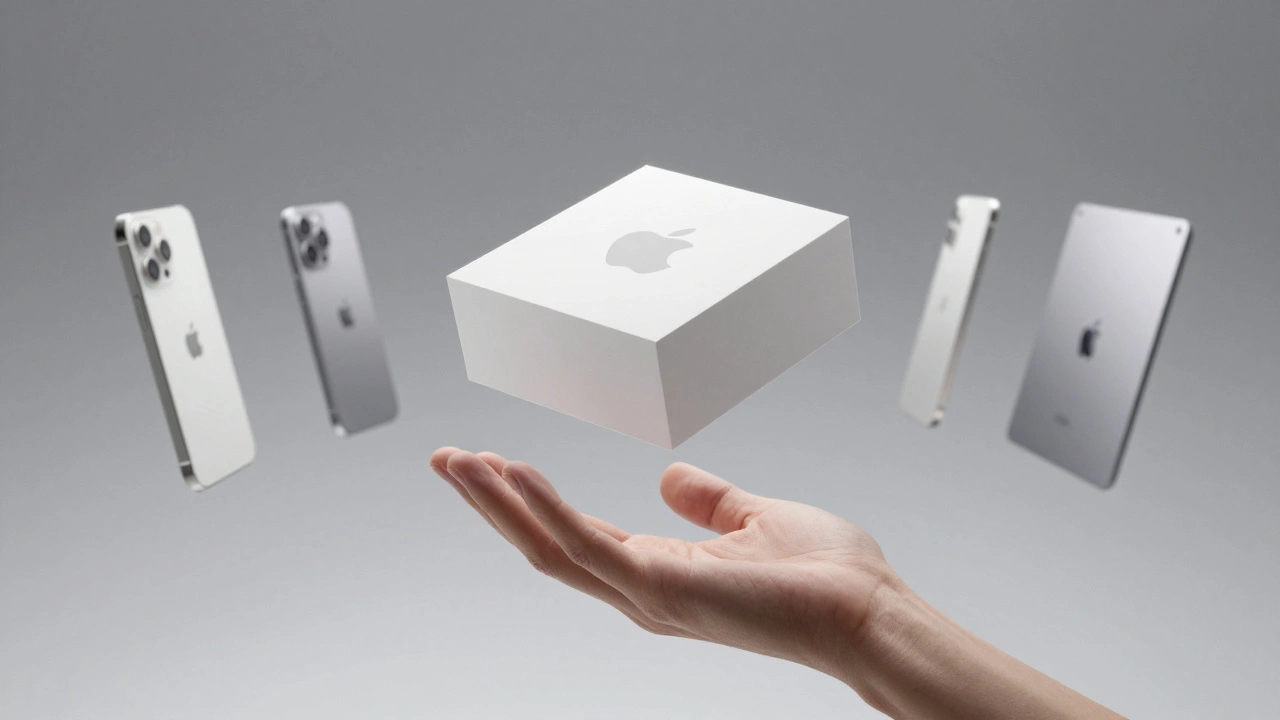
Apple doesn’t redesign its box for every new product. When the Vision Pro came out - a massive, futuristic headset - they didn’t invent a new shape. They used the same top-opening box as the MacBook and iPad. Just bigger.
Why? Because consistency builds trust. If you’ve opened an iPhone, an AirPods case, or a MacBook before, you already know how this box works. You know the rhythm. The resistance. The sound. The reveal.
That familiarity matters. Vision Pro is complex. It needs a learning curve. The packaging doesn’t add to that. It lowers the barrier. It says, "You’ve done this before. You can do this again."
Sustainability Without Sacrifice
Apple’s packaging has also changed - quietly - to match modern values. Plastic is gone. Recycled materials are in. Even the paper is FSC-certified.
But here’s the key: it doesn’t look like "eco-friendly." It still looks premium. The white box is still white. The fit is still perfect. The sound is still that satisfying whoosh.
That’s rare. Most brands treat sustainability as a compromise. Apple treats it as an upgrade. It proves you don’t need plastic to feel luxurious. You don’t need clutter to feel confident. You just need great design.
The Box That Speaks Without Words
Apple’s packaging doesn’t say "innovation." It doesn’t say "premium." It doesn’t even say "Apple."
Yet, you know all of that the second you touch it.
That’s the power of sensory branding. The texture of the paper. The weight of the lid. The silence before the whoosh. The way the product sits perfectly centered. These aren’t design choices. They’re signals. And your brain reads them faster than any slogan.
Studies show that when people feel a product was made with intention, they’re more likely to trust it, value it, and come back for more. Apple’s packaging doesn’t just hold the product. It holds the promise.
Why This Matters Beyond Apple
This isn’t just about Apple. It’s about what happens when you treat packaging as part of the product - not afterthought.
Most companies think packaging is about protection. Shipping. Cost. Logistics. Apple thinks it’s about emotion. Memory. Identity. Connection.
And the numbers prove it: people keep the box. They post unboxings online. They show friends. They talk about it. That’s free marketing. That’s loyalty. That’s retention.
When you design the unboxing like it’s the first chapter of a story, customers don’t just buy a product. They join a ritual. And rituals don’t end when the box is empty. They repeat.
Categories
Popular Articles