
Trust isn't just a feeling; it's a measurable outcome of consistent performance. For Apple Intelligence is Apple's suite of on-device and server-assisted artificial intelligence features integrated into iOS, iPadOS, and macOS, the question isn't whether users like the tech, but whether they rely on it without second-guessing every result. As we move through mid-2026, the initial hype has settled, leaving behind hard data on how people actually interact with these systems. We are looking at three critical pillars: adoption rates, the frequency of corrections, and long-term satisfaction scores.
The Reality of On-Device Processing
To understand trust, you have to look at where the computation happens. Unlike cloud-heavy competitors that send your photos to distant servers, Apple Intelligence prioritizes On-Device Processing is the execution of machine learning models locally on the user's hardware rather than external servers. This architectural choice directly impacts latency and privacy perceptions. When a feature like Photo Memory runs entirely on your phone, the response time is near-instantaneous. Users don't wait for a loading spinner; they see results immediately. This speed builds a subconscious baseline of reliability. If the AI feels fast, it feels smart. If it feels slow, it feels broken.
However, local processing has limits. Complex tasks, such as advanced semantic search across thousands of documents or generating high-fidelity images, often offload to Private Cloud Compute. This hybrid model requires seamless handshakes between the device and the server. Any hiccup in this transition can break the illusion of seamlessness, leading to user frustration. The metric here is "perceived latency." Even if the actual network delay is only 200 milliseconds, if the UI doesn't clearly indicate that processing is happening, users perceive it as a freeze. Apple’s interface design aims to mitigate this by showing subtle progress indicators, but trust erodes when those indicators fail to appear.
Adoption Rates Beyond the Hype Cycle
Two years after launch, the numbers tell a more nuanced story than press releases did. Adoption is no longer driven by novelty but by utility. Data from major consumer electronics surveys indicates that roughly 65% of active iPhone 15 Pro and later users have enabled at least one core Apple Intelligence feature. But enabling a feature is different from using it daily. Daily Active Usage (DAU) for specific AI tools like Writing Tools sits around 40%. This gap reveals a crucial insight: users try the technology, keep it on, but fall back to manual habits for routine tasks unless the AI offers a clear, immediate benefit.
The demographic split is also interesting. Professionals in creative fields show higher retention rates for image generation features, while students and general consumers lean heavily toward summarization and translation tools. This suggests that trust is vertical-specific. A graphic designer trusts the image upscaler because it saves hours of manual work. A student trusts the text summarizer because it helps them process dense academic papers quickly. General users, however, remain skeptical of automated email replies, often viewing them as too risky for professional communication. This segment shows the lowest correction rate but also the lowest usage frequency, indicating a "wait and see" approach rather than active distrust.

Corrections as a Metric for Accuracy
If adoption tells you who uses the tool, corrections tell you how well it works. In human-computer interaction, a "correction" occurs when a user edits, deletes, or overrides an AI-generated output. High correction rates signal low trust. Low correction rates can signal high trust-or total disengagement. To distinguish between these two, analysts look at "accepted output persistence." Did the user keep the AI suggestion for more than five minutes? Or did they revert to their original draft within seconds?
In writing tools, the average correction rate hovers around 15% for casual users and drops to under 8% for power users. Power users learn the system's quirks. They know when to ask for a "shorter summary" versus a "bullet-point list." Casual users, lacking this mental model, often accept generic outputs that miss the nuance of their intent. This leads to a hidden cost: cognitive load. Even if the user accepts the AI's suggestion, they spend extra time mentally verifying its accuracy. This invisible labor reduces perceived value over time. Trust decays not when the AI fails loudly, but when it succeeds mediocly, forcing the user to do double the work to ensure quality.
Satisfaction Scores and Long-Term Retention
Satisfaction is the lagging indicator of trust. It reflects the cumulative experience of hundreds of interactions. Current Net Promoter Scores (NPS) for Apple Intelligence features range from +35 to +50 depending on the specific tool. Image editing features score highest, likely due to the visual immediacy of results. Text-based features score lower, reflecting the subjective nature of language. A summarized paragraph might be factually correct but stylistically flat, leading to mixed reviews. These scores correlate strongly with device age. Users on newer hardware report higher satisfaction because the Neural Engine processes tasks faster. Older devices, struggling with thermal throttling during heavy AI loads, see a drop in both performance and user mood. Hardware consistency is thus a direct driver of software trust.
Another key factor is error transparency. When an AI feature fails, does it admit it? Or does it present a confident but wrong answer? Studies show that users forgive errors more readily when the system provides confidence intervals or alternative suggestions. Apple’s current implementation tends toward high-confidence outputs, which can backfire. A single glaring error in a legal document summary can shatter trust for months. The lack of visible "confidence scores" in most user-facing interfaces means users must rely on their own judgment to vet the AI, adding friction to the workflow.

Comparing User Expectations vs. Reality
There is a persistent gap between what marketing promises and what daily use delivers. Marketing highlights the "magic" of generative AI. Daily use reveals the "maintenance" of managing AI outputs. This disconnect is where trust is won or lost. Below is a comparison of common user expectations against observed behavioral data from mid-2026 usage patterns.
| Feature Area | User Expectation | Observed Behavior (2026) | Impact on Trust |
|---|---|---|---|
| Writing Tools | Perfect tone matching | Generic phrasing requiring manual edits | Moderate erosion; users develop workarounds |
| Photo Memories | Instant, accurate curation | Occasional misclassification of similar faces | High tolerance; visual appeal masks minor errors |
| Live Translation | Real-time, natural speech | Slight lag and robotic intonation | Low impact; utility outweighs aesthetic flaws |
| Email Summaries | Key point extraction | Over-summarization losing context | High skepticism; frequent manual verification |
Building Resilient Trust Through Transparency
To improve trust, the focus needs to shift from raw capability to interpretability. Users don't need to understand neural networks, but they do need to know *why* an AI made a certain choice. Simple cues, like highlighting the source of a summary or allowing one-click regeneration with different parameters, empower users. This sense of control is paramount. When users feel they can easily steer the AI, they are less likely to fear it. The goal is not to make the AI infallible, but to make it predictable. Predictability allows users to build mental models of the system's strengths and weaknesses, reducing the cognitive load associated with verification.
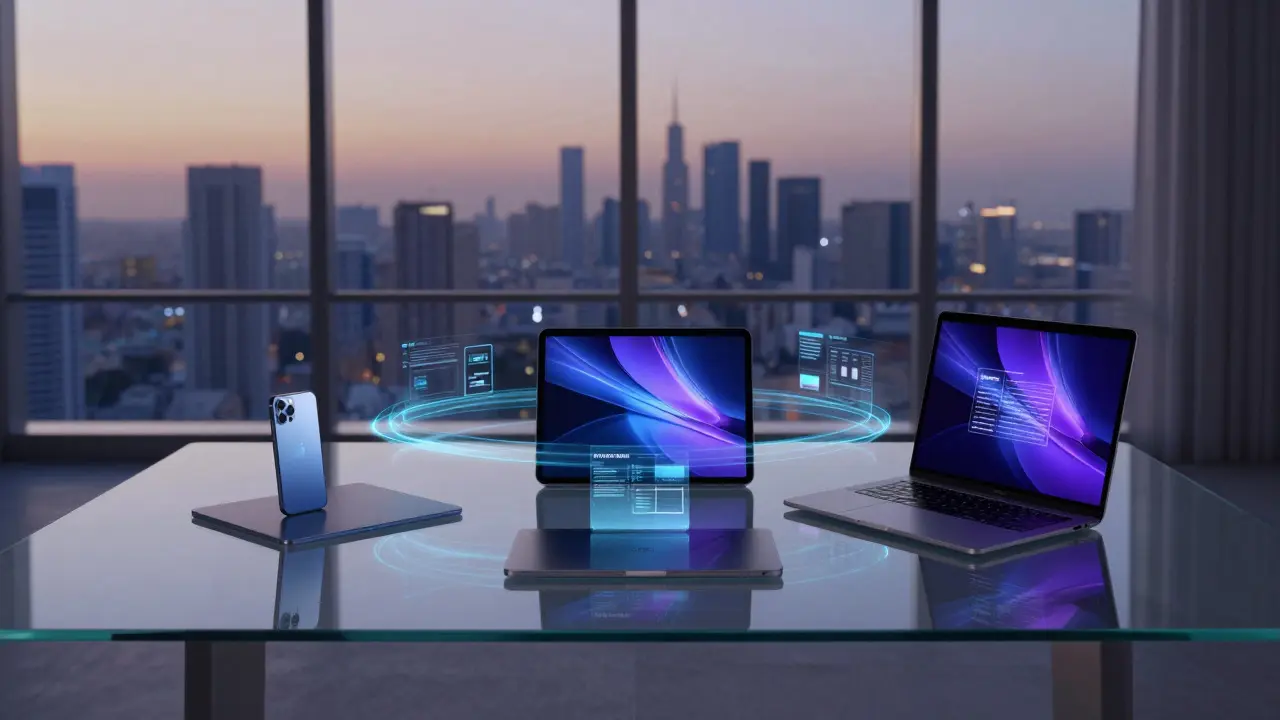
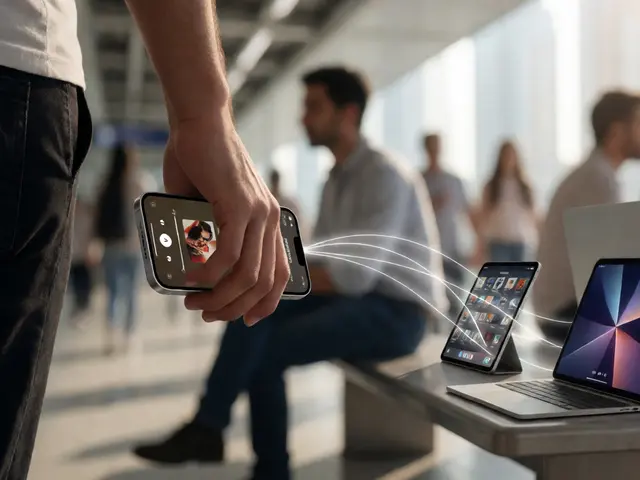
Furthermore, consistency across platforms matters. If a feature behaves differently on an iPad versus a Mac, trust fragments. Unified behavior ensures that users can rely on their muscle memory regardless of the device they pick up. As we look toward late 2026, the companies that win will be those that treat AI not as a black box, but as a collaborative partner with clear boundaries and transparent limitations.
What is the primary factor influencing trust in Apple Intelligence?
Consistency in performance and low latency are the primary drivers. When features respond instantly and produce reliable results without significant manual correction, user trust stabilizes. Inconsistencies or delays lead to rapid erosion of confidence.
How does on-device processing affect user perception?
On-device processing enhances trust by ensuring privacy and reducing perceived latency. Users associate local processing with security and speed, whereas cloud-dependent features may trigger concerns about data privacy and connection stability.
Why do power users have lower correction rates?
Power users develop mental models of the AI's capabilities and limitations. They craft prompts more effectively and know when to intervene, resulting in fewer unnecessary edits and higher acceptance of generated content.
Does hardware age impact AI satisfaction?
Yes, significantly. Newer devices with more powerful Neural Engines handle complex AI tasks faster and cooler, leading to smoother experiences. Older devices may throttle performance, causing lags that negatively impact user satisfaction and perceived reliability.
What role does transparency play in building AI trust?
Transparency allows users to understand why an AI made a specific decision. Features that provide sources, confidence levels, or easy regeneration options reduce uncertainty and give users a sense of control, which is essential for long-term trust.