
When you unbox a new iPhone or MacBook, you might not think about the carbon emissions hidden in its aluminum casing, its screen, or the electricity used to charge it. But Apple does. And that’s where things get interesting.
Apple’s goal isn’t just to make sleek gadgets. It’s to make them without leaving a carbon trail. By 2030, the company says every Apple product-from the tiniest AirPod to the heaviest Mac Pro-will be carbon neutral across its entire life cycle. That includes mining, manufacturing, shipping, charging, and even recycling. It’s ambitious. And it’s forcing real changes in how materials are made and how energy is used.
Why Materials Matter More Than You Think
Most people assume the biggest carbon footprint of a phone comes from using it. But Apple’s data shows otherwise. In 2024, about 29% of emissions came from charging and using devices. The rest? Mostly from making the thing in the first place. Mining metals, refining silicon, smelting aluminum-all of that adds up.
Take aluminum. Traditional aluminum production is one of the dirtiest parts of manufacturing. It burns coal or natural gas to separate aluminum from ore. That process alone can release over 12 tons of CO2 for every ton of aluminum made. Apple didn’t just look for cheaper aluminum. It found a way to make it clean.
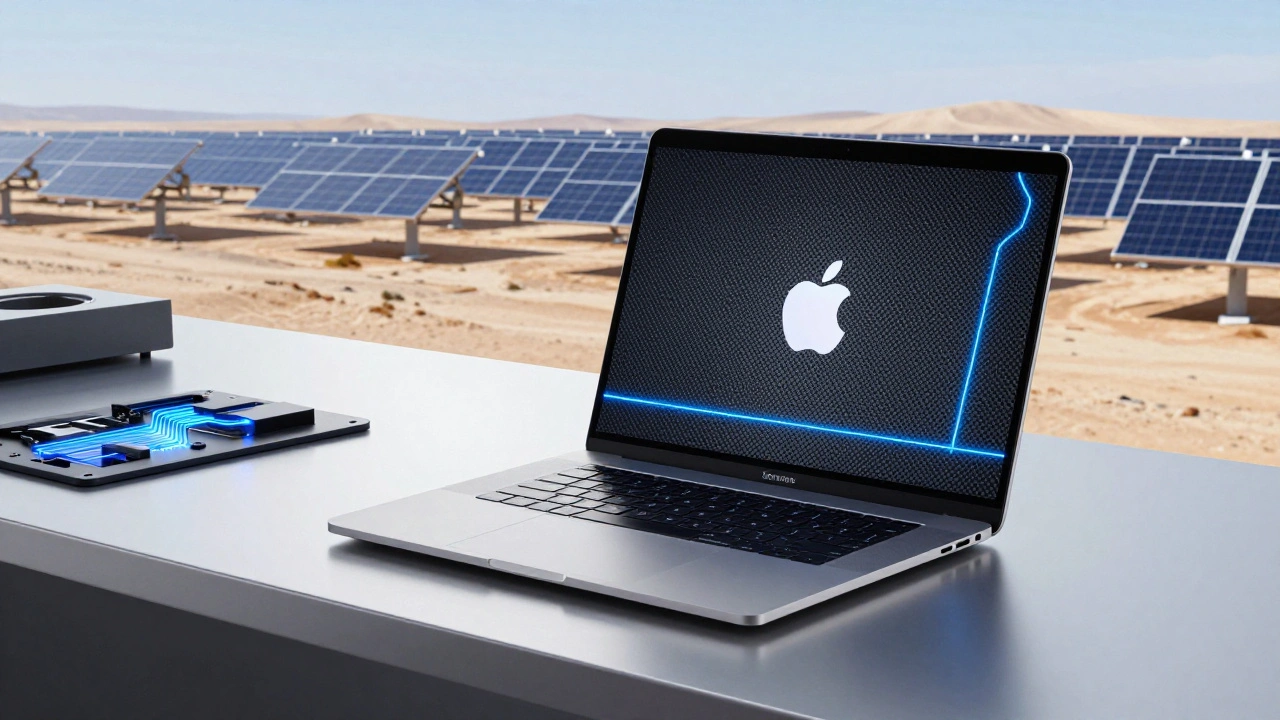
In 2020, Apple partnered with two aluminum suppliers to develop the world’s first direct carbon-free smelting process. No fossil fuels. No emissions. The first batch of this new aluminum went into the 16-inch MacBook Pro. Since then, it’s been used in more products. Today, Apple says over 50% of the aluminum used in its devices comes from recycled or carbon-free sources. That’s not a marketing trick. It’s a material shift.
Renewable Energy Isn’t Optional-It’s Built In
Apple doesn’t just buy renewable energy. It builds it. And it makes its suppliers do the same.
By 2024, Apple had convinced over 300 suppliers-representing more than 90% of its direct manufacturing spending-to power all Apple production with 100% renewable electricity. That’s not a suggestion. It’s a contract requirement. These suppliers have committed to switching by 2030. And they’re already delivering.
Together, Apple and its suppliers have brought online 17.8 gigawatts of renewable energy capacity. That’s enough to power 5 million American homes. In 2024 alone, those projects avoided 21.8 million metric tons of CO2 emissions-equivalent to taking 4.7 million cars off the road.
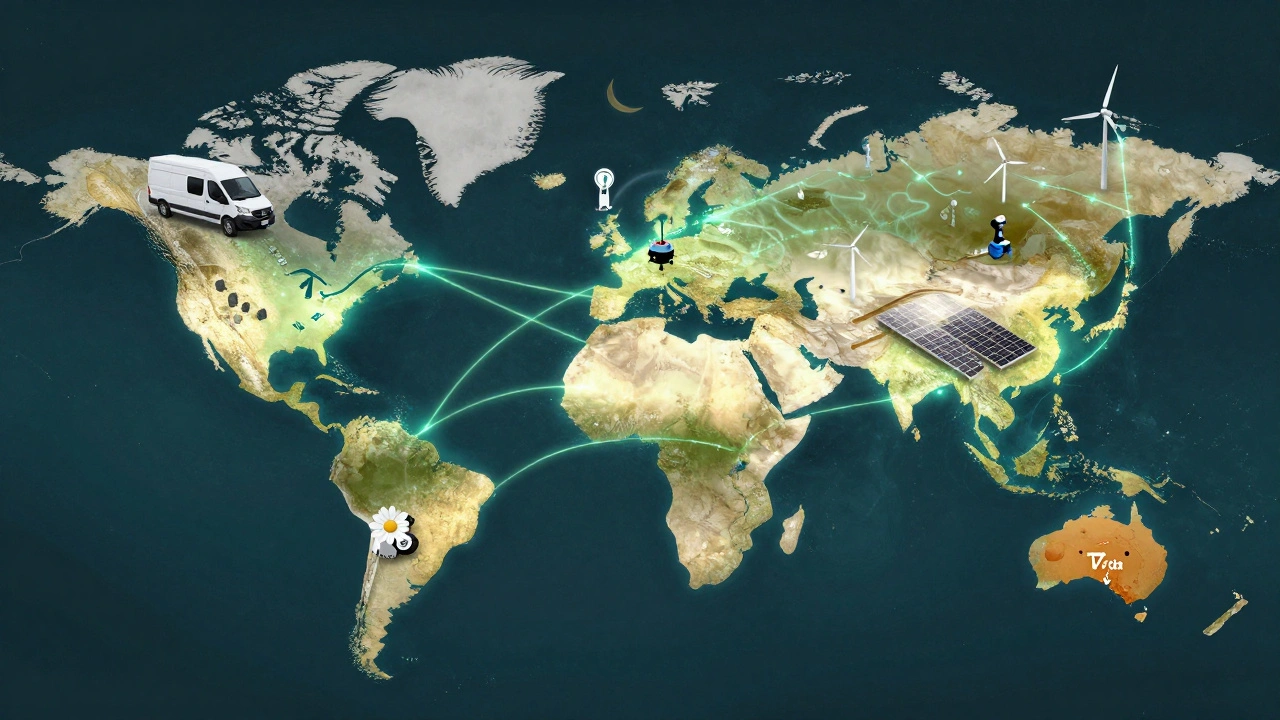
It’s not just about solar panels on factory roofs. Apple’s strategy is regional. In Europe, it’s backing major solar projects. In Greece, a 110MW solar farm built with HELLENiQ ENERGY is now feeding clean power into the grid. In Latvia, Apple signed one of the country’s first corporate power purchase agreements for a 110MW solar farm. In Spain, a 131MW solar project in Segovia went live in early 2025. These aren’t donations. They’re long-term contracts that lock in clean energy prices and force grid decarbonization.
And it’s working. In regions like Poland and Romania-where coal still powers much of the grid-Apple’s investments are directly replacing fossil fuel use. That’s a bigger win than just powering one factory. It’s changing entire energy markets.
Fixing the Hidden Polluters
Not all emissions come from big smokestacks. Some come from tiny, invisible chemicals.
Fluorinated gases are used in electronics manufacturing to clean surfaces and etch circuits. They’re potent. One ton of these gases traps as much heat as 23,000 tons of CO2. Apple used to rely on them. Now, it’s nearly eliminated them.
Through partnerships with suppliers, Apple cut emissions from fluorinated gases by over 242,000 metric tons in 2019 alone. How? By redesigning processes, switching to alternatives, and investing in closed-loop systems that capture and reuse gases instead of releasing them.
Another quiet win? Energy efficiency. Apple works directly with factories to optimize how they use electricity. By 2019, 92 facilities were part of its Supplier Energy Efficiency Program. Together, they saved over 779,000 metric tons of CO2 annually-roughly the same as taking 170,000 cars off the road. That’s not a side project. It’s built into every manufacturing agreement.
Carbon Neutral Products? The Legal Fight
Apple announced its first carbon-neutral products in 2023-the Apple Watch lineup. But in August 2024, a German court blocked Apple from calling those watches "carbon neutral." Why? Because the company used carbon offsets to balance out a small amount of leftover emissions.
The court said consumers might be misled. If a product says "carbon neutral," shouldn’t it have zero emissions? Apple argues it’s not just offsetting-it’s reducing first, then removing what’s left. But the legal challenge highlights a deeper tension: Can you ever call something "neutral" if you’re still releasing carbon and then buying credits to pretend it didn’t happen?
Apple’s response? Double down on direct reduction. Its Restore Fund, launched in 2021 with $200 million, invests in projects that actually pull carbon out of the air-like restoring wetlands, grasslands, and forests. Mangroves in Colombia? They store 10 times more carbon than regular forests. Savannas in Kenya? Restored with local communities. These aren’t just offsets. They’re long-term carbon removal.
Apple says it’s moving away from offsets and toward real removal. But the lawsuits aren’t going away. And they’re forcing the whole industry to rethink what "carbon neutral" even means.

Shipping, Recycling, and the Last Mile
Even if you make a clean product, how you get it to customers matters.
Apple now partners with delivery companies that use electric vans, e-bikes, and low-carbon shipping routes. In 2024, it started using electric vehicles for last-mile delivery in cities like San Francisco, London, and Tokyo. It’s also joining the First Movers Coalition-a group of companies pushing for sustainable aviation fuel. Why? Because air freight still accounts for a big chunk of emissions from global supply chains.
And then there’s recycling. Apple’s robots, like Daisy and Dave, can disassemble iPhones and recover materials like cobalt, lithium, and rare earth elements. In 2024, Apple recycled over 1 million metric tons of materials. That’s not just waste management. It’s a circular economy in action. The more material it recovers, the less it needs to mine-and the less carbon it emits.
What This Means for the Rest of the Industry
Apple isn’t doing this alone. But it’s setting the standard.
Other tech companies are watching. Samsung, Google, and Microsoft have all announced similar goals. But none have matched Apple’s scale of supplier pressure, material innovation, or regional energy investment. Apple’s model shows that carbon neutrality isn’t just about buying credits. It’s about rewriting the rules of manufacturing, energy, and logistics.
For suppliers, it’s a mandate. For consumers, it’s a quiet promise: your device doesn’t have to cost the Earth. And for the planet, it’s a signal that even the biggest tech giants can change how they build things.
By 2030, Apple says it will be carbon neutral. But the real win? It’s already changing how materials are made, how energy is sourced, and how products are thought of-not just as gadgets, but as systems with consequences.
Is Apple really carbon neutral already?
No-not yet. Apple is carbon neutral for its own offices and data centers, but the goal is to make every product sold carbon neutral across its entire life cycle by 2030. As of 2025, it has reduced global emissions by 60% since 2015. That’s progress, but not full neutrality. The remaining emissions are being addressed through renewable energy, material innovation, and carbon removal projects.
What does "carbon-neutral product" actually mean?
It means Apple has reduced emissions as much as possible during production, shipping, and use-and then removed or offset the rest. For example, the Apple Watch uses recycled aluminum, renewable energy in manufacturing, and carbon removal projects to balance out the last few tons of emissions. But as courts in Germany and California have ruled, calling it "neutral" can be misleading if offsets are involved. Apple now emphasizes reduction over offsets.
Why does Apple care about aluminum?
Aluminum production is one of the most carbon-intensive parts of making electronics. Traditional smelting uses fossil fuels and emits over 12 tons of CO2 per ton of aluminum. By working with suppliers to develop carbon-free smelting, Apple cut emissions by up to 90% for the aluminum used in its devices. That’s why it’s a major focus-it’s one of the biggest levers for reducing the footprint of a single product.
How much of Apple’s emissions come from charging devices?
In 2024, about 29% of Apple’s total carbon footprint came from electricity used by customers to charge and operate devices like iPhones, Macs, and Apple Watches. That’s why Apple is investing heavily in renewable energy projects in the U.S., Europe, and Asia-Pacific-to make sure the power used to charge those devices is clean.
Are Apple’s renewable energy projects only in the U.S. and Europe?
No. While most projects are in the U.S., Europe, and Asia-Pacific-the regions where most devices are sold-Apple also invests in high-impact areas like China. The China Clean Energy Fund supports over 1 gigawatt of renewable projects. In 2025, a second fund was launched to keep expanding this work. The goal is to match 100% of customer electricity use globally with clean energy, no matter where the device is charged.