
Have you ever caught yourself checking your wrist just to see if a colored circle is closed? It’s a strange habit for some, but for millions of people, those simple loops are the difference between moving their body and staying on the couch. The secret isn’t magic; it’s design. Specifically, it’s how Activity rings use gamified visual feedback to turn complex health data into an intuitive daily game.
We live in an era where our watches know more about our biology than we do. They track heart rate variability, blood oxygen, sleep stages, and stress levels. Yet, despite this flood of data, the most effective metric visualization remains three simple circles. Why? Because humans don’t make decisions based on raw numbers alone. We respond to stories, progress, and completion. This article breaks down why this specific design works, how it manipulates behavior through psychology, and what designers can learn from it.
The Power of Simplicity in Complex Data
Most health dashboards fail because they overwhelm. Imagine opening an app and seeing twelve different graphs: steps, calories burned, active minutes, stand hours, flights climbed, distance traveled, resting heart rate, HRV, sleep score, recovery time, breathing rate, and mindfulness minutes. Your brain freezes. You close the app.
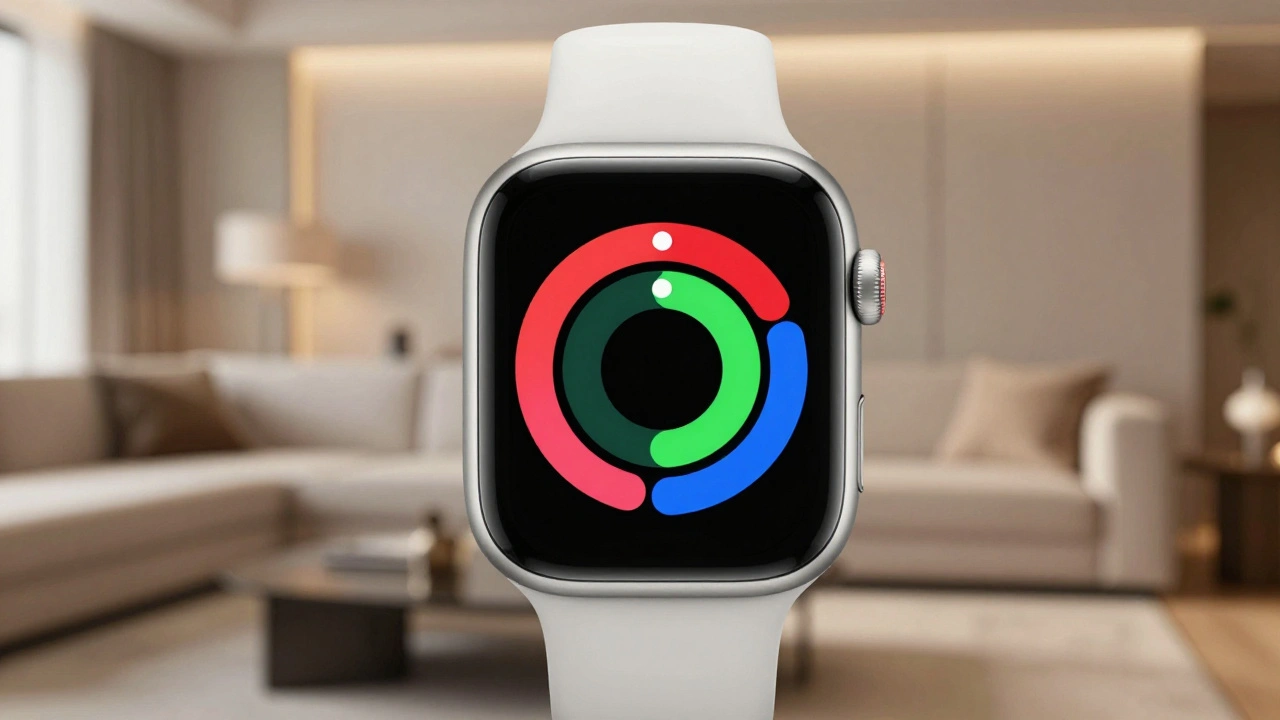
The genius of the ring system lies in its ruthless simplification. It takes all that granular data and compresses it into three primary goals: Move, Exercise, and Stand. According to Apple’s Human Interface Guidelines define these as standardized visual elements for displaying activity progress., each ring tracks one specific dimension. The red ring tracks active energy (calories), the green ring tracks brisk activity minutes, and the blue ring tracks standing hours. Everything else-steps, distance, flights climbed-is pushed to a secondary view at the bottom of the screen.
This hierarchy matters. By foregrounding only three metrics, the design lowers cognitive load. You don’t need to analyze trends or compare week-over-week averages to understand your status today. You just need to answer one question: Are the rings closed? This binary state-open or closed-is instantly recognizable. It turns abstract health concepts into concrete tasks.
| Ring Color | Metric Tracked | Goal Type | User Action Required |
|---|---|---|---|
| Red | Move | Calories Burned | General movement throughout the day |
| Green | Exercise | Minutes of Brisk Activity | Sustained effort (e.g., walking fast, running) |
| Blue | Stand | Hours Stood | Stand for at least 1 minute in distinct hours |
Gamification Mechanics That Stick
Let’s be honest: closing rings feels good. But why? It’s not just vanity. It’s behavioral psychology packaged in software. The system uses several proven gamification techniques that keep users coming back.
First, there’s the concept of progress visibility. In traditional fitness, progress is often slow and invisible. You might work out for weeks before seeing a change in the mirror. With rings, progress is immediate. Every step fills the red ring slightly. Every minute of exercise advances the green ring. This constant micro-feedback loop satisfies our brain’s desire for instant gratification.
Second, the system leverages streaks. A streak counts consecutive days where you close all three rings. Missing a day resets the counter to zero. This taps into loss aversion-a psychological principle where people prefer avoiding losses over acquiring equivalent gains. Once you have a 30-day streak, the fear of breaking it becomes a powerful motivator to move, even when you’re tired or busy.
Third, there are badges and awards. These aren’t just digital stickers. They represent symbolic rewards that transform daily metrics into collectible achievements. Earning a badge for closing rings 100 times in a year gives a sense of accomplishment that raw calorie counts never could.
Research supports this approach. A study by Lister et al. analyzed 50 popular health apps and found that 78% used goal-setting elements and 78% included social influences. Only 6% used explicit point systems. This suggests that modern users prefer clear goals and social connection over abstract scoring. The ring system fits perfectly into this pattern by focusing on completion rather than accumulation.
Social Dynamics and Competition
Health doesn’t happen in a vacuum. We are social creatures, and our behaviors are heavily influenced by those around us. The ring design extends beyond individual tracking into a social arena.
Users can share their ring status with friends, creating a subtle form of public accountability. When you know your friend can see whether you’ve closed your rings today, you’re more likely to take that afternoon walk. This transforms a solitary habit into a shared experience.
Additionally, the platform allows for direct competition. Friends can race to close their rings first each day. This adds a layer of playful rivalry that makes mundane activities feel like a game. Instead of thinking, "I should go for a run," you think, "I need to beat Sarah’s exercise ring."
This social integration is crucial for long-term adherence. Studies show that social support significantly increases the likelihood of maintaining new habits. By embedding social features directly into the core interface, the design ensures that community reinforcement is always just a glance away.
Behavioral Outcomes and Psychological Impact
Does this design actually change behavior? Yes, but with nuances. The system embodies key principles from behavioral science, including self-monitoring, feedback, goal-setting, and social comparison.
Self-monitoring is the act of observing your own behavior. Simply tracking your steps has been shown to increase physical activity. The rings make self-monitoring effortless and visually engaging. You don’t need to write anything down; the watch does it for you.
Feedback comes in real-time. As you move, the rings fill up. This immediate response helps users understand the relationship between their actions and outcomes. If you want to close the exercise ring, you quickly learn how many minutes of brisk walking are needed.
Goal-setting provides direction. Without a target, effort is aimless. The rings give you a clear daily objective. Moreover, the goals are adaptive. If you consistently exceed your targets, the system may suggest increasing them. If you struggle, it encourages consistency over intensity.
However, there’s a potential downside. For some users, the pressure to maintain perfect streaks can create anxiety. The fear of breaking a long streak might lead to obsessive checking or unnecessary exertion. This highlights the importance of balancing motivation with mental well-being. Designers must consider how gamification elements impact users differently based on personality traits and stress levels.
Comparison with Alternative Visualizations
How do activity rings compare to other health metric displays? Let’s look at alternatives.
Many competitors use numerical dashboards. For example, some devices display dozens of metrics in list form. While informative, these interfaces require significant cognitive effort to interpret. Users must scan multiple numbers, understand units, and mentally calculate progress. This friction reduces engagement.
Other platforms use linear progress bars. Linear bars work well for single-goal tasks, but they struggle with multi-dimensional goals. Showing three separate linear bars side-by-side creates visual clutter and lacks the unified aesthetic of concentric rings.
Some apps employ complex scoring systems, combining various metrics into a single "health score." While convenient, these scores obscure the underlying data. Users don’t know which specific behavior improved their score. The ring system avoids this opacity by keeping each metric distinct yet interconnected.
In short, the ring design strikes a balance between simplicity and comprehensiveness. It presents enough information to guide behavior without overwhelming the user. This clarity is its greatest strength.
Implementation Lessons for Designers
If you’re designing a product that relies on user habits, here are key takeaways from the ring model:
- LIMIT PRIMARY METRICS: Focus on 3-4 key indicators. Too many choices paralyze decision-making.
- USE VISUAL PROGRESS: Circles, bars, or icons that fill up provide intuitive feedback. Avoid raw numbers wherever possible.
- LEVERAGE STREAKS: Consecutive success builds momentum. Make losing progress feel costly to encourage consistency.
- ADD SOCIAL LAYERS: Allow users to share achievements or compete safely. Social proof amplifies motivation.
- KEEP IT CONSISTENT: Use the same colors and shapes across all contexts. Familiarity reduces learning curves.
Also, remember that technology evolves. While the basic three-ring structure remains stable, integrations deepen. For instance, data from the rings now informs personalized workout recommendations in subscription services. This creates a feedback loop where tracking influences future actions, which in turn generates more data. Designers should plan for such ecosystem synergies from the start.
Future Directions in Health Tech Design
Where does this go next? Experts predict deeper personalization. Future iterations might adjust ring goals dynamically based on individual biometrics, weather, or schedule. Imagine a system that automatically lowers your exercise goal on rest days or raises it during training blocks.
There’s also potential for richer social experiences. Group challenges, team-based streaks, or community leaderboards could enhance engagement further. However, caution is needed. Over-gamification risks turning health into a chore. The best designs empower users without controlling them.
Finally, accessibility will remain critical. Ensuring that visual cues are perceivable by users with color blindness or motor impairments is essential. High contrast modes, haptic feedback, and voice narration can make these tools inclusive for everyone.
What do the three activity rings represent?
The three rings represent Move (red), Exercise (green), and Stand (blue). Move tracks active calories burned, Exercise tracks minutes of brisk activity, and Stand tracks the number of hours you stood for at least one minute.
Why are activity rings considered gamified?
They use game-like elements such as goals, progress bars, streaks, badges, and social competition. These mechanics tap into psychological drivers like achievement, ownership, and loss aversion to motivate consistent behavior.
Can I customize my activity ring goals?
Yes, you can adjust your Move and Exercise goals manually through the Fitness app. The system may also suggest changes based on your recent performance to help you stay challenged but achievable.
Do activity rings work for everyone?
For most people, yes. However, individuals with certain medical conditions or mobility limitations may find the default goals unrealistic. Customization options help accommodate diverse needs, but professional advice is recommended for specific health concerns.
How do streaks affect user behavior?
Streaks leverage loss aversion. Once a user builds a consecutive day count, they become motivated to avoid resetting it. This encourages daily engagement and habit formation, though it can sometimes cause stress if perfectionism takes over.