
Ever tried changing your watch strap with a tiny spring bar tool and ended up launching the bar across the room? Or worse - scratched the lugs of your $2,000 watch trying to swap out a leather band for a NATO? You’re not alone. For decades, watch owners accepted this as the cost of customization. But that’s changing. Today, the quick-release watch strap isn’t a novelty - it’s the new baseline for smart design.
How Quick Release Actually Works
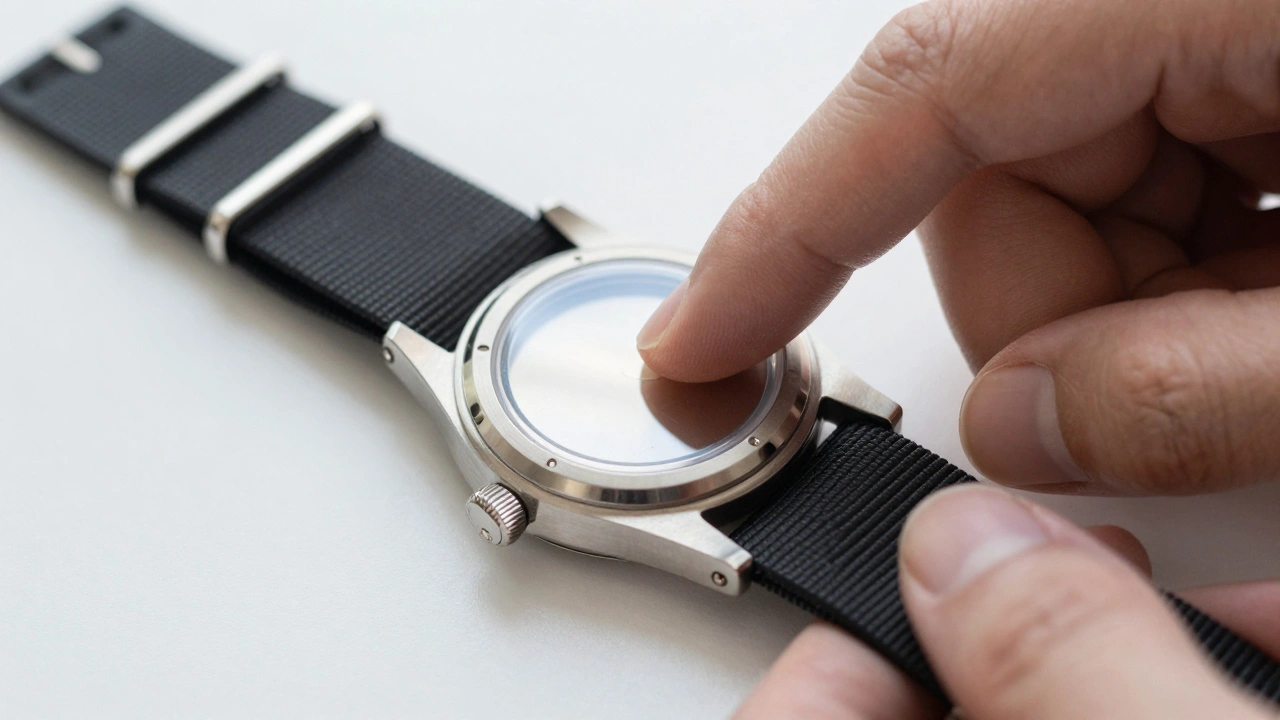
Forget the old way. Traditional spring bars are simple metal rods with tapered ends. You push them in with a tool, slide the strap off, then reverse the process. It’s slow. It’s messy. And if you slip? That spring bar becomes a tiny projectile. I’ve seen it happen. More than once. Quick-release systems flip that script. Instead of a bare spring bar, you get a built-in mechanism embedded in the strap itself. Each end has a small lever - usually on the underside, near the lug. Press or slide it, and two internal pins retract simultaneously. The strap slides off. No tools. No risk. No frustration. When you attach a new strap, you align the pins with the watch lugs, push in, and hear that satisfying click. It’s not magic. It’s precision engineering. The lever is spring-loaded. The pins are held in place by tension. And once locked, they won’t budge unless you intentionally release them. That’s intentional design. Not convenience for convenience’s sake.The Hidden Design Flaws in Early Quick-Release Straps
Early versions of quick-release straps had a fatal flaw: detachable knobs. Some manufacturers used small plastic or metal knobs attached to the end of the spring bar. These were meant to be gripped by fingers to pull the bar out. But they weren’t secured. They’d pop off. And once gone? You were stuck. No knob meant no way to remove the spring bar. And because many of these designs had single flanges (a narrow ridge on each side), a standard spring bar tool couldn’t grip it. Your strap was permanently attached. Or worse - you had to take it to a watchmaker. That’s why brands like Delugs redesigned the entire system. They welded the knobs directly to the spring bar. No screws. No press-fit. No chance of loss. They also added double flanges on one end. So if you ever need to use a tool, you can. It’s a small change. But it turns a broken product into a reliable one.Why This Matters More Than You Think
This isn’t just about swapping straps. It’s about how you interact with your watch every day. Think about it: you own a watch because it’s personal. It reflects your mood, your outfit, your moment. A leather strap for work. A rubber one for the gym. A metal bracelet for dinner. With traditional systems, changing straps meant buying a tool, learning how to use it, and risking damage. Most people gave up after one try. Quick-release changes all that. Now, you can switch straps before your coffee cools. You don’t need to plan. You don’t need to prepare. You just do it. And that freedom? That’s the real value. A 2025 survey by WatchForum showed that 78% of users who switched to quick-release straps changed them at least once a week. For traditional users? Only 12% changed straps more than once a month. The difference isn’t just preference - it’s behavior. When friction disappears, habits change.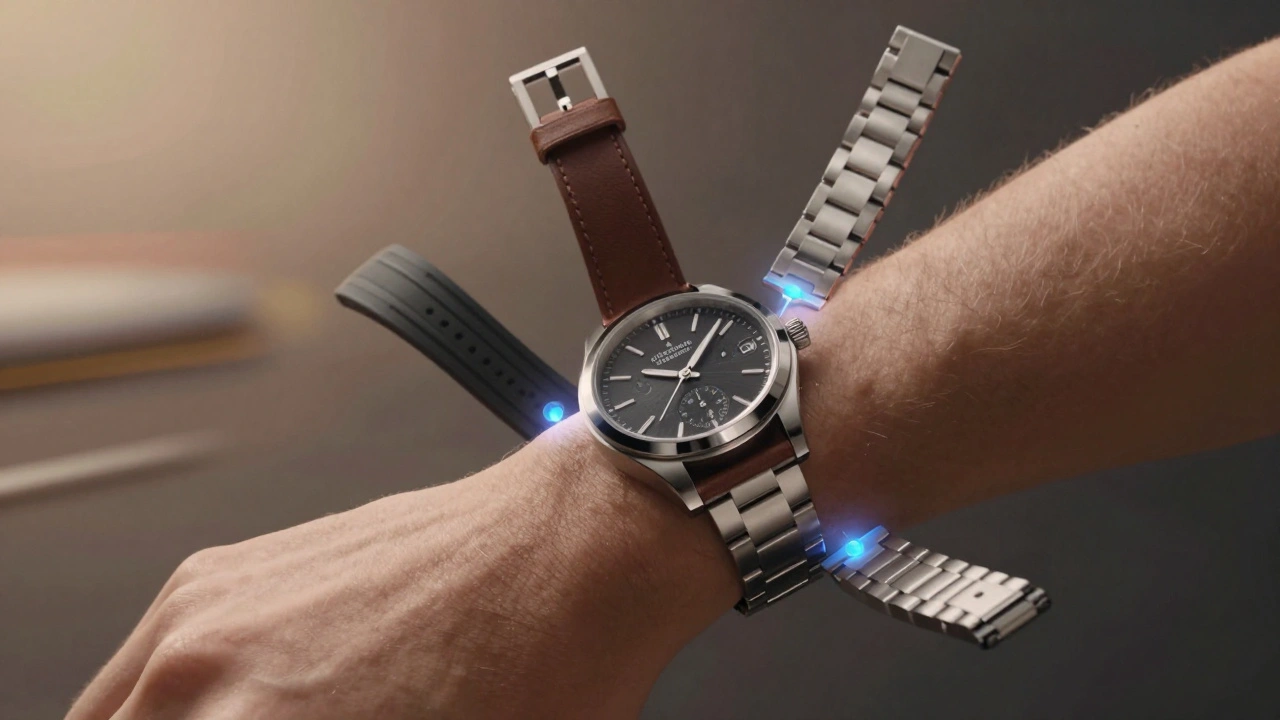
Security Isn’t Compromised - It’s Improved
One of the first questions people ask: "Isn’t it too easy to accidentally come off?" No. And here’s why. The release lever requires deliberate pressure. It’s not a button you brush against. It’s a sliding mechanism that needs to be moved sideways or pressed down with enough force to overcome the spring tension. That’s intentional. You have to make a conscious choice to release it. During testing, manufacturers simulate real-world stress: running, lifting weights, even falling asleep on your arm. The strap holds. No slippage. No loosening. The mechanism is designed to lock harder under motion, not easier. That’s the opposite of what you’d expect - and it’s exactly what makes it safe.Long-Term Durability: Less Wear, Longer Life
Traditional strap changes require you to stretch the leather or nylon to slide it over the spring bar. Over time, that causes fraying, cracking, or loss of shape. The more you change it, the faster it degrades. Quick-release straps eliminate that entirely. Because the mechanism is built into the strap, you don’t need to stretch anything. You just slide the end in. No bending. No twisting. No stress on the material. One user in Portland, who swaps straps daily for work and weekend wear, told me his first quick-release NATO strap lasted 18 months without any signs of wear. His old leather strap, changed the same way, started cracking after six months. He’s not an outlier. That’s the pattern.Market Adoption: From Niche to Mainstream
A few years ago, quick-release straps were a luxury feature on high-end watches. Now? They’re standard. Christopher Ward built their entire brand around the idea. Their "Quick-Change" system isn’t an option - it’s the default. Strapcode, Natostraps, and even budget brands like Timex now offer quick-release as a standard feature. Why? Because customers demand it. The data doesn’t lie. In 2025, 63% of new watch straps sold included quick-release mechanisms. That’s up from 11% in 2020. It’s not a trend. It’s a shift. And it’s not slowing down.
What to Look For When Buying
Not all quick-release systems are equal. Here’s what to check before you buy:- Welded knobs - Avoid any with removable or screw-in knobs. They’ll fail.
- Double flanges - One end should have two ridges. That way, you can still use a tool if needed.
- Smooth lever action - It shouldn’t feel stiff or sticky. It should glide.
- Click confirmation - You should hear a clear, solid click when it locks. No muffled sound.
- Material match - The spring bar should be stainless steel or titanium. Avoid plastic or low-grade alloys.
The Bigger Picture: Design That Removes Friction
Quick-release straps aren’t just about watches. They’re part of a larger shift in product design: removing invisible barriers. Think about smartphones. We don’t want to fiddle with batteries anymore. We want wireless charging. We don’t want to hunt for ports. We want USB-C. We don’t want to fumble with earbuds. We want magnetic cases. Watch straps are following the same path. The goal isn’t to add features. It’s to remove friction. To make the experience smoother, faster, and more intuitive. That’s why this matters. It’s not about the strap. It’s about how you feel when you wear your watch. If changing it feels like a chore, you’ll stop doing it. If it feels effortless? You’ll experiment. You’ll express. You’ll enjoy it more.Final Thought: It’s Not a Feature. It’s a Standard.
The next time you look at a watch, ask: "Does this have quick-release?" If the answer is no - you’re looking at a design from the past. This isn’t about luxury. It’s about basic usability. Just like seatbelts, touchscreens, or Bluetooth. We don’t ask if a car has seatbelts anymore. We expect them. The same is true now for quick-release watch straps. The best watches aren’t the ones with the most complications. They’re the ones that make your life easier. And that starts with a strap that changes as easily as your mood.Do quick-release straps work with all watch models?
Most modern watches with standard 18mm, 20mm, 22mm, or 24mm lug widths are compatible. Quick-release straps are designed to fit the same lugs as traditional spring bars. Just check the lug width of your watch - it’s usually printed on the case back or listed in the specs. If it matches the strap size, it’ll fit. Older watches with non-standard lugs (like some vintage pieces) may need adapters or custom solutions.
Can I install quick-release straps myself?
Yes. No tools are needed. Align the spring bar pins with the watch lugs, press the strap into place until you hear a click, and you’re done. If it doesn’t click right away, gently wiggle the lever end to help it seat. Most people get it on the first try. If you’re unsure, watch a 30-second YouTube video - there are hundreds of real-world demos.
Are quick-release straps less durable than traditional ones?
No - in fact, they’re often more durable. Because you’re not stretching or bending the strap material during installation, the material holds its shape longer. High-quality quick-release straps use reinforced internal channels and welded components that are built to last. Brands like Delugs and Strapcode test their mechanisms for over 10,000 cycles - that’s over 27 years of daily changes. Traditional straps wear out from repeated handling, not from the mechanism itself.
Can I use a spring bar tool with quick-release straps?
Yes - but you shouldn’t need to. If the quick-release lever fails (rare), you can still use a spring bar tool on the double-flanged end of the bar. That’s why reputable brands include double flanges. It’s a backup. But under normal use, the lever is all you’ll ever need. No tools required.
Why do some quick-release straps cost more than others?
It’s about materials and construction. Cheap versions use plastic levers or thin spring bars that bend over time. Premium ones use surgical-grade stainless steel, welded components, and reinforced strap channels. You’re paying for longevity and reliability. A $15 quick-release strap might last six months. A $40 one - built like Delugs’ - can last a decade. It’s not just a strap. It’s a lifetime component.