
When you buy an Apple device, you pay more upfront than you would for a comparable Windows PC. But if you look at the full picture - over three years, across hundreds of employees - Apple devices often cost less to run. Not because they’re magic. But because they’re simple.
Why Simplicity Saves Money
Think about the last time your computer froze, asked for an update you didn’t understand, or refused to connect to your printer. How long did it take to fix? Who had to help you? Now imagine that happening to thousands of employees across a company. That’s not just frustration. That’s payroll. Apple doesn’t just design products. It designs systems. The hardware, the operating system, the security layers, the app store - they’re built together. No patchwork. No third-party bloat. That’s why a Mac user is far less likely to call IT. IBM ran a real-world test with 200,000 devices. They needed 20 engineers to support the Windows machines. For the same number of Macs? Just 7. That’s an 186% increase in support staff just to handle Windows. One engineer supports nearly 30,000 Mac users. On Windows? Barely 10,000.The Ticket Problem
Help desk tickets don’t write themselves. They come from confusion. From settings buried in menus. From updates that break things. From apps that don’t play nice. Data from Jamf shows Macs save enterprises $843 per device over three years - mostly from fewer support calls. Why? Because Mac users open half as many tickets as Windows users. And when they do? Only 5% of Mac support cases require someone to walk over and fix it. For Windows? That number jumps to 27%. That’s not about skill. It’s about design. A Mac doesn’t ask you to choose between “Update Now” and “Update Later.” It updates quietly, in the background, without breaking your workflow. A Windows machine? It might reboot during a Zoom call. It might ask you to pick a driver. It might need a registry tweak.Productivity Isn’t Just a Buzzword
Lower support costs aren’t the only win. When users aren’t stuck fixing their own devices, they get more done. Survey data shows 97% of Mac users say their device increases productivity. 79% say they couldn’t do their job as well without it. Why? Because everything works together. Your files sync. Your phone rings through your laptop. Your calendar talks to your email. No plugins. No drivers. No guessing. One study found Mac users closed sales deals that were 16% larger on average than their Windows-using peers. Not because they were better salespeople. Because they spent less time waiting for their laptop to wake up, less time rebooting after updates, less time explaining to IT why the printer didn’t work. And here’s something companies rarely talk about: retention. Employees who use Macs are 20% more likely to stay at their company. Why? Because frustration builds up. And when you’re constantly fighting your tools, you start looking for a better job.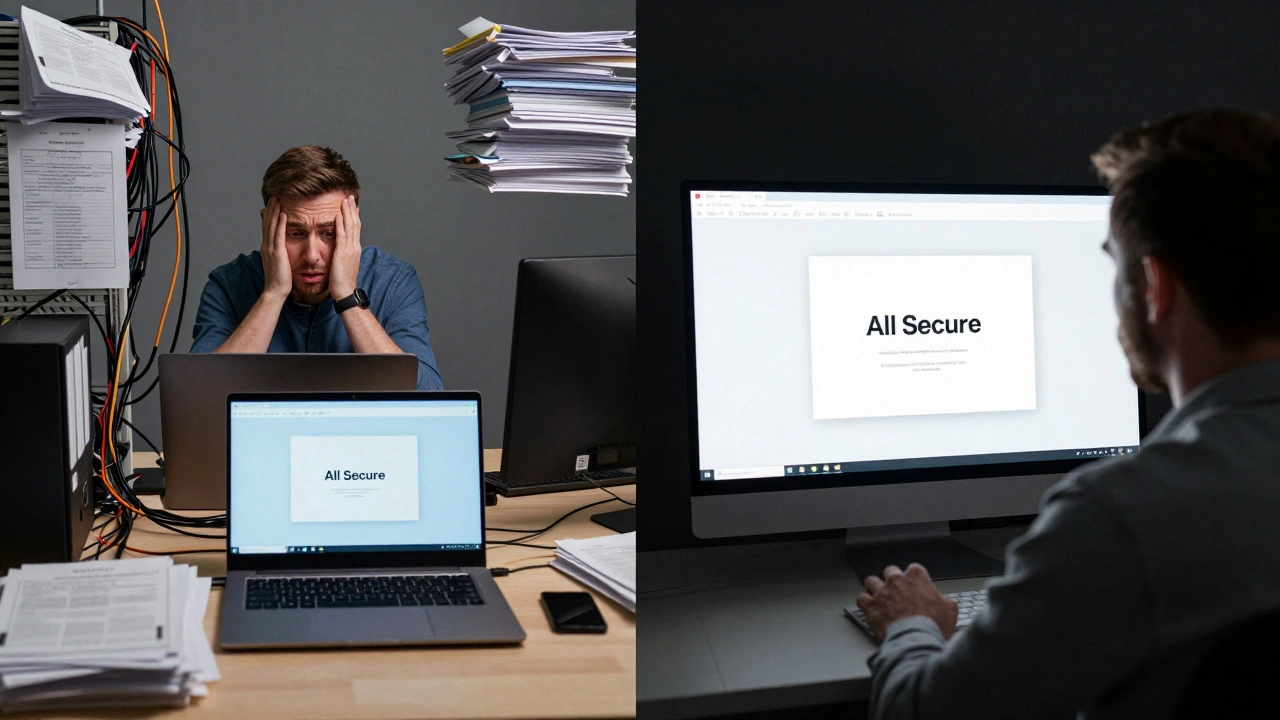
Security That Doesn’t Cost Extra
Windows environments often need five different security tools: antivirus, firewall, endpoint detection, data loss prevention, and patch management. Each one costs money. Each one adds complexity. Each one creates new ways to break. macOS doesn’t need that. Encryption is on by default. App permissions are clear. Sandboxing stops apps from messing with your files. Updates are automatic and reliable. Apple’s M-series chips include hardware-level security that Windows machines can’t match. Forrester found Apple saves companies $40 per device per year just in security software licenses. But the real savings? Avoiding one data breach. A single incident can cost millions. Apple’s architecture makes breaches far less likely - 50% less per device than other systems.Less Software, Less Chaos
Windows PCs often run a patchwork of software: one tool for backups, another for antivirus, a third for file syncing, a fourth for remote access. Each needs installation. Each needs updates. Each needs licenses. macOS includes most of that out of the box. Time Machine. FileVault. iCloud. Screen Time. AirDrop. No extra cost. No extra training. No extra IT tickets. Organizations using Macs report 30% less software sprawl. That means fewer licenses to track, fewer conflicts to debug, fewer versions to manage. It’s not glamorous. But it saves hours - and dollars - every week.
Longer Life, Less Waste
Windows laptops often slow down after two years. Drivers stop updating. Software stops working. The hardware feels outdated. Macs last longer. Not because they’re built better (though they are). But because the software and hardware are designed to work together for years. Apple supports its devices with updates for up to seven years. Most Windows laptops get three. That means fewer replacements. Fewer procurement cycles. Fewer data transfers. Fewer training sessions for new devices. And when you do upgrade? Macs hold their value. Resale prices stay higher. That lowers the true cost of ownership even more.The Real Cost of Complexity
The biggest mistake companies make? Looking only at the sticker price. A $1,200 Mac seems expensive next to a $700 Windows laptop. But when you add up:- IT labor hours
- Help desk tickets
- Security breaches
- Lost productivity
- Software licenses
- Device replacement cycles
What This Means for Your Business
If you’re still choosing devices based on upfront price, you’re leaving money on the table. Here’s what to ask:- How many support tickets do we get per device per year?
- How many times do we send someone to fix a computer in person?
- How much time do employees lose waiting for updates or troubleshooting?
- How many security tools do we pay for - and how often do they break?
Do Macs really cost less than Windows PCs over time?
Yes - when you account for the full lifecycle. While Macs cost more upfront, studies from Forrester and Jamf show they save $50 to $843 per device over three years when you factor in IT support, security, productivity, and device replacement. The savings come from fewer help desk tickets, less hands-on IT work, and longer device life.
Why do Macs generate fewer IT support tickets?
Because the system is integrated. Hardware, OS, and apps are designed to work together. Updates are automatic and reliable. Security features are built in. Users don’t need to choose drivers, fix registry errors, or install third-party tools. That means less confusion - and fewer calls to IT.
Is Apple’s security really better than Windows?
In enterprise settings, yes. macOS includes encryption, sandboxing, and app permission controls by default. Apple’s M-series chips add hardware-level security that’s harder to bypass. Forrester found M1 Macs have a 50% lower risk of data breaches per device. Windows often needs multiple third-party tools to match this, which adds cost and complexity.
How does simplicity improve employee productivity?
When users aren’t fighting their devices, they focus on their work. Mac users report 97% higher productivity, 95% higher creativity, and 94% higher self-sufficiency. They spend less time waiting for updates, rebooting, or fixing software. That adds up to real work getting done - and fewer distractions.
Can small businesses benefit from Apple’s simplicity?
Absolutely. Even with 10 employees, fewer IT tickets mean less downtime and lower support costs. Macs require less management, update automatically, and last longer. For small teams without dedicated IT staff, that means fewer headaches and more time to grow the business.