
When you walk into an Apple Store, you don’t just see products. You see spaces built for learning. Not in the way a classroom is built-with desks, chalkboards, and textbooks-but in a way that feels alive, casual, and inviting. These are the learning zones, and they’re not an afterthought. They’re the heart of how Apple turns shoppers into users, and users into creators.
Back in 2017, Apple launched Today at Apple is a free, in-store educational program that offers hands-on sessions on photography, music, coding, and creativity, hosted by Creative Pros. It was ambitious. Stores were redesigned with massive video walls, circular seating, and dedicated stages. The goal? To make every Apple Store feel like a community center. But over time, reality set in. Not every location could support a 6K video wall or 20-seat Forum. So Apple didn’t abandon the idea. It evolved it.
Five Ways Apple Structures Learning Spaces Today
As of 2026, Apple doesn’t use one layout. It uses five. Each fits a different store size, location, and customer flow. Here’s what they look like:
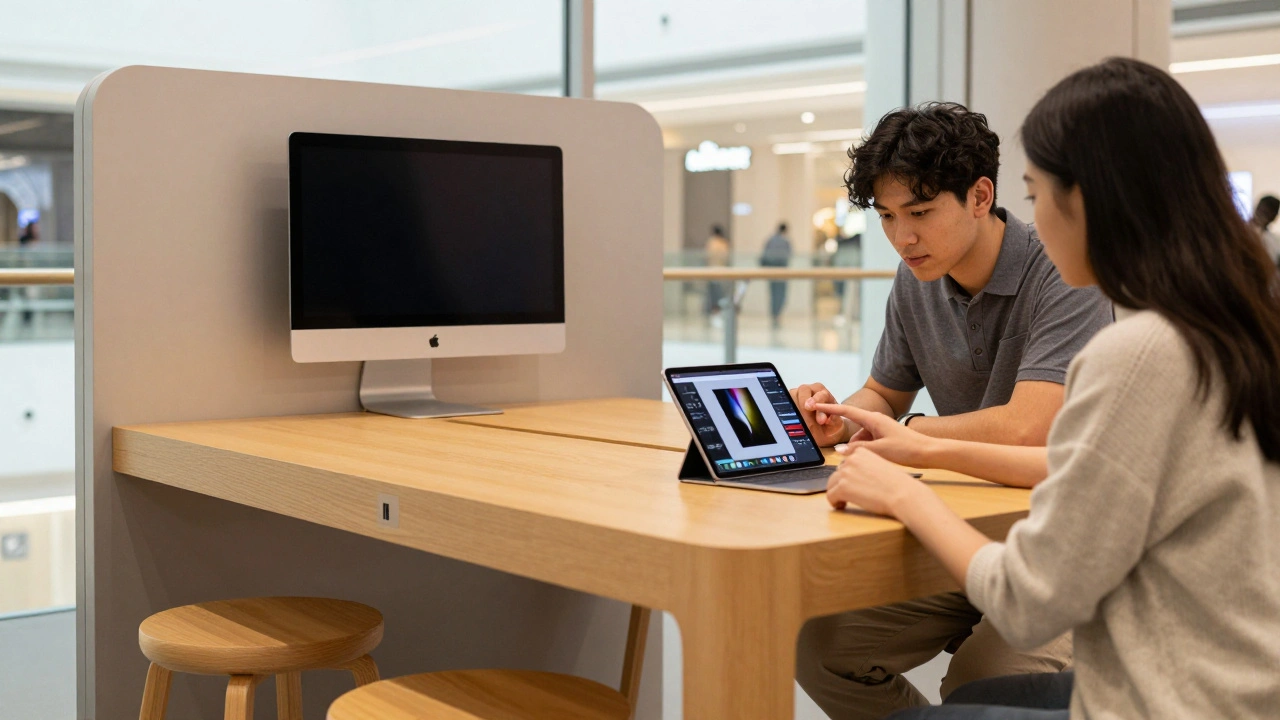
- Single Table: The most basic setup. One table, one Forum Display is a wall-mounted digital screen used to demonstrate apps, tutorials, and live content during sessions, a few stools. Found in small malls or suburban locations. It’s not flashy, but it works. Sessions here are intimate-usually four to six people.
- Standard Forum: The classic version most people picture. A video wall, cube-style seating, and a central stage. This is where you’d see a 90-minute Studio Hour is a guided session led by a Creative Pro on topics like photo editing, music production, or video storytelling. It’s immersive, but it’s also expensive to build and maintain.
- Significant Forum: Reserved for flagship stores like Fifth Avenue or Michigan Avenue. Bigger screens, premium acoustics, and room for 30+ people. These are where Apple hosts artist collaborations, product launches, and special events. They’re not just learning spaces-they’re experiences.
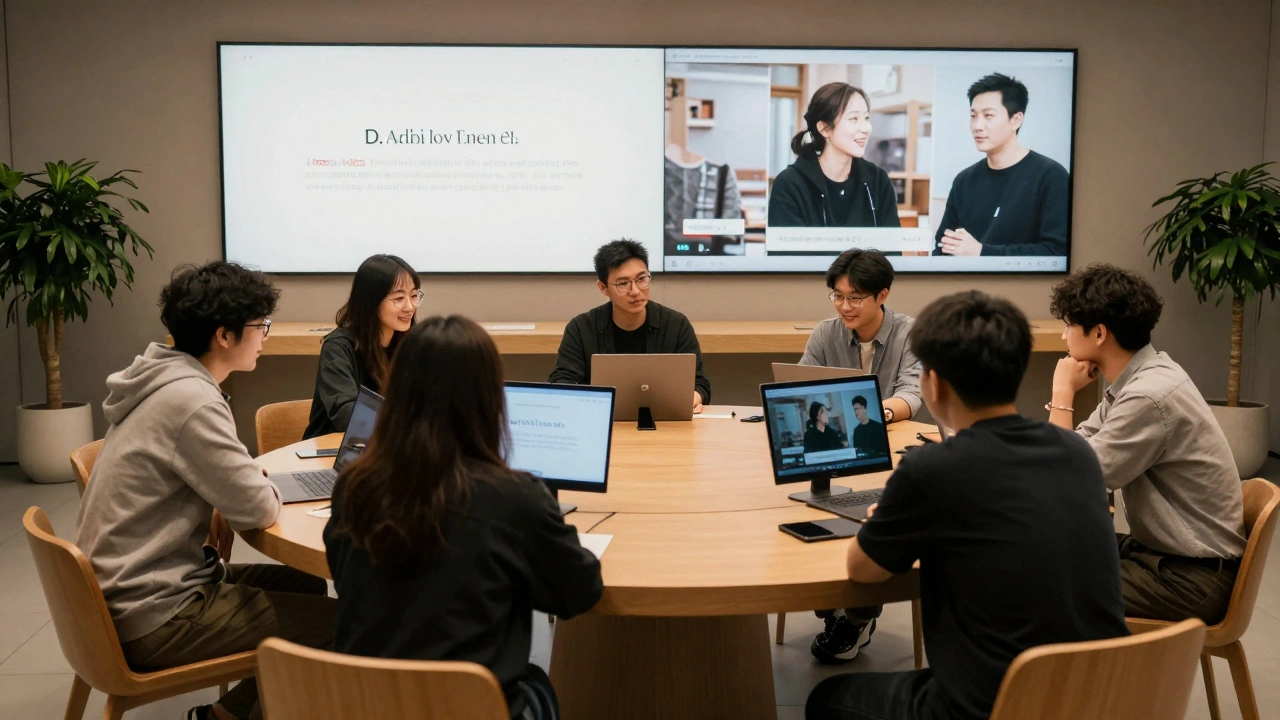
- Roundtable: The quiet standout. Two round tables, each with a large display, and seating that encourages conversation. This setup is used mostly in Vintage D.2 stores, which are smaller, older locations. It’s perfect for Skills sessions because it’s personal but still has enough tech to show real-time demos. Many customers prefer it over the big Forum-it feels less like a lecture and more like a chat with a friend who knows their stuff.
- Tysons Corner: The newest design. A low table with a cutaway section built right in-hidden speakers, USB-C ports, and a slim profile. Paired with a refreshed Forum Display, it’s designed to fit into older stores without major renovations. It’s the future: compact, efficient, and easy to scale.
Why the Shift from Big to Small?
Early on, Apple thought bigger was better. The original Forum setups were inspired by public plazas-open, bold, meant to draw crowds. But here’s what they learned: most people don’t want to sit in a room with 20 strangers to learn how to use the Notes app. They want to sit at a table with two others, ask questions, and try things out. That’s why Skills sessions is short, practical, drop-in classes focused on everyday Apple device usage, like organizing photos or using Siri now make up over 70% of all Today at Apple offerings.
And then there’s the hardware. The Beats Pill+ is a portable Bluetooth speaker once standard in learning zones for audio during sessions was discontinued in late 2024. Apple had thousands of them. Now, they’re running out. Replacing them with external speakers would cost money and clutter space. So they redesigned the tables. The new Tysons Corner tables have speakers built into the cutaway edge. No wires. No extra gear. Just clean, quiet sound.
Same with the displays. Older Forum Displays used 6K panels. New ones use 8K, but with better brightness control and lower power draw. They’re not just upgrades-they’re smarter. They adapt to daylight in a mall, or dim lighting at night. They’re built to last.
The Hidden Design Philosophy
Apple doesn’t just arrange furniture. It designs for behavior.
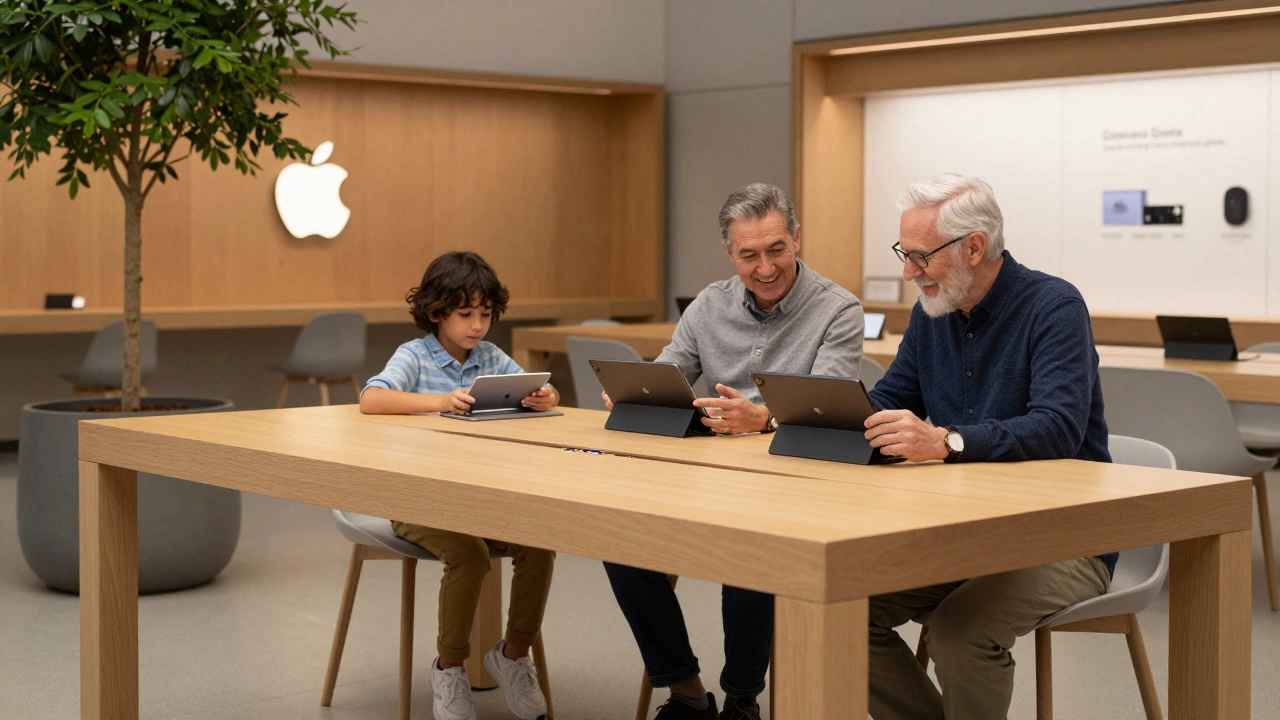
The low table at Tysons Corner? It’s not just about saving space. It’s about accessibility. When the table is lower, it’s easier for kids, seniors, or people in wheelchairs to reach. The stools? They’re not bar-height. They’re chair-height. That means you don’t have to crane your neck to see the screen. You can lean in. You can touch the device. You can feel like you’re part of the conversation.
And the USB-C ports? They’re not for show. They’re for doing. Someone walks in with an iPad and a broken charger. The Creative Pro says, “Plug it in here.” Five minutes later, they’re backing up photos. No waiting. No line. No confusion.
Even the layout of the Genius Bar changed. In older stores, it was tucked away. Now, it’s part of the genius grove is a redesigned area around the Genius Bar, featuring natural elements like plants and wood to create a calming, welcoming space. Trees. Soft lighting. Open sightlines. It’s not a repair counter. It’s a place you want to go.
What’s Missing? And What’s Coming
There’s a tension now. Customers who’ve been to the Fifth Avenue store expect the same vibe at their local mall. But they don’t get it. The Tysons Corner setup doesn’t have the drama. The Single Table doesn’t have the screen. And that’s okay-because Apple isn’t trying to make every store the same. It’s trying to make every experience useful.
That’s why Pop-Up Studio is a no-registration, drop-in session that lasts 15-20 minutes, often held in non-traditional spaces like the store entrance or near the accessories section exists. You walk in, see a quick demo on editing videos on iPhone, try it yourself, and leave. No sign-up. No time commitment. Just a moment of learning.
And beyond the store? Creative Studios is off-site educational programs run by Apple in community centers, libraries, and schools to extend Today at Apple beyond retail locations are growing. Apple is teaching photography in public libraries. Coding in high schools. Music production in youth centers. The store is no longer the only classroom.
The Real Goal Isn’t Sales. It’s Trust.
Apple doesn’t run Today at Apple to sell more iPhones. It runs it to build trust. When you learn how to use your device better, you stop calling support. You stop returning it. You start recommending it.
Think about it. You’ve never been to a store where someone sat with you for 30 minutes and showed you how to turn off notifications. But at Apple? They do. And that changes everything. You don’t just walk out with a new habit. You walk out feeling like the company cares about how you live, not just what you buy.
That’s why the future of learning zones isn’t about bigger screens or more seats. It’s about fewer barriers. Fewer steps. Fewer words. Just a table. A screen. A USB port. And someone who knows how to help you.
Are Today at Apple sessions free?
Yes. All Today at Apple sessions are completely free. No purchase is required. You don’t even need to have an Apple device to attend-just show up. Sessions are open to everyone, regardless of age or experience level.
Do I need to sign up for a session?
For most sessions, yes. You can register through the Apple Store app or website. But Apple also offers Pop-Up Studio sessions that don’t require registration. These are short, drop-in classes held in high-traffic areas like the entrance or near the accessories section. Just walk up and join.
What’s the difference between a Forum and a Roundtable?
A Forum is a large, immersive space with a video wall and fixed seating for groups of 15-30 people. It’s designed for demonstrations and larger classes. A Roundtable uses two circular tables with individual displays and seating for 6-8 people. It’s more personal, better for hands-on practice, and encourages conversation. Many people find the Roundtable more comfortable and effective for learning.
Why did Apple stop using Beats Pill+ speakers?
Apple discontinued the Beats Pill+ in late 2024. Since replacement units are no longer being made, stores are running out of working speakers. The solution? Integrated audio. New tables now have built-in speakers and USB-C ports, reducing the need for external gear and making setups faster and cleaner.
Can I attend a session if I don’t own an Apple product?
Absolutely. Today at Apple welcomes everyone. You don’t need to own an iPhone, iPad, or Mac to attend. Many sessions use demo devices provided by Apple. Whether you’re curious about editing photos or just want to learn how to use Siri better, you’re welcome to join.
What’s Next?
By 2027, Apple will likely retrofit most existing stores with the Tysons Corner design. It’s cheaper. It’s easier. It’s more inclusive. And it still delivers real learning. The big Forums won’t disappear-they’ll stay in flagship stores. But the majority of customers? They’ll learn at low tables, with built-in speakers, and USB ports right where they need them.
The future of retail education isn’t about spectacle. It’s about simplicity. A table. A screen. A helper. And you.