
Most of us don't think about the glass on our iPhones until we drop them on a concrete sidewalk and hold our breath while picking them up. But that thin layer is actually a marvel of materials science. Apple doesn't just pick a piece of glass; they engineer a complex system where the substrate, the chemical strengthening, and the invisible coatings all work together to stop your screen from shattering while keeping the image crisp.
The Foundation: Chemical Strengthening and Gorilla Glass
At the core of Apple's display strategy is a long-standing partnership with Corning is a global leader in glass science that develops the specialized aluminosilicate glass used in most modern smartphones. . For years, the industry standard has been Gorilla Glass is a chemically strengthened glass designed to be thin and light while resisting damage from drops and scratches . This isn't just regular glass; it undergoes a chemical ion-exchange process where larger potassium ions replace smaller sodium ions in the glass surface, creating a compressed layer that resists cracking.
The evolution of this material has been aggressive. If you remember the early days of smartphones, a single drop often meant a web of cracks. By the time Gorilla Glass Victus arrived, the benchmarks shifted significantly. In lab tests, Victus showed it could survive drops up to 2 meters on rough surfaces-a massive jump compared to other aluminosilicate glasses that often fail at less than 0.8 meters. It also offers roughly double the scratch resistance of its predecessor, Generation 6. To keep this quality consistent, Apple recently committed $2.5 billion to ensure 100% of the cover glass for iPhone and Apple Watch is produced at Corning's Harrodsburg, Kentucky facility.
Beyond the Substrate: The Rise of Liquid Glass
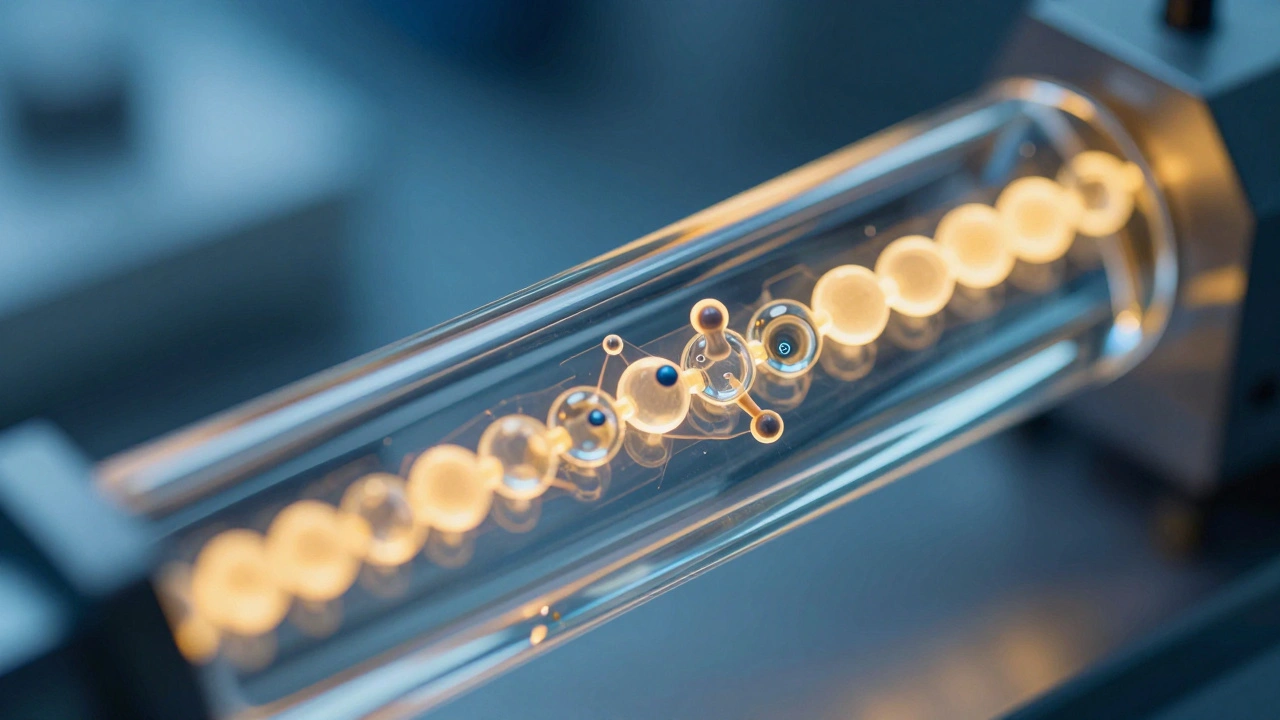
Even the toughest glass has a limit. This is where liquid glass coatings come into play. Instead of relying solely on a thick slab of material, Apple is exploring nanoscale coatings that act like an invisible shield. These coatings use silica-based nanoparticles, some only a few nanometers wide, that bond chemically to the glass surface.
Think of it as filling in the microscopic "valleys" of the glass. Because these particles pack together so densely, they create a surface that is incredibly hard and uniform. This makes it much harder for abrasive particles (like sand in your pocket) to catch and create those annoying micro-scratches. Because the material is applied as a liquid that self-levels before curing, it stays incredibly thin-measured in micrometers. This is key because if the coating were too thick, your touch sensitivity would drop, and the screen would feel "mushy." By keeping it at the nano-scale, Apple maintains the snappy response times and color accuracy users expect.
| Feature | Standard Aluminosilicate | Gorilla Glass Victus | Liquid Glass Coatings |
|---|---|---|---|
| Primary Benefit | Basic Transparency | Impact/Drop Resistance | Surface Hardness & Clarity |
| Thickness | Millimeters | Millimeters | Micrometers/Nanometers |
| Application | Fused Substrate | Fused Substrate | Chemical Bonding/Coating |
| Scratch Resistance | Moderate | High (2x vs Gen 6) | Very High (Nanoscale density) |
Optical Coatings and the Quest for Clarity
Strength is only half the battle; the other half is visibility. Have you ever struggled to see your screen in direct sunlight? That's where Optical Coatings are thin layers of material applied to glass to manipulate light, reduce reflections, and repel contaminants come in. Apple has looked into specialized technologies, such as those from Eclear, to enhance how their devices handle light, especially for wearables and future AR glasses.
These coatings solve three main problems:
- Glare Reduction: Anti-reflective properties increase contrast, making the screen readable without needing to crank the brightness to 100%.
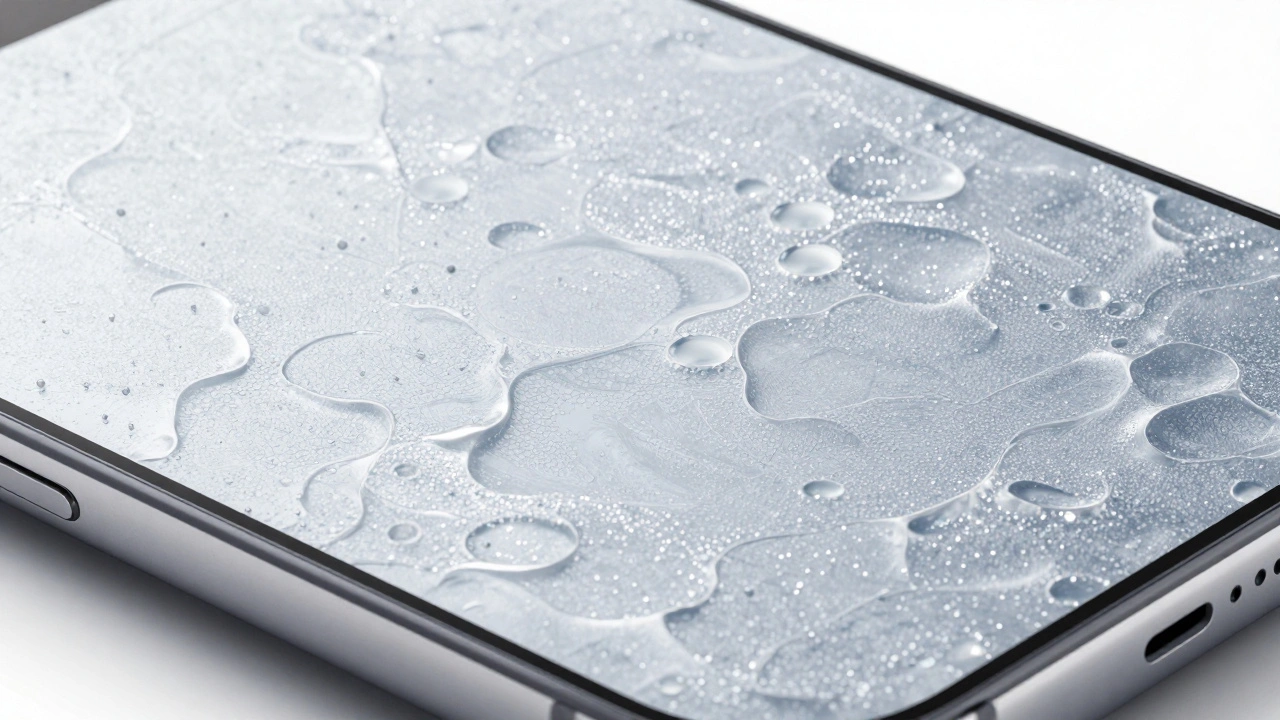
- Smudge Control: Hydrophobic surfaces repel oils and water, meaning fingerprints don't cling as aggressively to the glass.
- Environmental Protection: These layers protect the underlying glass from fogging and chemical wear without distorting the image.
For something like the Apple Watch, which is constantly exposed to sweat and outdoor elements, these hydrophobic properties aren't just a luxury-they're a necessity for the device to remain functional and clear.
Looking Forward: Diamond-Like Coatings and Foldables
Apple isn't stopping at silica. There is ongoing research into Diamond-Like Carbon (DLC) is an amorphous carbon material that mimics the hardness and thermal conductivity of diamond coatings. By applying a DLC layer to Gorilla Glass, Apple could potentially create a screen that is virtually impossible to scratch with standard household materials.
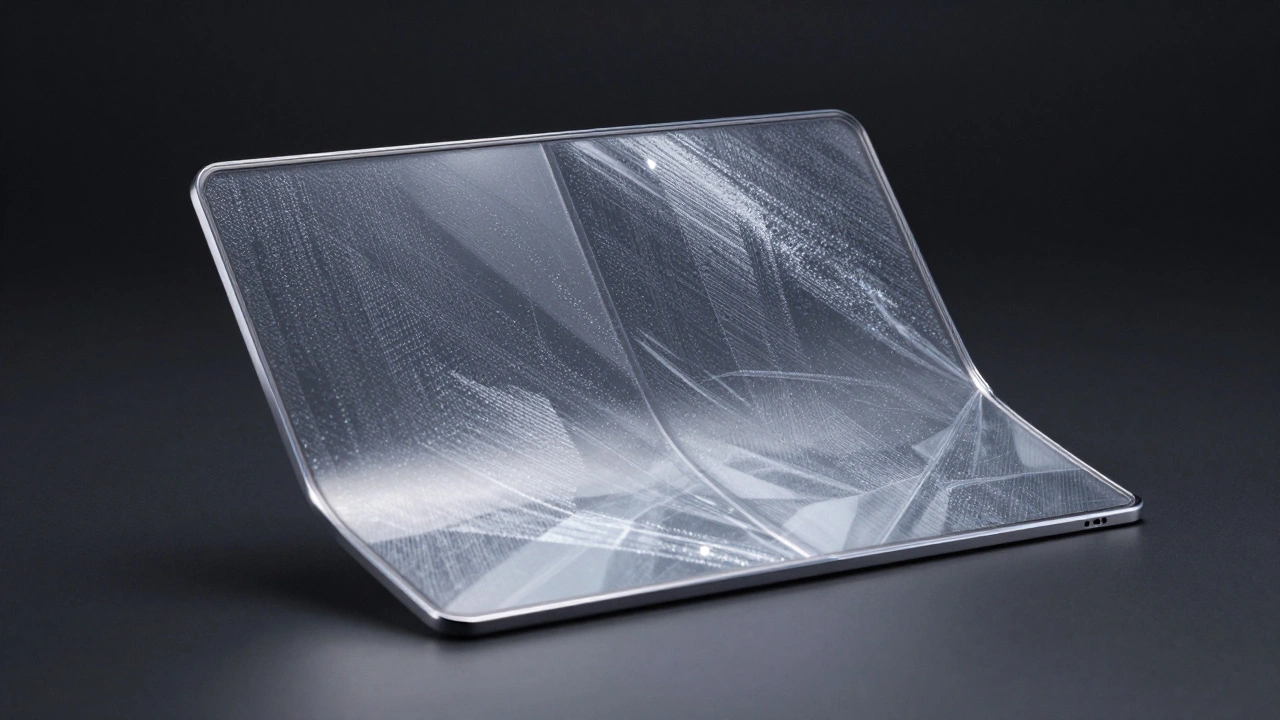
This technology is also a bridge to the future of foldable devices. The biggest challenge with foldables is that they often use plastic polymers to allow bending, but plastic scratches if you even look at it wrong. Liquid glass technology could allow Apple to apply a glass-like hardness to a flexible substrate. Imagine a phone that folds like a piece of paper but feels and resists scratches like a slab of sapphire.
The Aftermarket Reality: Tempered Glass and NanoArmor
Despite Apple's billions in investment, many of us still slap a third-party protector on the screen the moment we leave the store. Tempered Glass is glass that has been thermally treated to increase its strength and shatter-resistance remains the most popular choice. However, a new wave of "nano-protectors" is emerging.
Products like the Flolab NanoArmor 6 are shifting the goalposts. Instead of just adding a thick layer of glass, these use advanced materials to achieve 93% clarity and a 37% reduction in glare. They are designed to handle high direct impact-up to 313 newtons-while maintaining a 7H scratch resistance rating. These aftermarket solutions mirror Apple's own internal goals: balancing raw durability with an invisible user experience.
Why does Apple use Gorilla Glass instead of just making their own glass?
Developing glass at scale requires massive infrastructure and decades of chemical research. Corning has the specialized facilities and the proprietary ion-exchange processes needed to create aluminosilicate glass that is both thin and impact-resistant. By partnering with Corning, Apple can focus on the design and final coatings while leveraging Corning's manufacturing expertise.
What is the difference between tempered glass and chemically strengthened glass?
Tempered glass is made through a thermal process of heating and rapid cooling to create surface tension. Chemically strengthened glass, like Gorilla Glass, uses a chemical bath to swap smaller ions for larger ones, creating a deeper and more consistent compression layer that is generally better for thin, lightweight electronics.
Do liquid glass coatings actually work?
Yes, but they work differently than a screen protector. They don't stop a screen from cracking if you drop it on a rock, but they significantly reduce micro-scratches and smudges. Because they are nanoparticles that bond to the surface, they increase the overall hardness of the top layer of glass.
Will optical coatings affect the colors of my screen?
When engineered correctly, no. The goal of an optical coating is to change how light reflects off the surface, not how it passes through. By tuning the refractive index of the coating to match the glass, Apple ensures that colors remain accurate while glare is reduced.
Can these glass technologies be used in cars?
Absolutely. Liquid glass layers are ideal for automotive infotainment systems because they can make large dashboards more robust, easier to clean, and less reflective in bright sunlight, which is a critical safety factor for drivers.